Coracobrachialis: Pain Pattern and Treatment
The coracobrachialis is a narrow muscle on the inner side of the upper arm, running from the coracoid process at the front of the shoulder to the middle of the humerus. It pulls the arm forward and in toward the body. Its documented pattern is pain at the front of the shoulder and a line down the back of the arm to the back of the hand, skipping the elbow and wrist. It is a muscle of the shoulder that cannot reach behind the back. It relates to the biceps brachii page, which shares its origin.
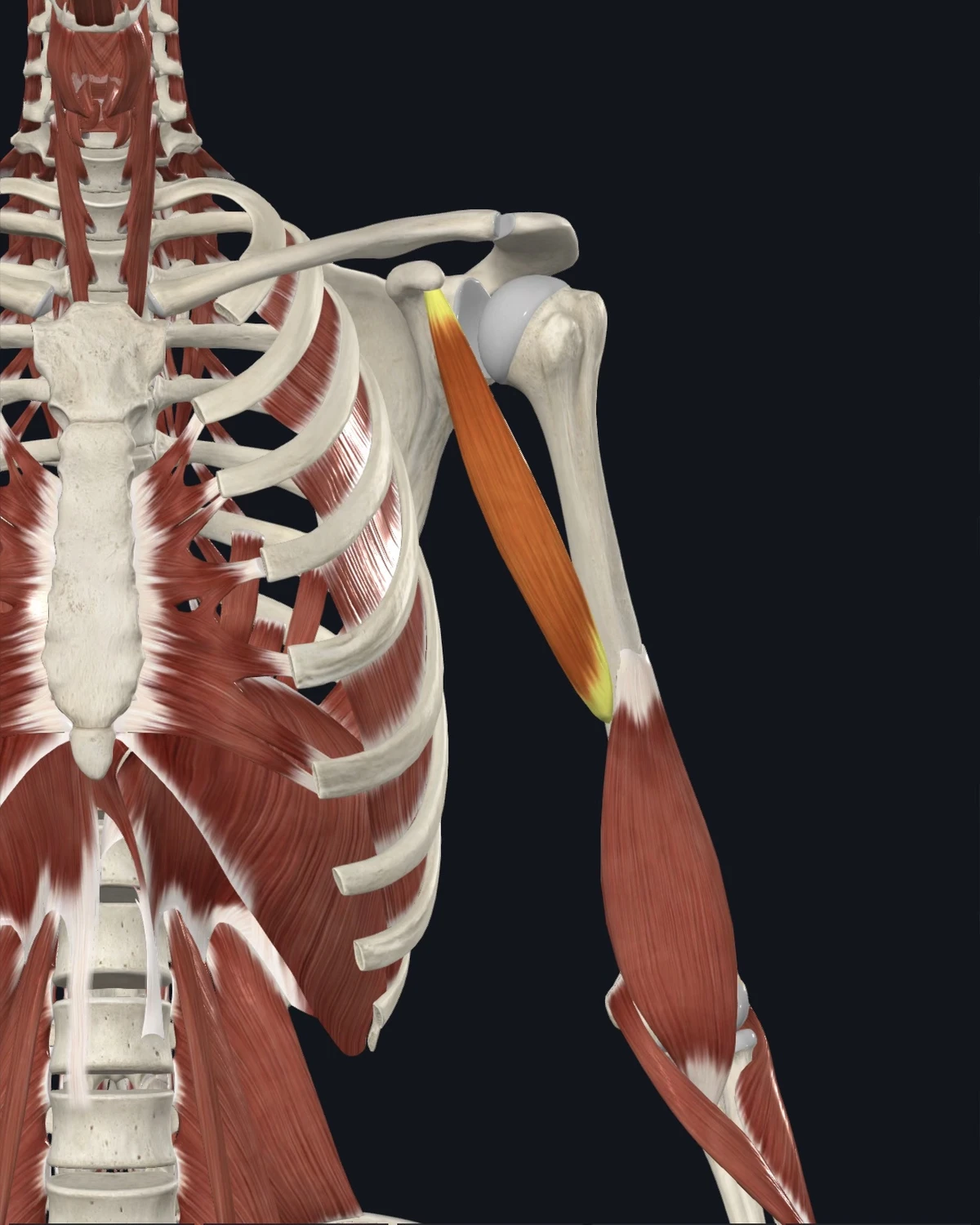
Attachments and action
Origin: The tip of the coracoid process of the scapula, with the short head of the biceps.
Insertion: The middle of the inner surface of the humerus.
Action: Flexion and adduction of the arm at the shoulder; it steadies the head of the humerus in the socket when the arm is raised.
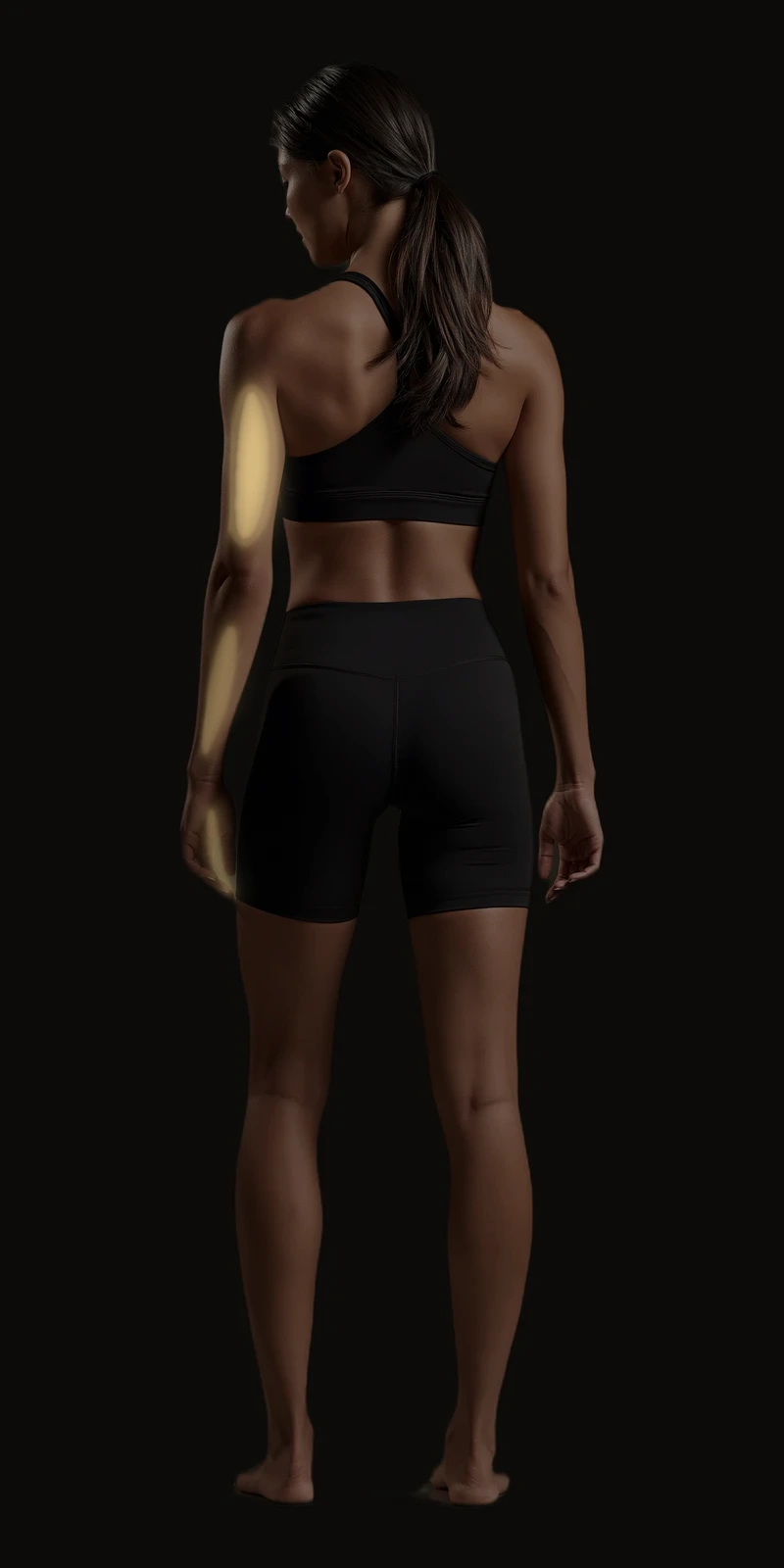
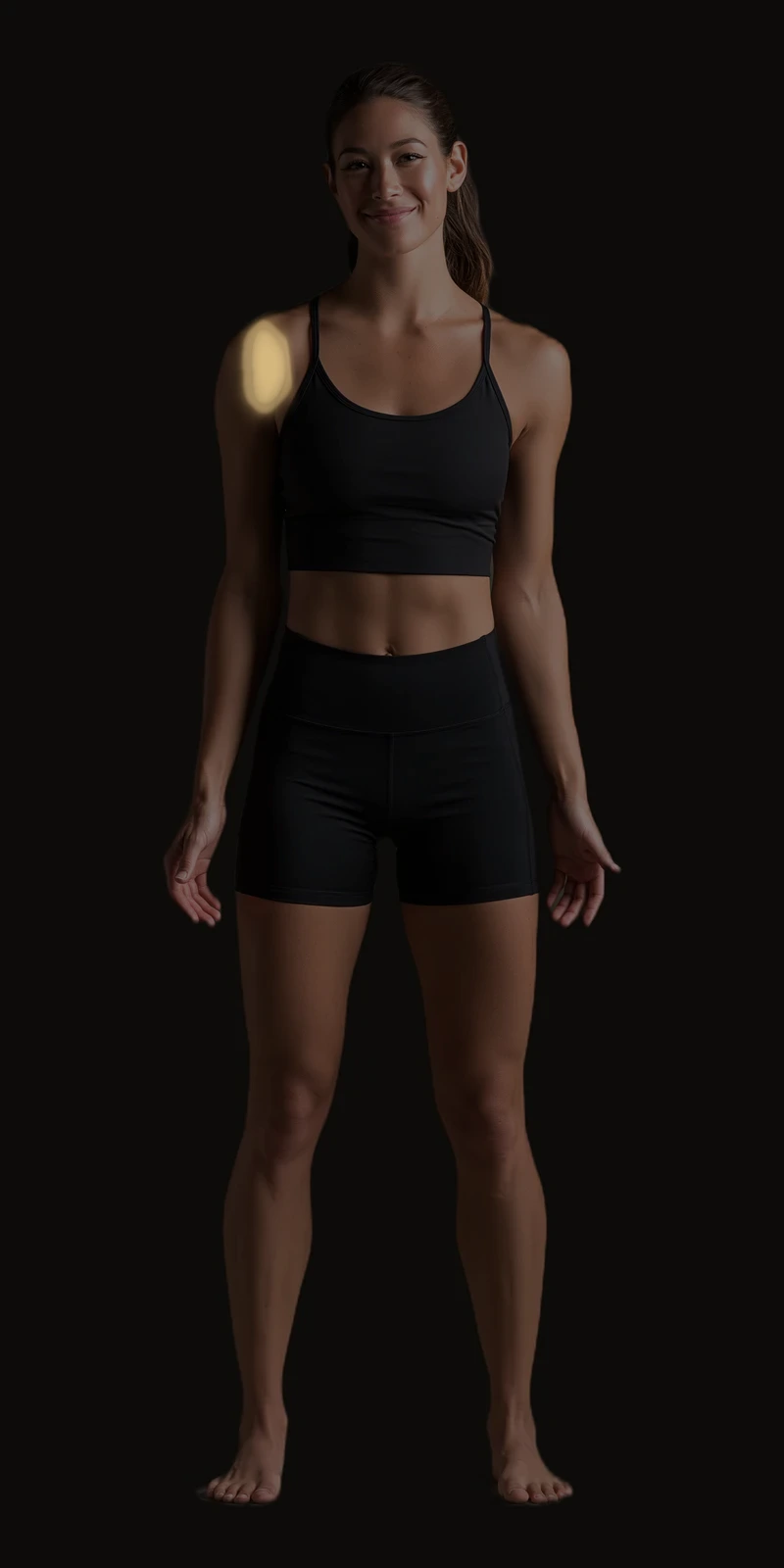
Where the pain is felt: At the front of the shoulder. Down the back of the upper arm. On the back of the forearm and the back of the hand toward the middle finger. The elbow and wrist themselves are skipped. With nerve involvement, numbness on the outer forearm.
Common causes: Push-ups and bench press; lifting a heavy object in front of the body; a fall onto the outstretched arm; pull-ups and rope climbing; overhead throwing; a shoulder that has been guarded after an injury.
Patients say: "I cannot reach my back pocket." "It hurts in front of my shoulder and down the back of my arm, which makes no sense." Pain reaching across to the other shoulder. "The back of my hand aches with nothing to show for it."
When to get evaluated: Shoulder pain with a fall or a pop, with weakness raising the arm or a visible step at the top of the shoulder, needs imaging for a tear or dislocation first. Arm pain with chest pressure, sweating, or shortness of breath needs cardiac evaluation before anything else.
How this muscle is examined and treated
Examination tests reaching behind the back and across the chest, then presses the muscle high on the inner side of the upper arm, in front of the armpit, for the point that reproduces the shoulder and back-of-arm pain, and checks the outer forearm for numbness. Needling here addresses the muscle on the inner upper arm, with the neurovascular bundle's course respected. Assessment and treatment happen in the same visit.
Related conditions
Shoulder DysfunctionSports & Performance InjuriesChronic Pain Patterns
This page is educational. It describes muscle referral patterns commonly associated with pain; it does not diagnose your condition. Individual patterns vary. For evaluation of your specific pain, see a licensed clinician. Seek immediate medical care for emergencies. Eugene Baek, L.Ac. · New Jersey License 25MZ00080600