Lower Trapezius: Pain Pattern and Treatment
The lower trapezius is the fan of fibers running from the mid-back up to the shoulder blade. Its trigger points refer pain upward (to the top of the shoulder blade, the point of the shoulder, and the base of the skull), so the sore spot sits well above the trigger point. When upper-shoulder treatment keeps failing, this muscle may be why.
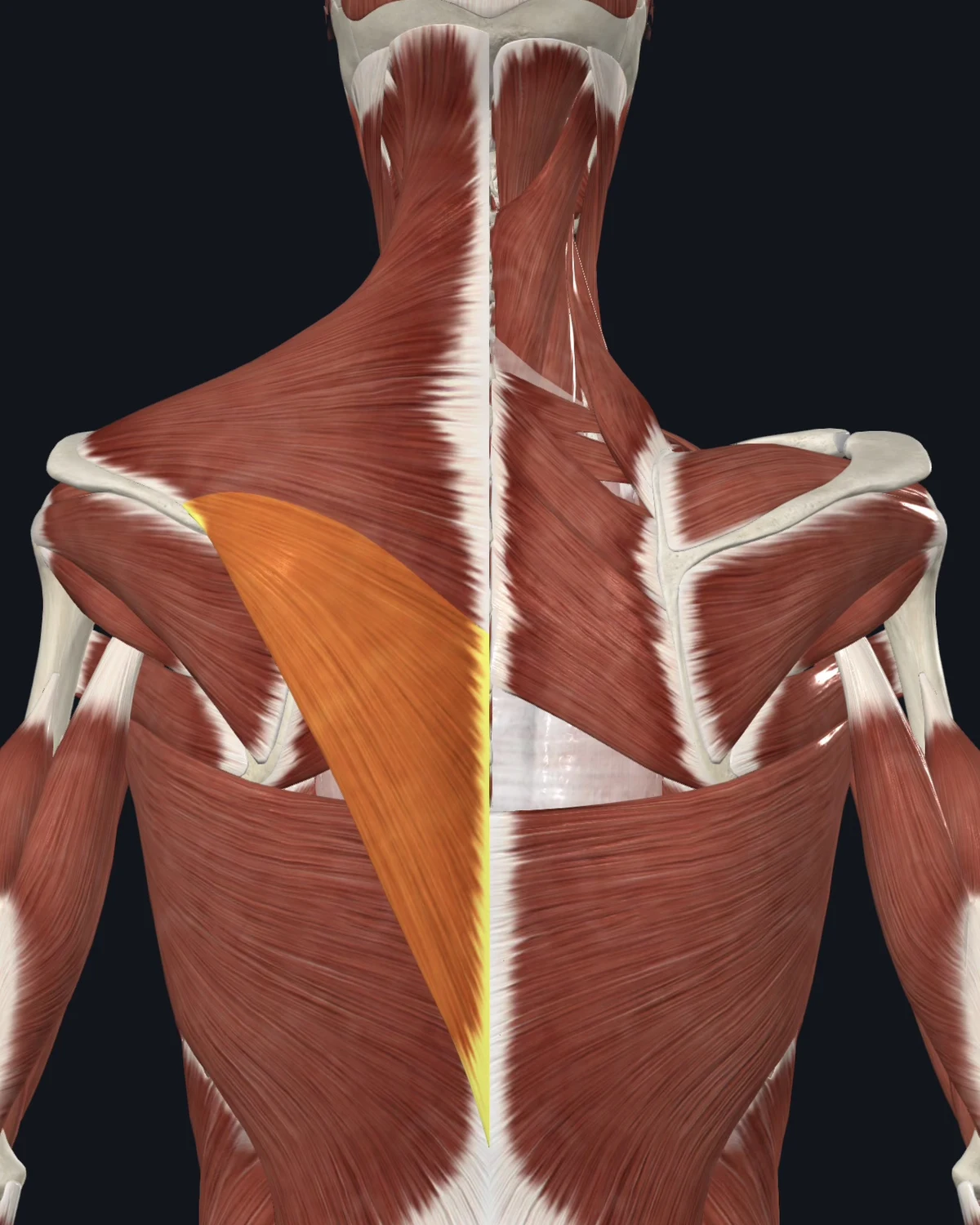
Attachments and action
Origin: The spinous processes of T4 through T12.
Insertion: The tubercle of the scapular spine.
Action: Depression and upward rotation of the scapula: the postural anchor that keeps the shoulder blade seated as the arm rises.
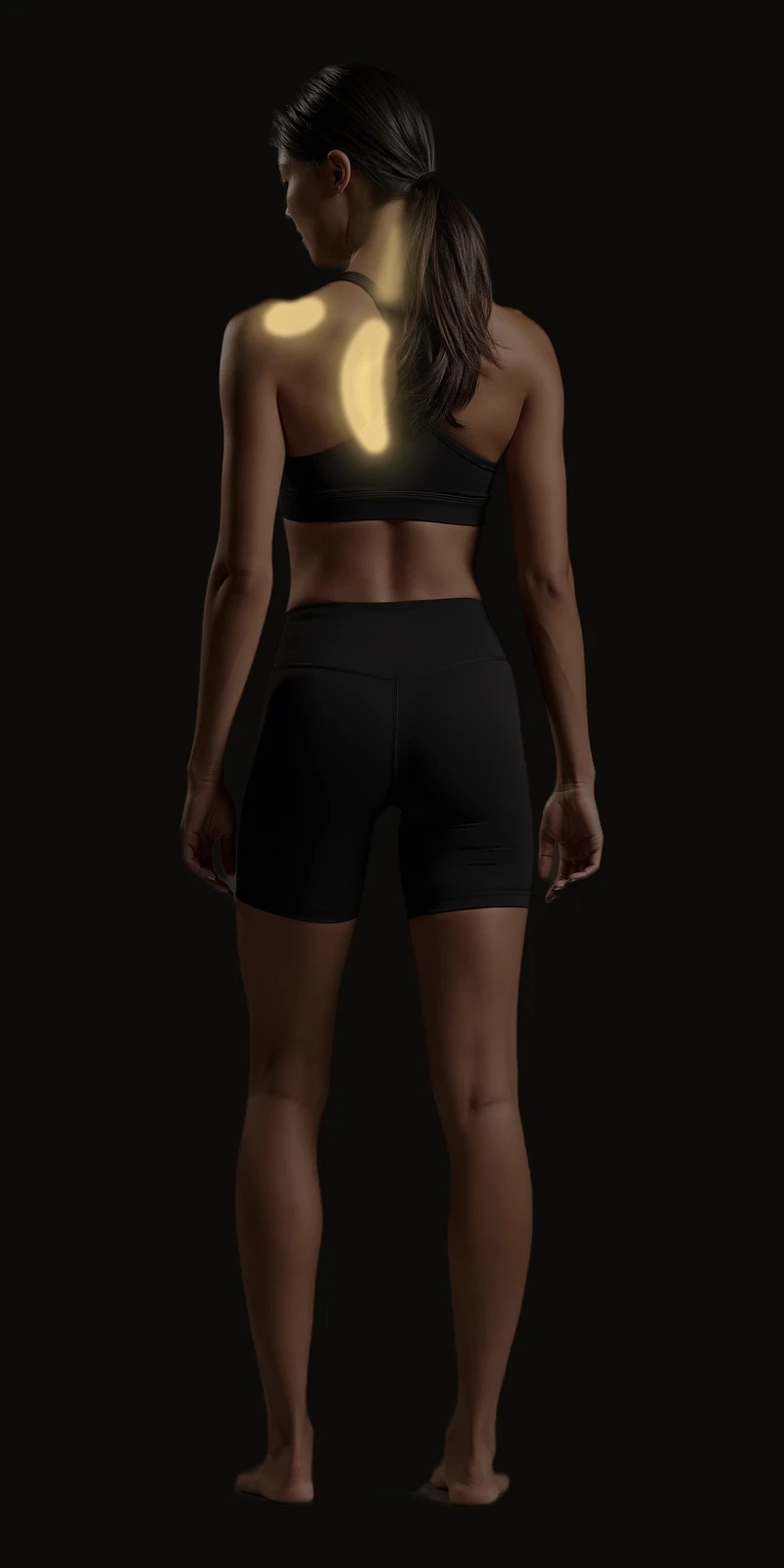
Where the pain is felt: TrP3 refers a deep ache to the suprascapular region above the spine of the blade and to the acromion at the shoulder’s point, with spillover along the inner border of the blade; it can also send pain up the side of the neck to the mastoid behind the ear. That zone sits near the hairline on the figure, so this part of the pattern is described in words here instead of being shown on the figure. TrP4 produces a distinctive burning line along the inner border of the shoulder blade. On the figure: the cap on the shoulder point, the band above the blade’s spine, and the thin line down the inner border.
Common causes: Desk work with unsupported forearms; rounded-shoulder posture held for hours; reaching forward and up repeatedly; long driving; bra straps and heavy bags loading the top of the shoulder.
Patients say: “The top of my shoulder blade aches, and massage helps for a day at most.” Others describe a burning line along the inner edge of the blade they can trace with a finger.
When to get evaluated: Upper back pain with chest pressure, shortness of breath, or pain spreading to the jaw or left arm needs urgent medical evaluation; referred cardiac pain can present between the shoulder blades.
How this muscle is examined and treated
Examination looks below the pain: the points that reproduce suprascapular ache and the inner-border burn sit in the lower fibers, a hand’s width beneath where patients point. Treating only the upper trapezius is why this pattern recurs. Needling the lower-fiber points addresses the trigger points. Assessment and treatment happen in the same visit.
Related conditions
Shoulder DysfunctionNeck & Cervical PainChronic Pain Patterns
This page is educational. It describes muscle referral patterns commonly associated with pain; it does not diagnose your condition. Individual patterns vary. For evaluation of your specific pain, see a licensed clinician. Seek immediate medical care for emergencies. Eugene Baek, L.Ac. · New Jersey License 25MZ00080600