Pectoralis Minor: Pain Pattern and Treatment
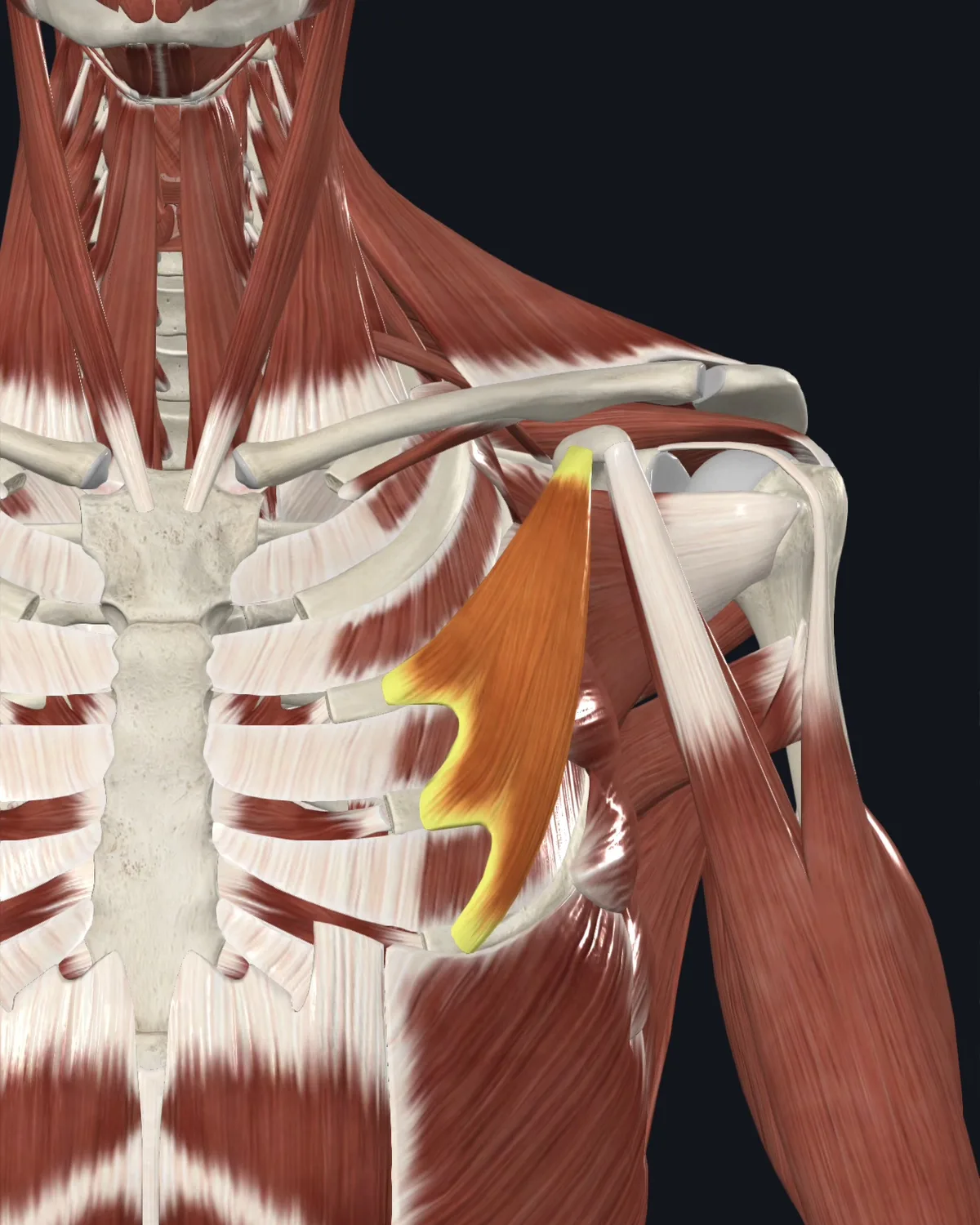
The pectoralis minor is a small muscle under the pectoralis major, running from the ribs up to the coracoid process at the front of the shoulder blade. It pulls the blade forward and down, which is the rounded-shoulder position. Its documented pattern is pain at the front of the shoulder and upper chest, spreading down the inner arm to the ring and little fingers. Because the nerves and artery to the arm pass under it, a tight pectoralis minor can also compress them, producing numbness and a heavy, swollen hand.
Attachments and action
Origin: The outer surfaces of the third, fourth, and fifth ribs near their cartilages.
Insertion: The medial border and upper surface of the coracoid process of the scapula.
Action: Protraction, depression, and forward tilt of the scapula; with the blade fixed it lifts the ribs as an accessory muscle of breathing.
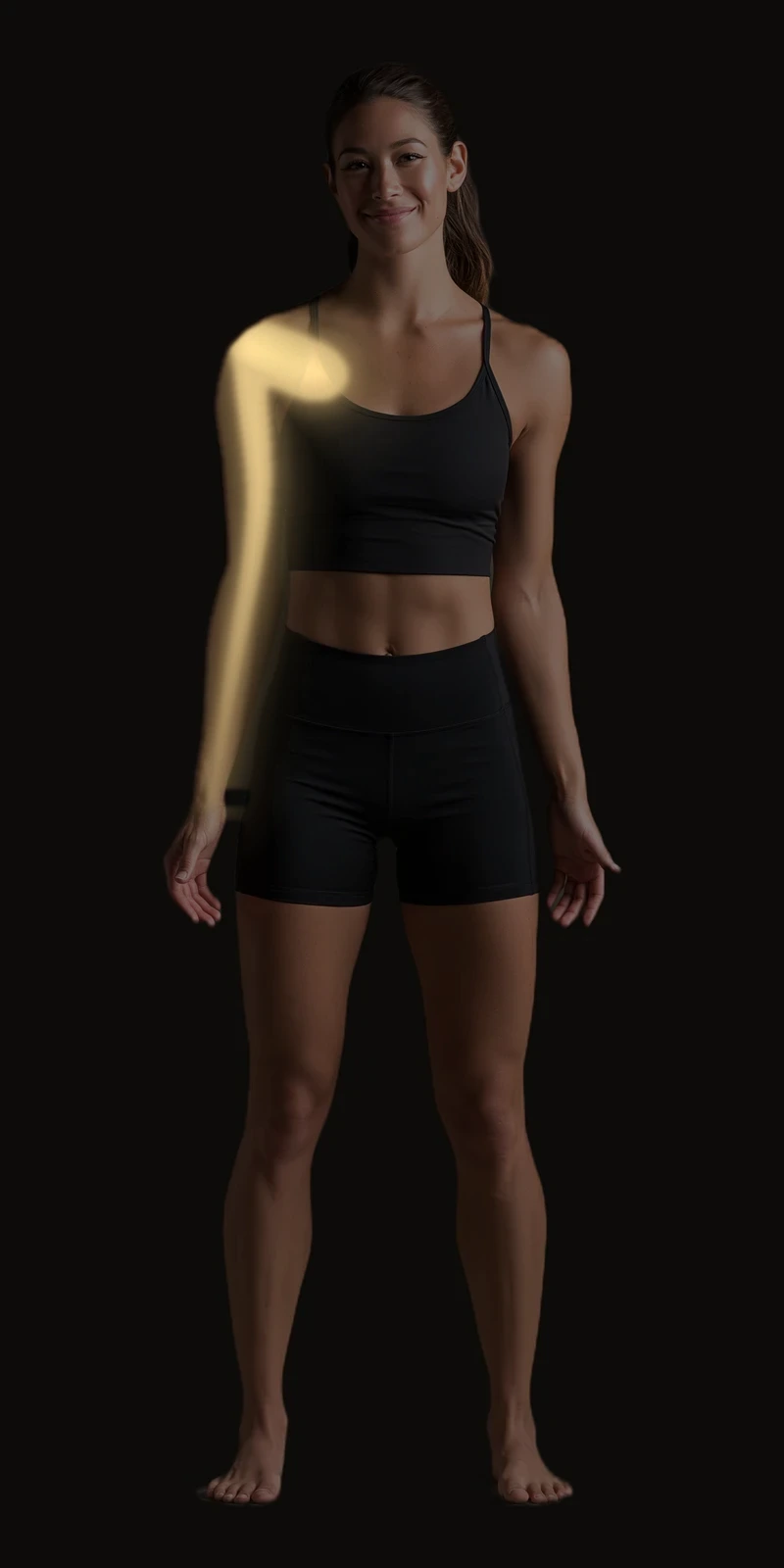
Where the pain is felt: The front of the shoulder and the upper chest below the collarbone. Down the inner side of the arm and forearm to the ring and little fingers. When the muscle compresses the nerves beneath it, the hand tingles, feels heavy, or swells.
Common causes: Rounded shoulders held at a desk or a phone for hours; a heavy backpack or shoulder bag; push-ups, bench press, and dips; chest breathing under stress; a cast or sling that held the arm forward.
Patients say: “My pinky and ring finger go numb when I raise my arm.” Pain at the front of the shoulder that a cuff exam did not explain. “My hand feels swollen by the end of the day.” Chest pain that a cardiac workup cleared.
When to get evaluated: Chest pain with pressure, sweating, shortness of breath, or pain on exertion needs cardiac evaluation before anything else. Arm numbness with a cold, pale, or discolored hand needs vascular assessment.
How this muscle is examined and treated
Examination measures resting shoulder position, tests the arm raised overhead for pulse change and symptom reproduction, and presses the muscle through the pectoralis major just below the coracoid. Needling here addresses the muscle through the chest wall at a shallow angle. Assessment and treatment happen in the same visit.
Related conditions
Shoulder DysfunctionNeck & Cervical PainChronic Pain Patterns
This page is educational. It describes muscle referral patterns commonly associated with pain; it does not diagnose your condition. Individual patterns vary. For evaluation of your specific pain, see a licensed clinician. Seek immediate medical care for emergencies. Eugene Baek, L.Ac. · New Jersey License 25MZ00080600