Subscapularis: Pain Pattern and Treatment
The subscapularis lines the front surface of the shoulder blade, hidden between the blade and the rib cage, and rotates the arm inward. Its documented pattern is severe pain at the back of the shoulder, spreading over the blade and down the back of the arm, with a distinctive band of referral at the wrist.
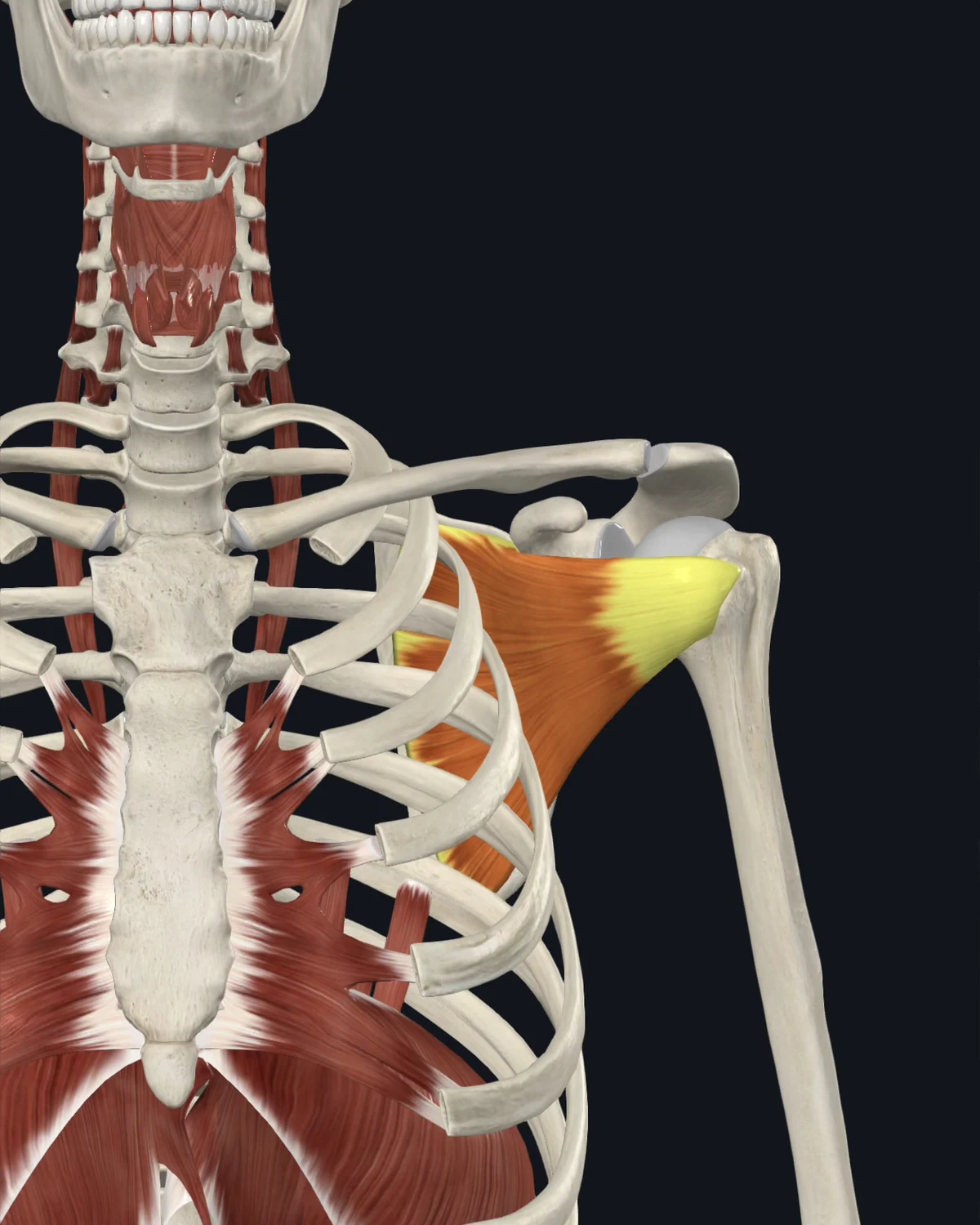
Attachments and action
Origin: The subscapular fossa on the anterior surface of the scapula.
Insertion: The lesser tubercle of the humerus.
Action: Internal rotation of the shoulder and stabilization of the humeral head, as the largest muscle of the rotator cuff.
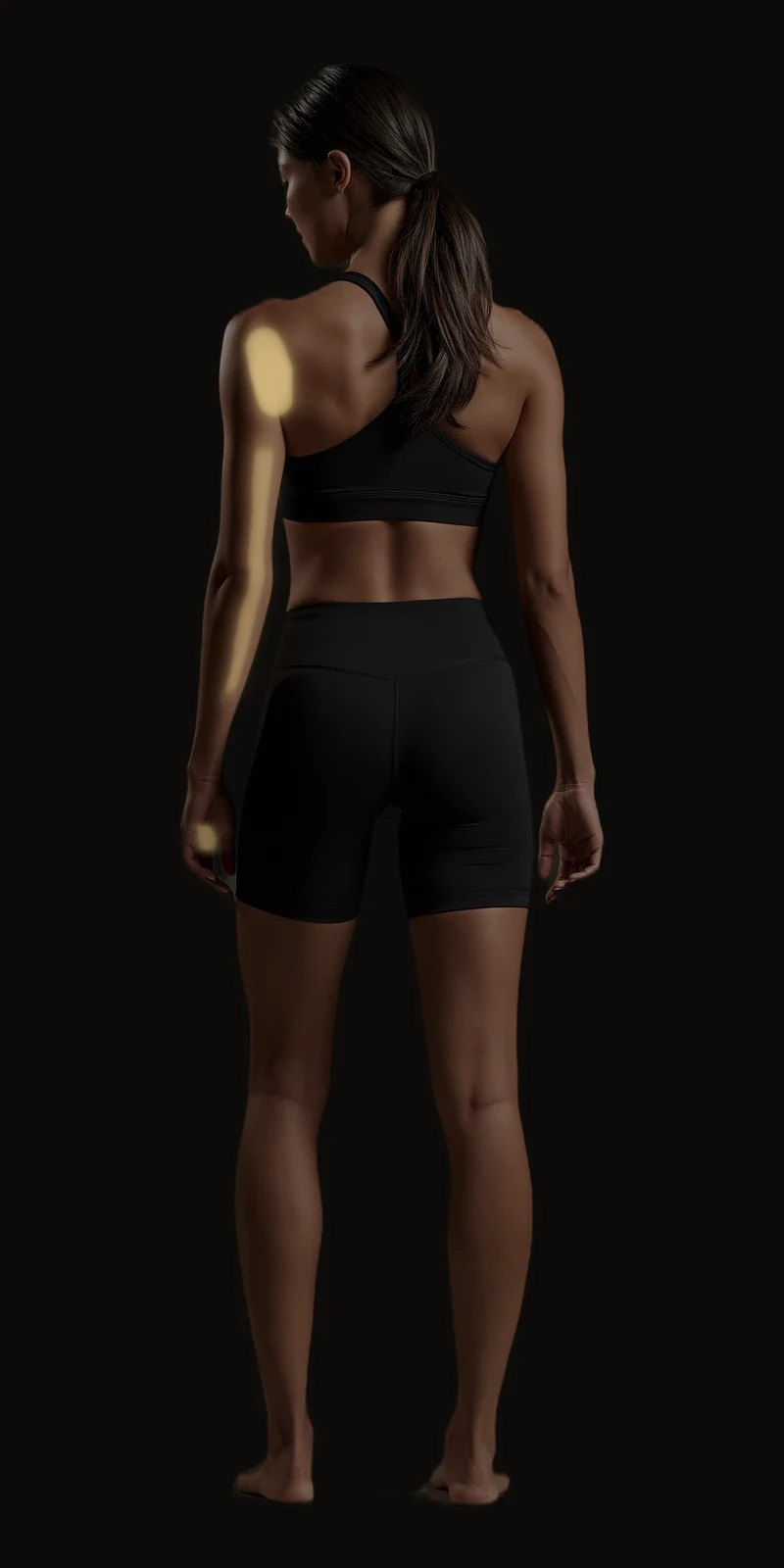
Where the pain is felt: Severe, deep pain at the back of the shoulder, spreading over the shoulder blade and down the back of the upper arm. The documented band at the wrist is this muscle’s signature: patients often move a watch to the other wrist.
Common causes: Frozen‑shoulder mechanics, throwing sports, swimming, prolonged immobilization in a sling, reaching across the body under load.
Patients say: “I cannot reach up and back.” A shoulder that has been stiffening for months. Wrist soreness with no wrist injury.
When to get evaluated: A shoulder losing motion in every direction over weeks deserves clinical evaluation for adhesive capsulitis alongside treatment; trauma with deformity gets imaging first.
How this muscle is examined and treated
Examination tests external rotation range and reaching up the back, then approaches the blade’s front surface through the armpit with the arm positioned to expose it. Needling the subscapularis addresses frozen‑shoulder‑pattern restriction at its most common myofascial source. Assessment and treatment happen in the same visit.
Related conditions
Shoulder DysfunctionPost‑Surgical RecoverySports & Performance Injuries
Treatment points: Subscapularis motor point
This page is educational. It describes muscle referral patterns commonly associated with pain; it does not diagnose your condition. Individual patterns vary. For evaluation of your specific pain, see a licensed clinician. Seek immediate medical care for emergencies. Eugene Baek, L.Ac. · New Jersey License 25MZ00080600