Biceps Brachii: Pain Pattern and Treatment
The biceps brachii is the two-headed muscle on the front of the upper arm. Its trigger points are easy to miss: the muscle itself typically does not hurt. The chief complaint is superficial pain at the front of the shoulder, which is why biceps trigger points can be misdiagnosed as bicipital tendinitis or a shoulder joint problem while the trigger points themselves sit lower, in the muscle belly, unexamined.
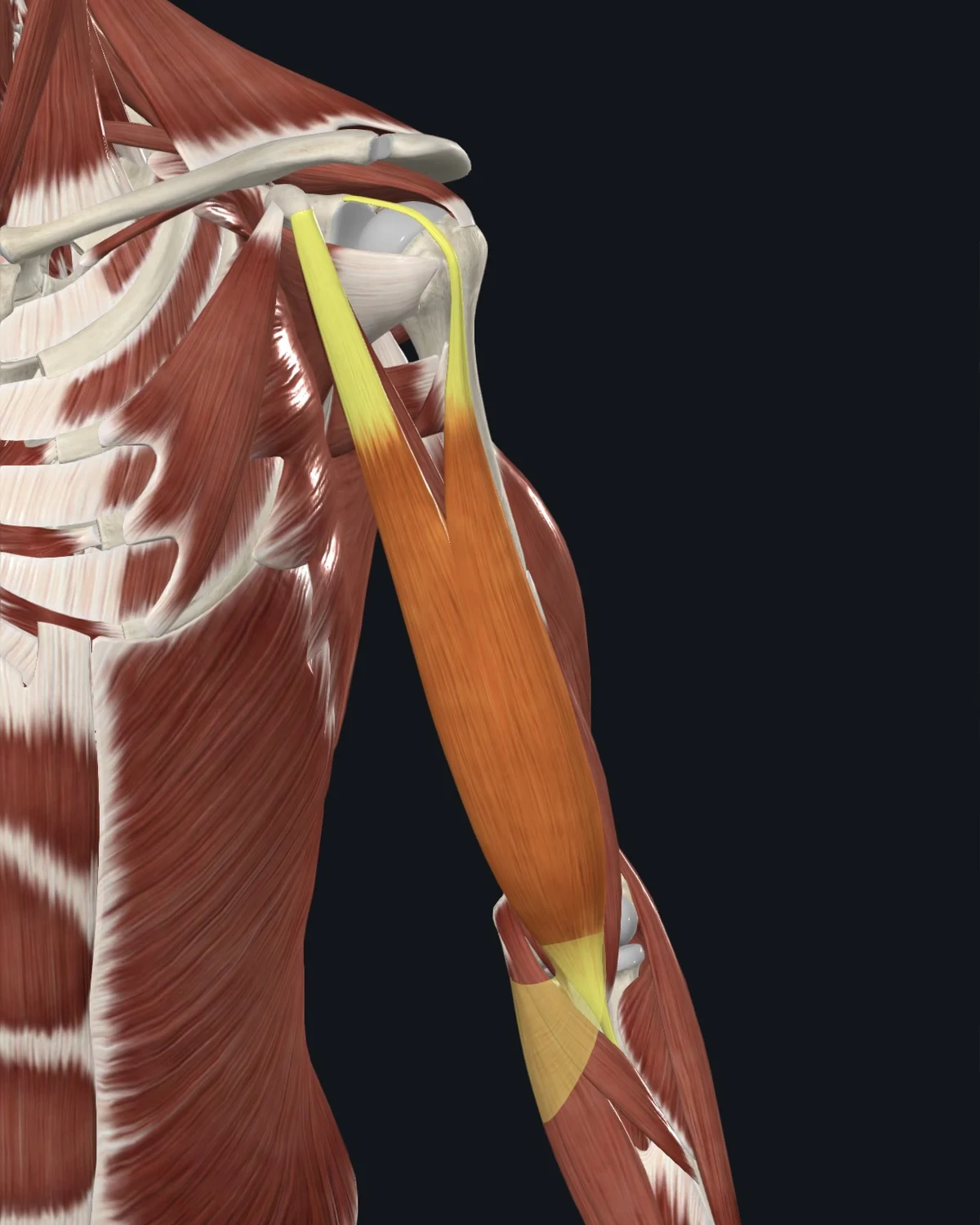
Attachments and action
Origin: The long head from the supraglenoid tubercle, the short head from the coracoid process of the scapula.
Insertion: The radial tuberosity and the bicipital aponeurosis.
Action: Flexion of the elbow, supination of the forearm, and assistance with shoulder flexion: every curl, carry, and palm-up lift.
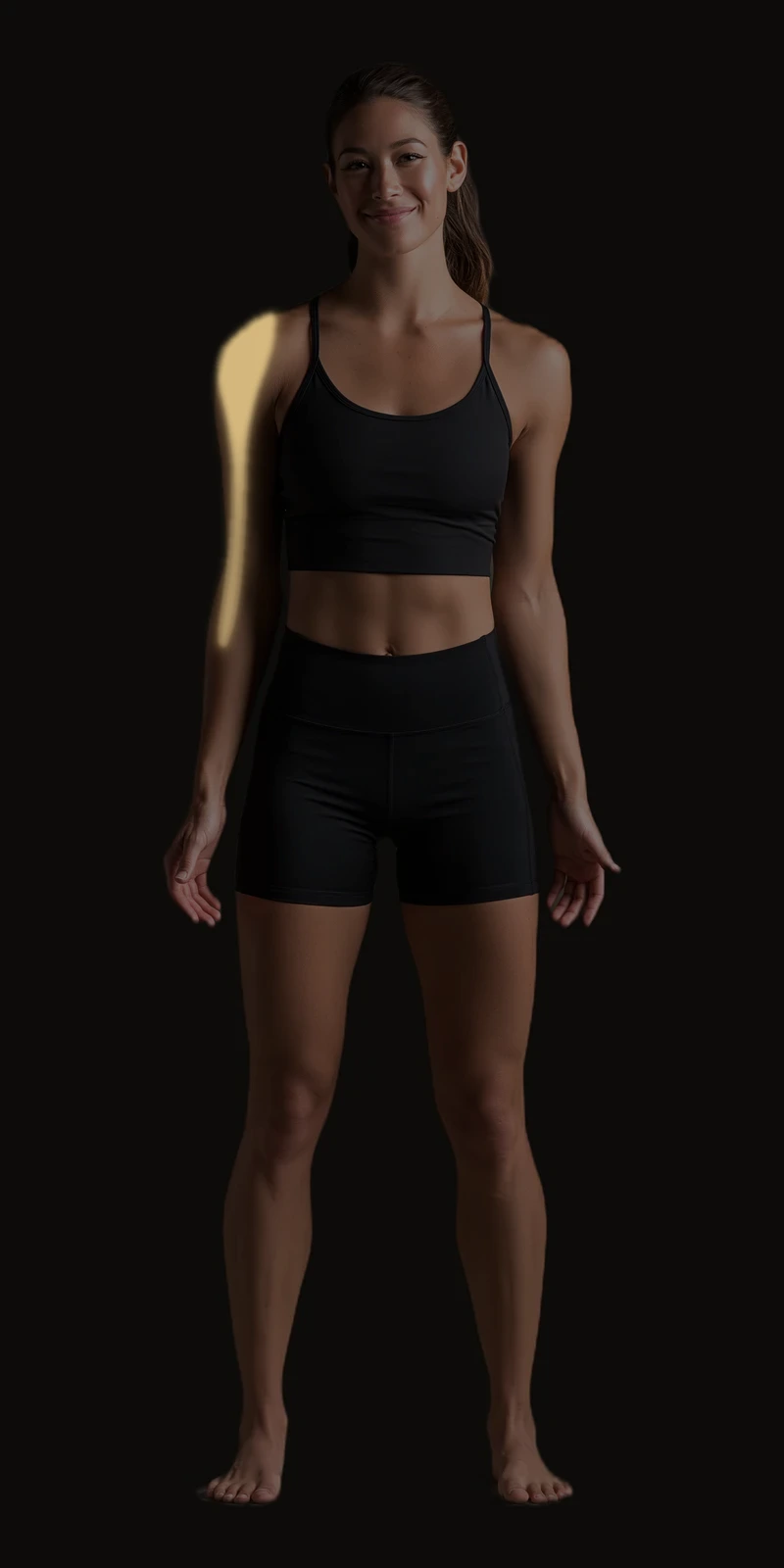
Where the pain is felt: Pain projects upward from the trigger points to the front of the shoulder, over the anterior deltoid. The pain feels superficial rather than deep in the joint, and a fainter line runs down the biceps toward the elbow. A weaker referral reaches the crook of the elbow, and a small skip zone can appear over the suprascapular area on the back of the shoulder (back surface; described here). The belly of the muscle itself is typically quiet. On the figure: the zone wrapping the front of the shoulder, flowing down the line of the biceps and fading above the elbow crease.
Common causes: Curls and pull-ups; carrying with the palm up; racquet sports and violin playing; sudden overload catching something heavy; long periods with the elbow held bent.
Patients say: “The front of my shoulder aches, and the ache feels close to the surface.” The ache sharpens raising the arm overhead; the arm itself feels vaguely sore but has no single tender spot patients can find.
When to get evaluated: Shoulder pain after a fall or with a visible bulge in the upper arm (a possible tendon rupture), or pain with fever, needs physician evaluation first. Deep joint pain with loss of motion warrants orthopedic assessment.
How this muscle is examined and treated
Examination separates this pattern from bicipital tendinitis: trigger-point pain is reproduced by pressing the muscle belly at mid-arm, not the tendon in the groove, and resisted testing is only mildly provocative. Needling the belly points typically eases the front-of-shoulder ache within visits. Assessment and treatment happen in the same visit.
Related conditions
Shoulder DysfunctionNeck & Cervical PainChronic Pain Patterns
This page is educational. It describes muscle referral patterns commonly associated with pain; it does not diagnose your condition. Individual patterns vary. For evaluation of your specific pain, see a licensed clinician. Seek immediate medical care for emergencies. Eugene Baek, L.Ac. · New Jersey License 25MZ00080600