Rhomboids: Pain Pattern and Treatment
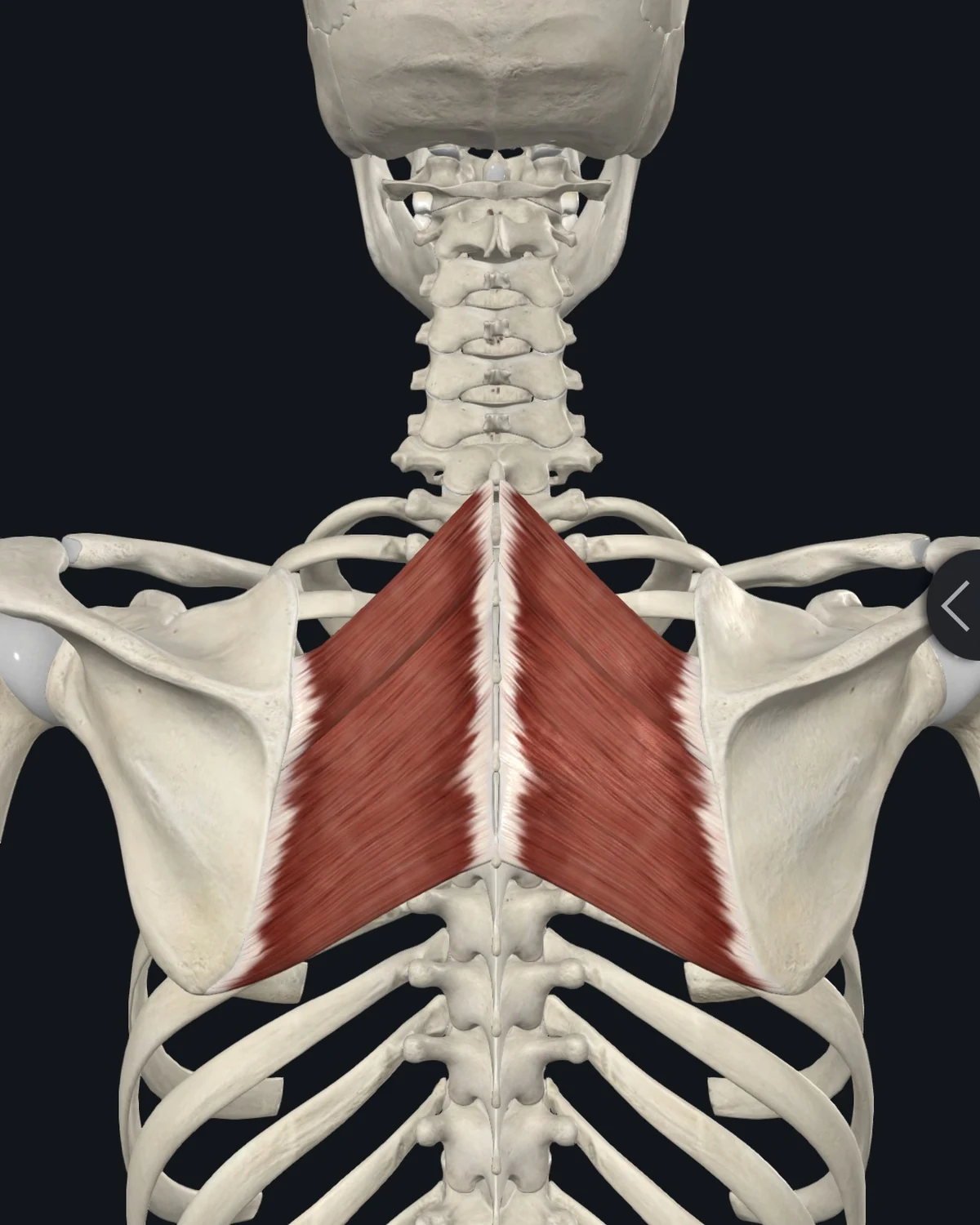
The rhomboids run from the spine to the inner border of the shoulder blade and pull the blades together. Their documented pattern is a superficial, concentrated ache along the inner edge of the shoulder blade that does not change much with movement and persists at rest.
Attachments and action
Origin: The nuchal ligament and the spinous processes of C7 through T5.
Insertion: The medial border of the scapula, from the spine of the scapula to the inferior angle.
Action: Retraction of the scapula toward the spine and stabilization of the shoulder blade against the rib cage during arm movement.
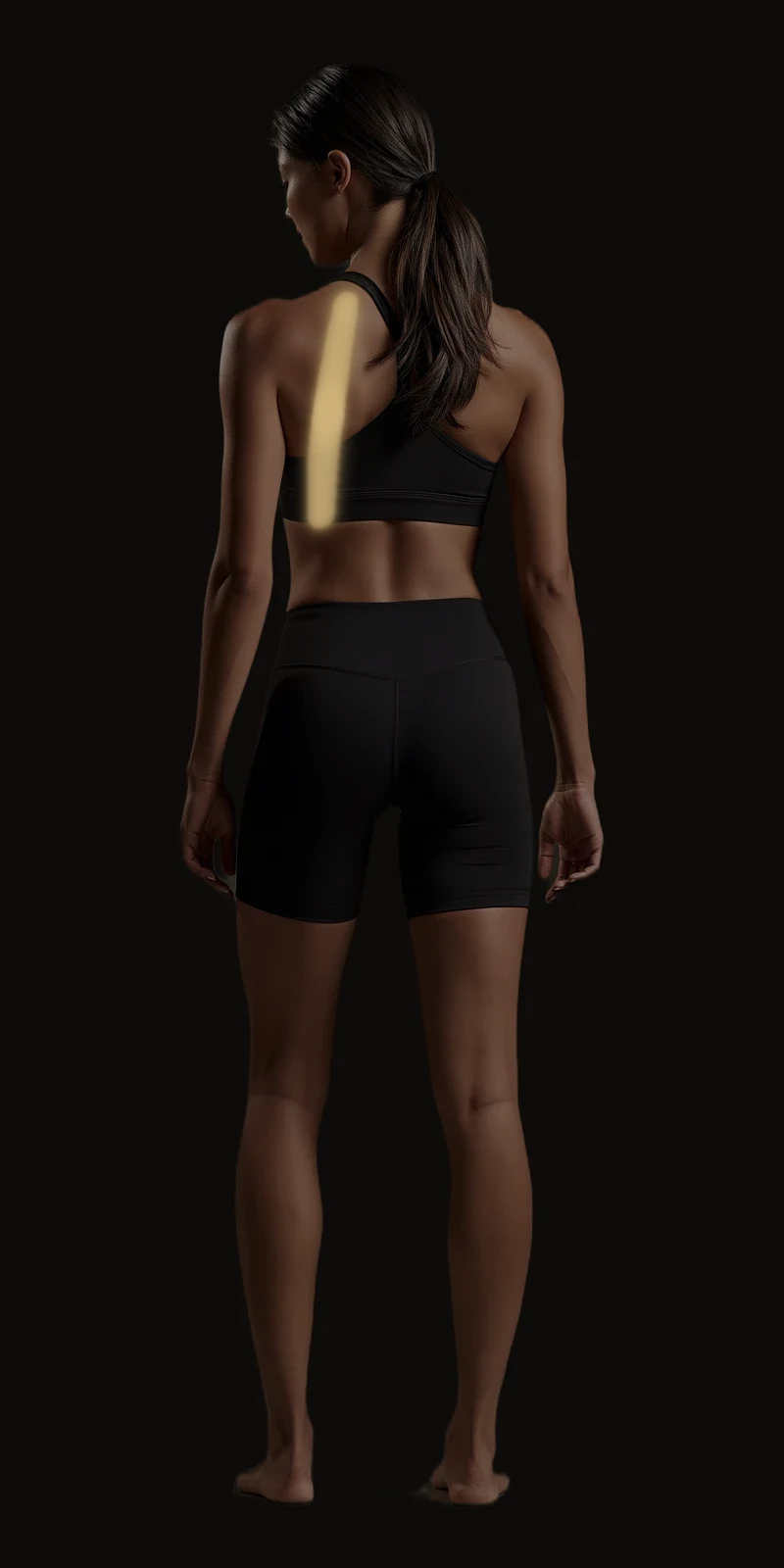
Where the pain is felt: Along the inner edge of the shoulder blade, between the blade and the spine. The ache is superficial and concentrated, and patients can usually point directly to it.
Common causes: Rounded-shoulder desk posture held for hours, long driving, carrying children, rowing and pulling exercise loads, an unaccustomed day of overhead work.
Patients say: “Right between my shoulder blade and spine, I can point to it.” The urge to press a thumb or a ball into the spot. Burning between the blades by the end of a work day.
When to get evaluated: Between-the-blades pain arriving with shortness of breath, chest pressure, or exertion needs cardiac evaluation before anything else.
How this muscle is examined and treated
Examination compares resting scapular position, tests retraction strength, and maps the band between the blade and the spine for the points that reproduce the familiar ache. Needling here addresses the muscle directly over the blade’s inner border. Assessment and treatment happen in the same visit.
Related conditions
Shoulder DysfunctionNeck & Cervical PainChronic Pain Patterns
This page is educational. It describes muscle referral patterns commonly associated with pain; it does not diagnose your condition. Individual patterns vary. For evaluation of your specific pain, see a licensed clinician. Seek immediate medical care for emergencies. Eugene Baek, L.Ac. · New Jersey License 25MZ00080600