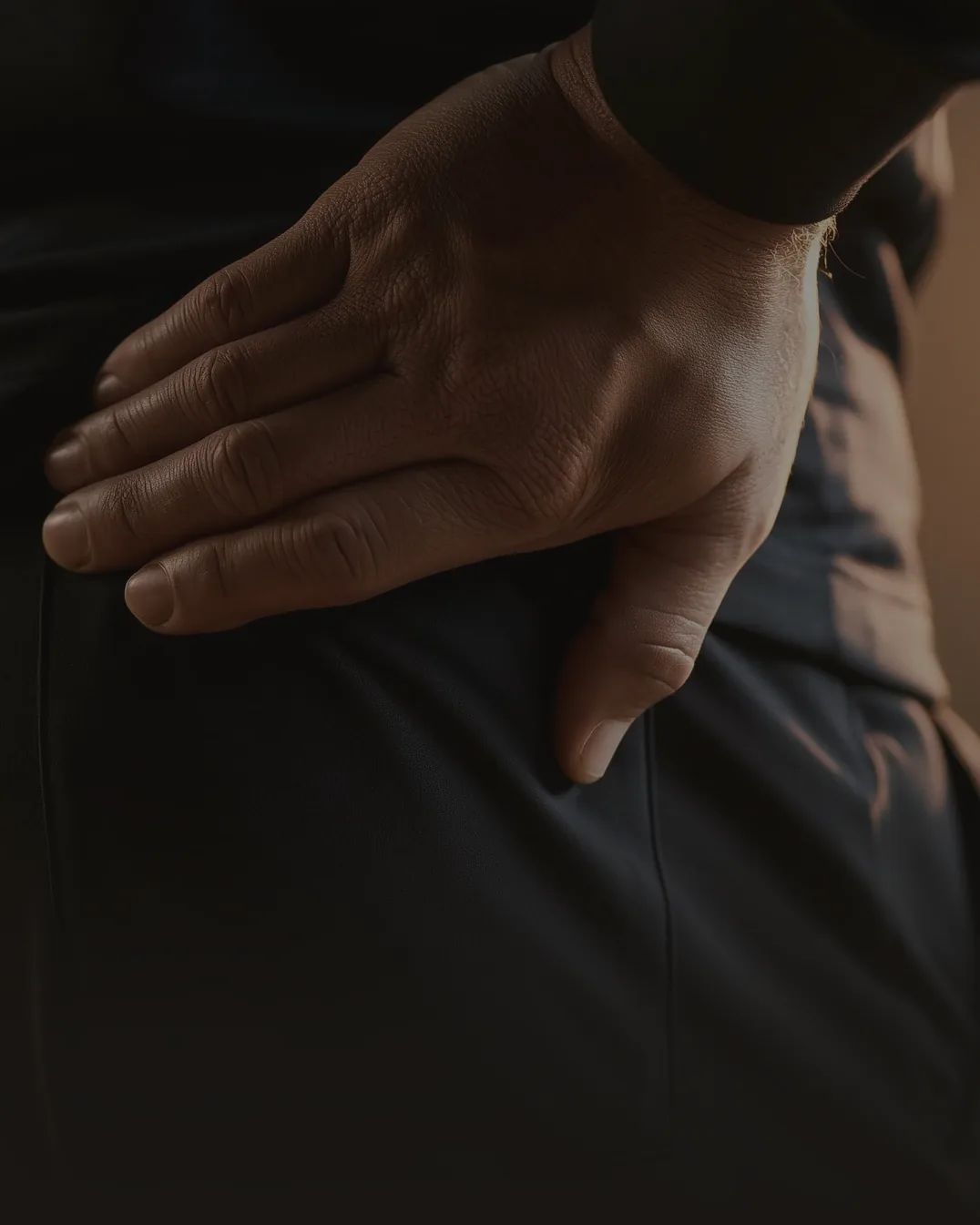
Hip and glute pain relief that starts
at the first visit.
Dry needling and acupuncture in one visit, releasing the piriformis and deep gluteal muscles that refer pain into the hip, buttock, and leg.
5.0 · 62 reviews on GoogleTreated, you sit through a meeting, drive an hour, and lie on that side without shifting.
Seek urgent medical care first for:
hip pain after a fall that keeps you from putting weight on the leg,
hip pain with fever,
new numbness in the groin or loss of bladder or bowel control,
unexplained weight loss, or pain that wakes you and does not ease with position,
or a hot, swollen hip.
First visits are typically $300, follow-ups $250. Acunatomy is out-of-network with all plans; HSA and FSA cards are accepted, and a superbill is provided for reimbursement. Coverage and costs, explained.
"Since I have been seeing Eugene for acupuncture therapy, I have gotten a significant amount of pain relief from osteoarthritis in my hip and lower back. After each session my pain and discomfort diminish. He is an extremely knowledgeable and dedicated professional."
Does acupuncture help hip and glute pain?
Yes. In a randomized trial, three sessions of ultrasound-guided dry needling of the piriformis lowered buttock pain by a clinically meaningful margin within one week. Trigger points in the piriformis, gluteus medius and minimus, and TFL refer pain into the buttock and outer hip and restrict rotation. Dry needling releases the deep gluteal muscles and hip flexors, restoring rotation and stride, and acupuncture reduces the pain and inflammation.
Tabatabaiee et al., Muscle & Nerve, 2019
A typical treatment timeline.
Sitting tolerance and walking comfort typically improve between visits.
What resolution looks like for your hip.
Shifting in your chair every few minutes.
Sitting without adjusting.
Foam rolling that never reaches it.
Deep ache, gone.
Stiff after a long drive.
Out of the car and walking.
Common questions about hip and glute pain treatment.
Joint pain sits in the groin or the front of the hip and worsens with weight bearing and rotation. Buttock and outer-hip pain that worsens with sitting points to the gluteal muscles. In 877 people scanned for outer-hip pain labeled bursitis, 80 percent had no bursitis; half had changes in the gluteal muscles and tendons. The first visit assesses the muscular layer, and if the joint is the driver you are told so.
Piriformis syndrome is a deep gluteal muscle in sustained contraction pressing on the sciatic nerve, producing buttock pain and symptoms down the leg that mimic disc-related sciatica. Dry needling reaches the piriformis at full depth: in a randomized trial, three sessions lowered the pain by a clinically meaningful margin within a week. Acupuncture reduces pain in the nerve the muscle presses on.
Sitting shortens the hip flexors and leaves the glutes unloaded for hours at a time. The gluteal muscles then grip against that shortening when you stand, and the trigger points in them produce the ache and stiffness in the first steps. Treating the pattern restores the muscles to their normal length, and patients typically notice easier sit-to-stand within the first two visits.
Because a glute that stays tight is a muscle held in protective contraction, and stretching pulls against that contraction instead of releasing it. Dry needling deactivates the trigger point directly, which stretching and rolling cannot do; the contraction releases because the muscle no longer has a reason to hold.
Yes. Deep gluteal syndrome is sciatic nerve entrapment by the deep rotators of the hip, the piriformis, obturator internus, and gemelli, producing buttock pain with symptoms down the leg. Dry needling releases those muscles at full depth, and acupuncture treats the nerve irritation that follows.
Groin or front-of-hip pain that worsens with weight bearing points to the hip joint. Buttock and outer-hip pain that worsens with sitting points to the gluteal muscles. Pain down the leg with numbness or tingling points to the low back. The first-visit assessment separates the three and treats what it finds.
Where does it hurt?
Or find it on the body →Your hip can
move freely again.
Let’s restore it.
5.0 · 62 reviews on Google
Out-of-Network Insurance Accepted: Horizon BCBS · Oxford · UnitedHealthcare · Cigna · Aetna · Self-Pay Available