Teres Minor: Pain Pattern and Treatment
The teres minor is the smallest of the four rotator cuff muscles. It turns the arm outward and holds the ball of the shoulder in its socket. Its documented pattern is a small, deep spot of pain at the back of the shoulder, exactly where the muscle attaches. Patients point to it with one finger. This page completes the cuff: the supraspinatus, infraspinatus, and subscapularis each have their own.
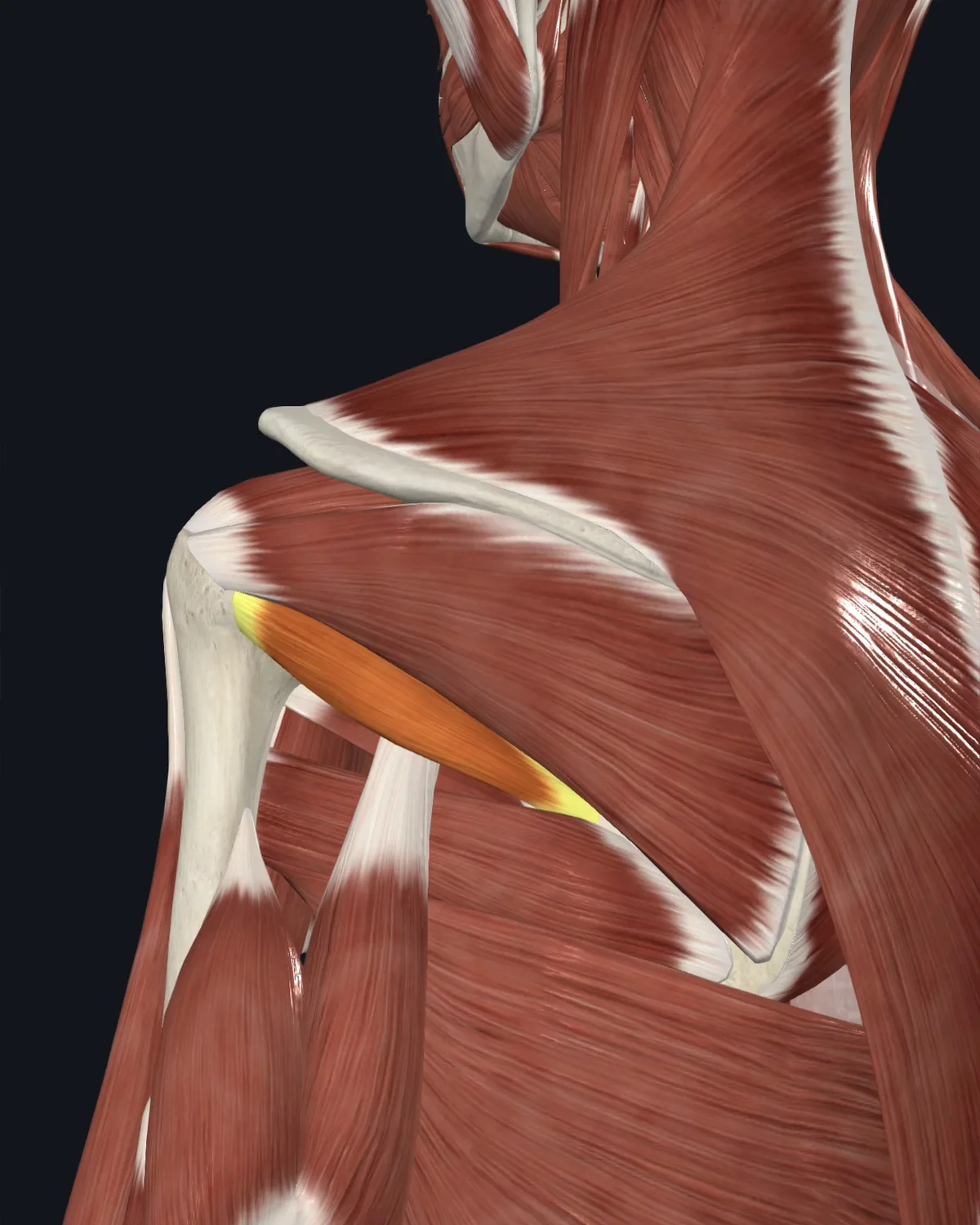
Attachments and action
Origin: The upper two thirds of the lateral border of the scapula, on its back surface.
Insertion: The lowest facet of the greater tubercle of the humerus and the joint capsule.
Action: Lateral rotation of the arm and stabilization of the humeral head in the socket during arm movement; it works only against resistance.
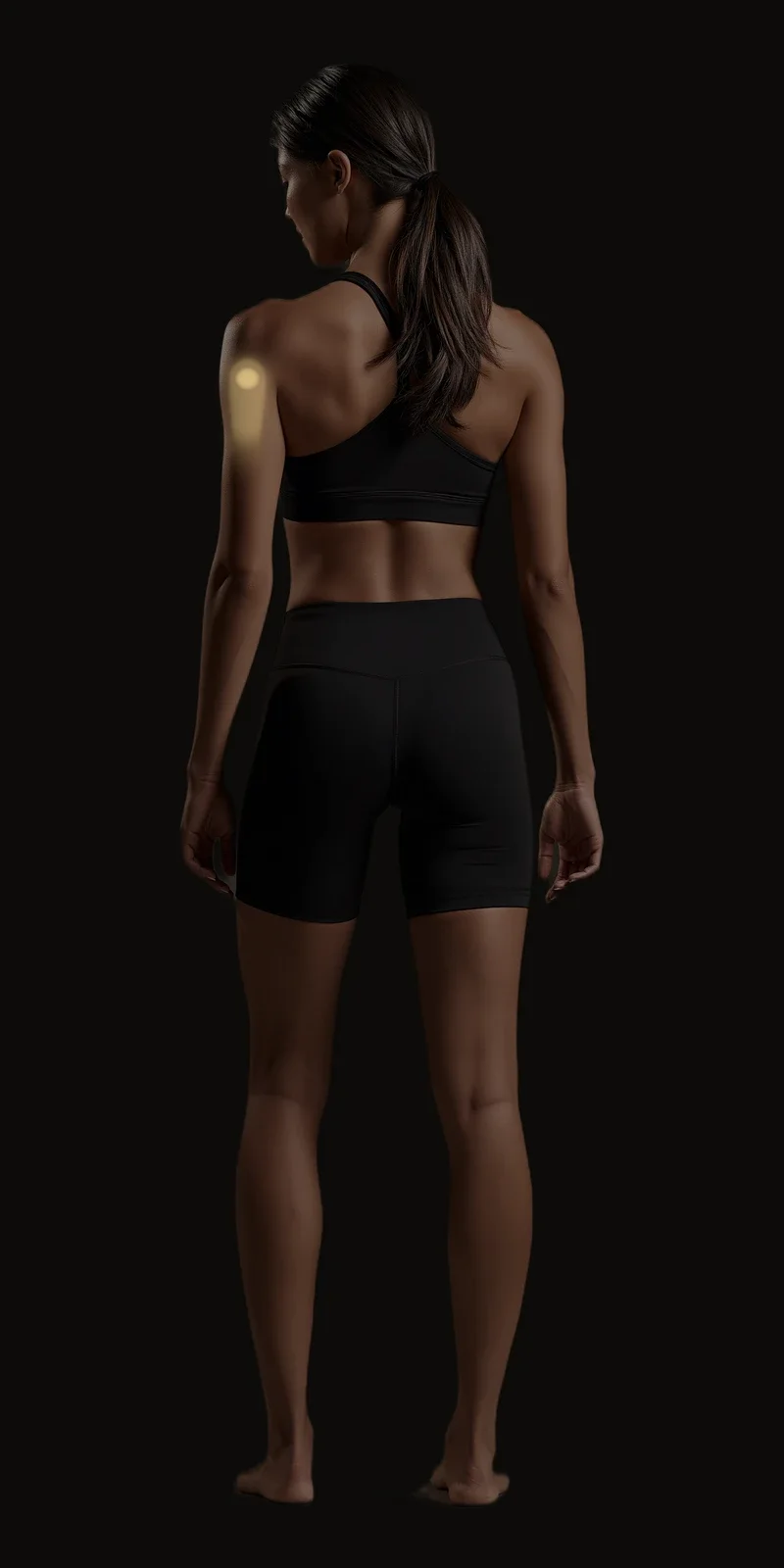
Where the pain is felt: One deep, coin-sized spot at the back of the shoulder, over the rear of the shoulder cap. It can spread a short way down the back of the arm. Some patients also report tingling in the ring and little fingers.
Common causes: Repeated reaching back, as in reaching to the back seat; throwing and racket sports; overhead pressing; a fall on the arm; any injury that involved the other cuff muscles first.
Patients say: “It is one spot, right here, and it is deep.” Pain reaching back for a seat belt. “The rest of my shoulder is fine, but this one point never goes away.”
When to get evaluated: A sudden loss of strength turning the arm outward after an injury needs orthopedic assessment for a cuff tear. Back-of-shoulder pain with chest pressure or shortness of breath needs cardiac evaluation before anything else.
How this muscle is examined and treated
Examination tests lateral rotation against resistance with the elbow at the side, then locates the muscle along the outer border of the blade below the infraspinatus. Needling here addresses the muscle at its attachment behind the shoulder. Assessment and treatment happen in the same visit.
Related conditions
Shoulder DysfunctionTendinitisSports & Performance Injuries
Treatment points: SI9 Jianzhen
This page is educational. It describes muscle referral patterns commonly associated with pain; it does not diagnose your condition. Individual patterns vary. For evaluation of your specific pain, see a licensed clinician. Seek immediate medical care for emergencies. Eugene Baek, L.Ac. · New Jersey License 25MZ00080600