Middle Trapezius: Pain Pattern and Treatment
The middle trapezius spans horizontally from the spine to the shoulder blade. Rounded-shoulder posture keeps this muscle overstretched, and its trigger points produce burning between the shoulder blades and an ache at the point of the shoulder.
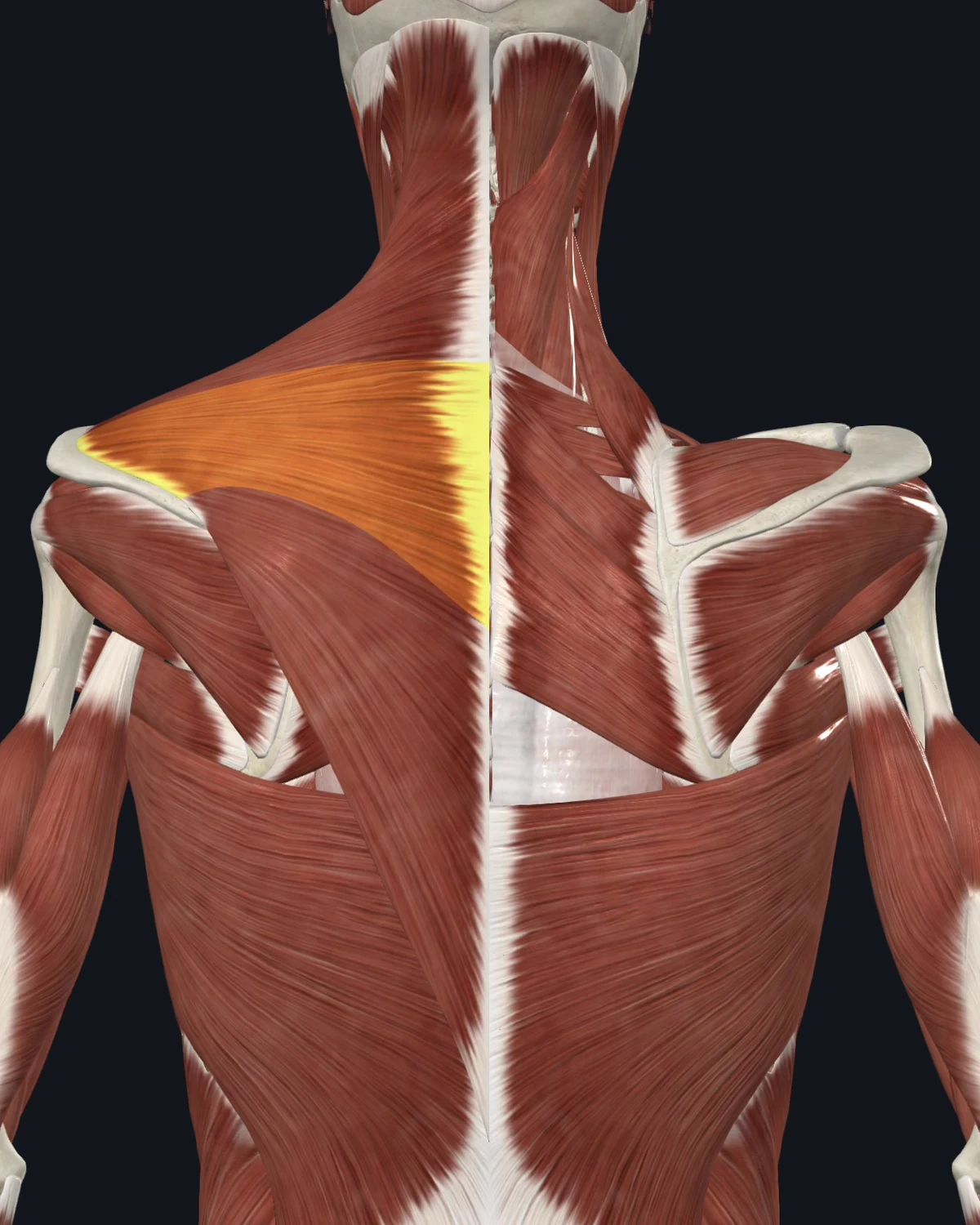
Attachments and action
Origin: The spinous processes of C7 through T3.
Insertion: The acromion and the spine of the scapula.
Action: Retraction of the scapula: holding the shoulder blade back against the forward pull of the chest muscles.
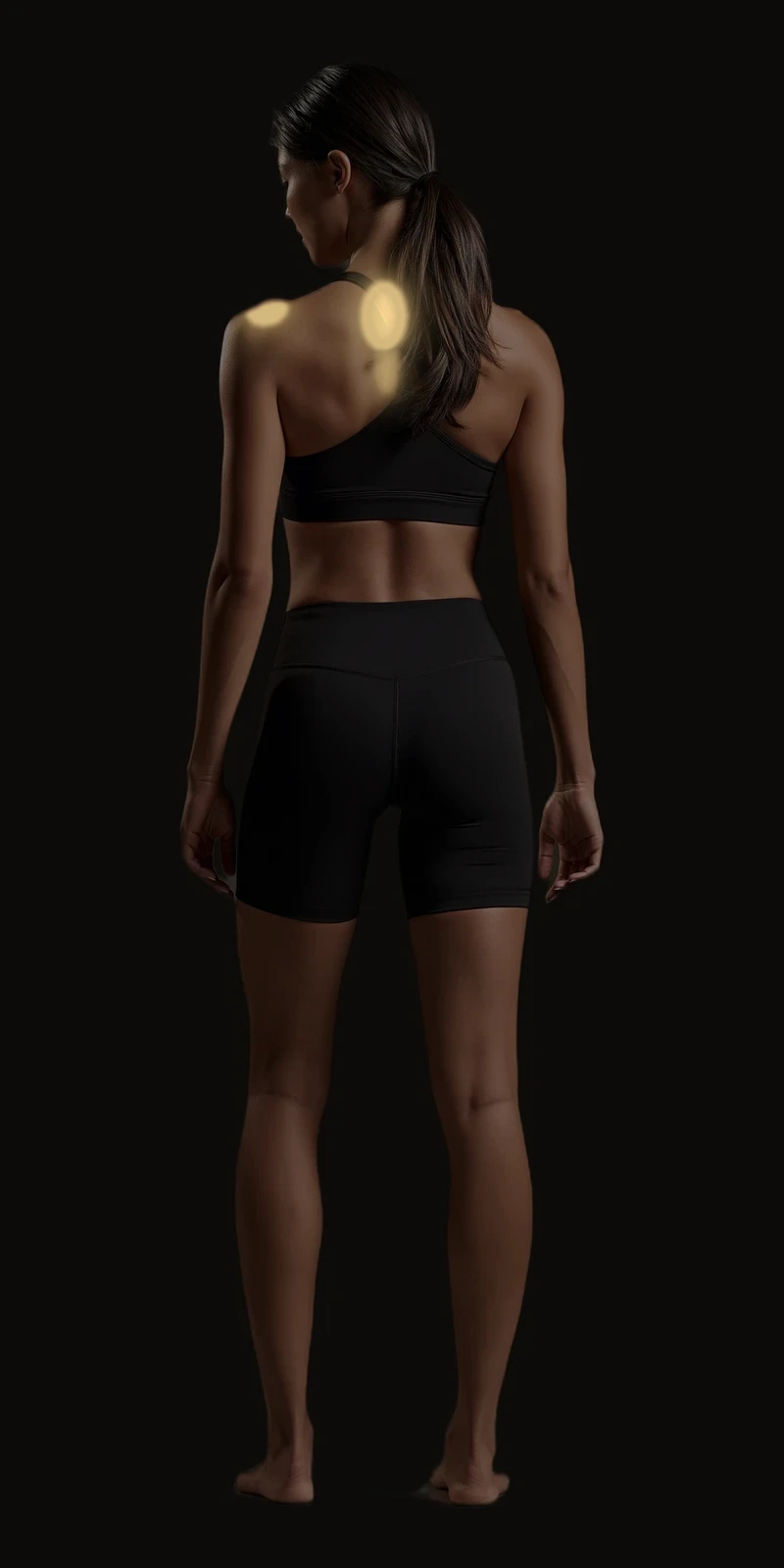
Where the pain is felt: TrP5 refers a superficial burning between the shoulder blade and the spine, flaring from the blade’s upper inner corner toward the base of the neck at C7–T1. TrP6 refers aching to the acromion, the bony point of the shoulder. TrP7 is unusual: it produces no pain, but triggers goosebumps rippling down the outer arm, which is described here instead of being shown on the figure. On the figure: the flame between blade and neck-base, and the teardrop on the shoulder point.
Common causes: Rounded-shoulder desk posture that keeps the muscle overstretched; sewing, driving, and laptop work with the arms held forward; tight pectoral muscles pulling the shoulders forward.
Patients say: “It burns between my shoulder blades after a day at the desk.” With the shoulder-point variant: “a bag strap on that shoulder is unbearable.”
When to get evaluated: Between-the-blades pain arriving with shortness of breath, chest pressure, or pain radiating to the jaw or arm needs urgent medical evaluation before any soft-tissue treatment.
How this muscle is examined and treated
Examination assesses resting shoulder posture and the balance between the chest and the mid-back. Shortened pectorals pull the shoulders forward and hold the middle trapezius overstretched, so treatment addresses both: needling the middle trapezius points and releasing the chest muscles that keep the trapezius strained. Assessment and treatment happen in the same visit.
Related conditions
Shoulder DysfunctionNeck & Cervical PainChronic Pain Patterns
This page is educational. It describes muscle referral patterns commonly associated with pain; it does not diagnose your condition. Individual patterns vary. For evaluation of your specific pain, see a licensed clinician. Seek immediate medical care for emergencies. Eugene Baek, L.Ac. · New Jersey License 25MZ00080600