Supinator: Pain Pattern and Treatment
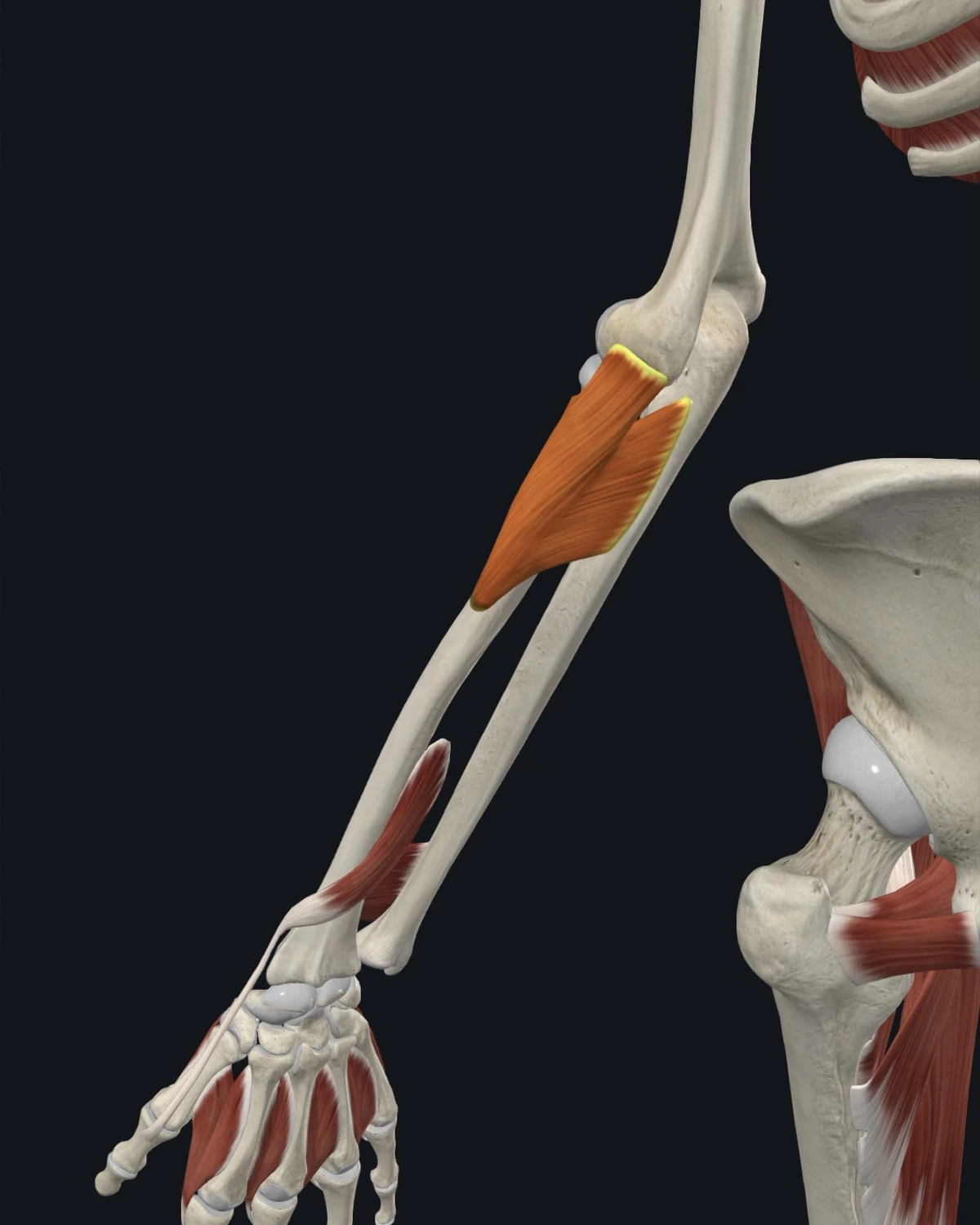
The supinator is a short, deep muscle that wraps around the upper third of the radius just below the elbow. It turns the palm up. Its documented pattern is pain at the outside of the elbow, the tennis elbow spot, and in the web of the thumb on the back of the hand. It is one of the muscles behind tennis elbow that persists after the tendon has been treated, and it is worst turning a doorknob, a key, or a screwdriver. It sits beneath the forearm extensor group, which has its own page.
Attachments and action
Origin: The lateral epicondyle of the humerus, the radial collateral and annular ligaments of the elbow, and the supinator crest of the ulna.
Insertion: The upper third of the radius, wrapping from the back to the front.
Action: Supination of the forearm, turning the palm up, at any elbow angle; it is the main supinator when the elbow is straight.
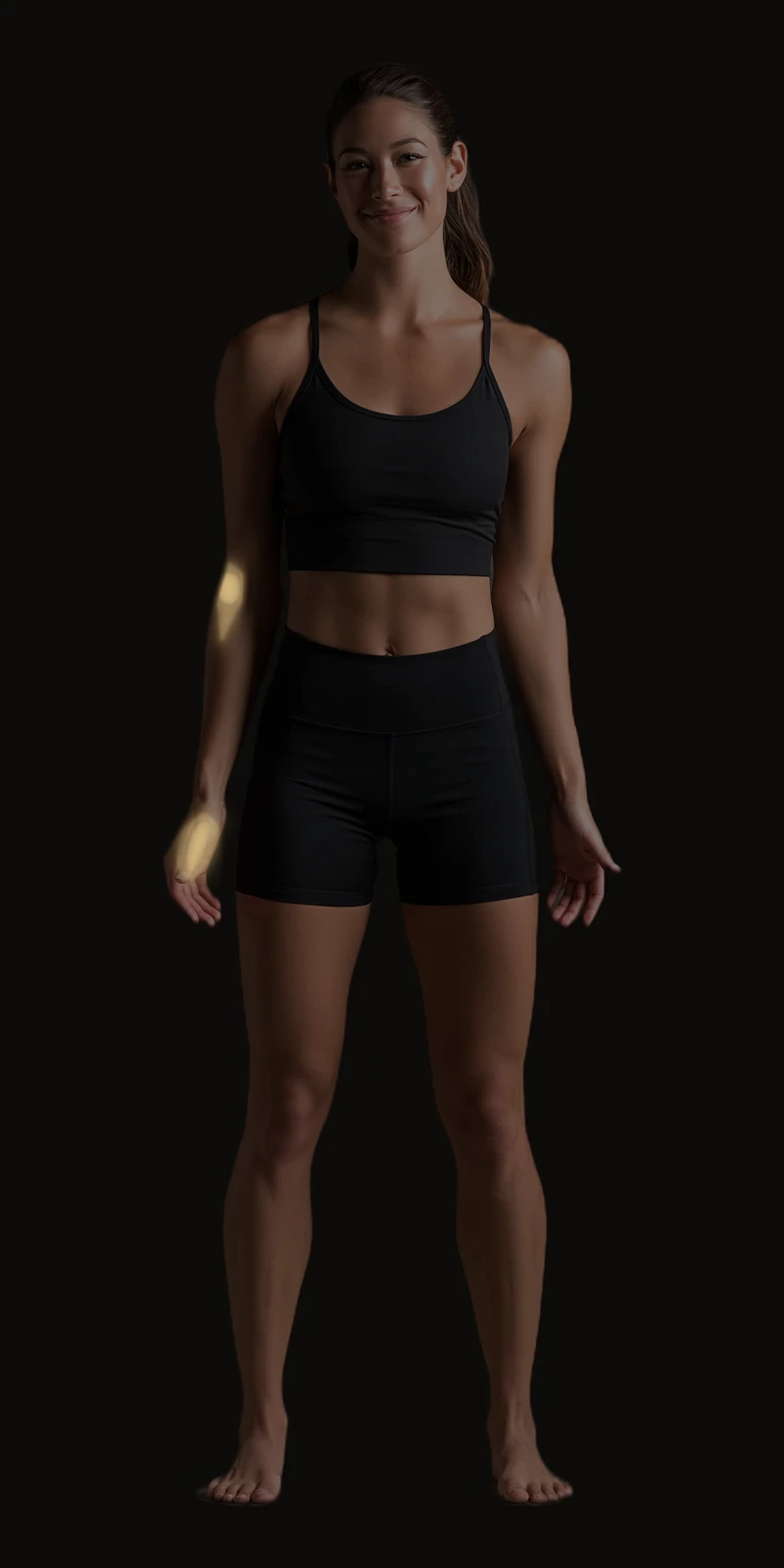
Where the pain is felt: At the bony point on the outside of the elbow. In the web of the thumb on the back of the hand. Sometimes along the back of the forearm between the two, and at the front of the elbow.
Common causes: Tennis, especially the backhand; turning a stiff key or doorknob many times a day; screwdriver work; carrying a heavy bag with the palm up; walking a dog that pulls; a keyboard and mouse with the forearm twisted.
Patients say: "They said tennis elbow, but the strap and the stretches did nothing." "Turning a doorknob is the worst." An ache in the web of my thumb. "I cannot shake hands without wincing."
When to get evaluated: Elbow pain after a fall, with swelling, a visible deformity, or an inability to bend or straighten the joint needs an X-ray first. Weakness lifting the fingers or thumb, or numbness in the hand, needs a nerve assessment.
How this muscle is examined and treated
Examination tests supination against resistance with the elbow straight and again bent, presses the muscle just below the outer elbow over the head of the radius for the point that reproduces the epicondyle and thumb-web pain, and checks finger extension for radial nerve involvement. Needling here addresses the muscle deep on the outside of the upper forearm, beneath the extensors. Assessment and treatment happen in the same visit.
Related conditions
TendinitisSports & Performance InjuriesChronic Pain Patterns
This page is educational. It describes muscle referral patterns commonly associated with pain; it does not diagnose your condition. Individual patterns vary. For evaluation of your specific pain, see a licensed clinician. Seek immediate medical care for emergencies. Eugene Baek, L.Ac. · New Jersey License 25MZ00080600