Palmaris Longus: Pain Pattern and Treatment
The palmaris longus is a slender muscle on the front of the forearm whose long tendon runs down the middle of the wrist into the palm, where it fans out as the palmar fascia. About one person in seven does not have it. Its documented pattern is unusual: a prickling, needle-like pain in the middle of the palm and the base of the thumb rather than a deep ache. It is the muscle behind a palm that hurts to grip a steering wheel, a racquet, or a tool, and it keeps company with Dupuytren contracture. This is a sub-page of the forearm flexor group page.
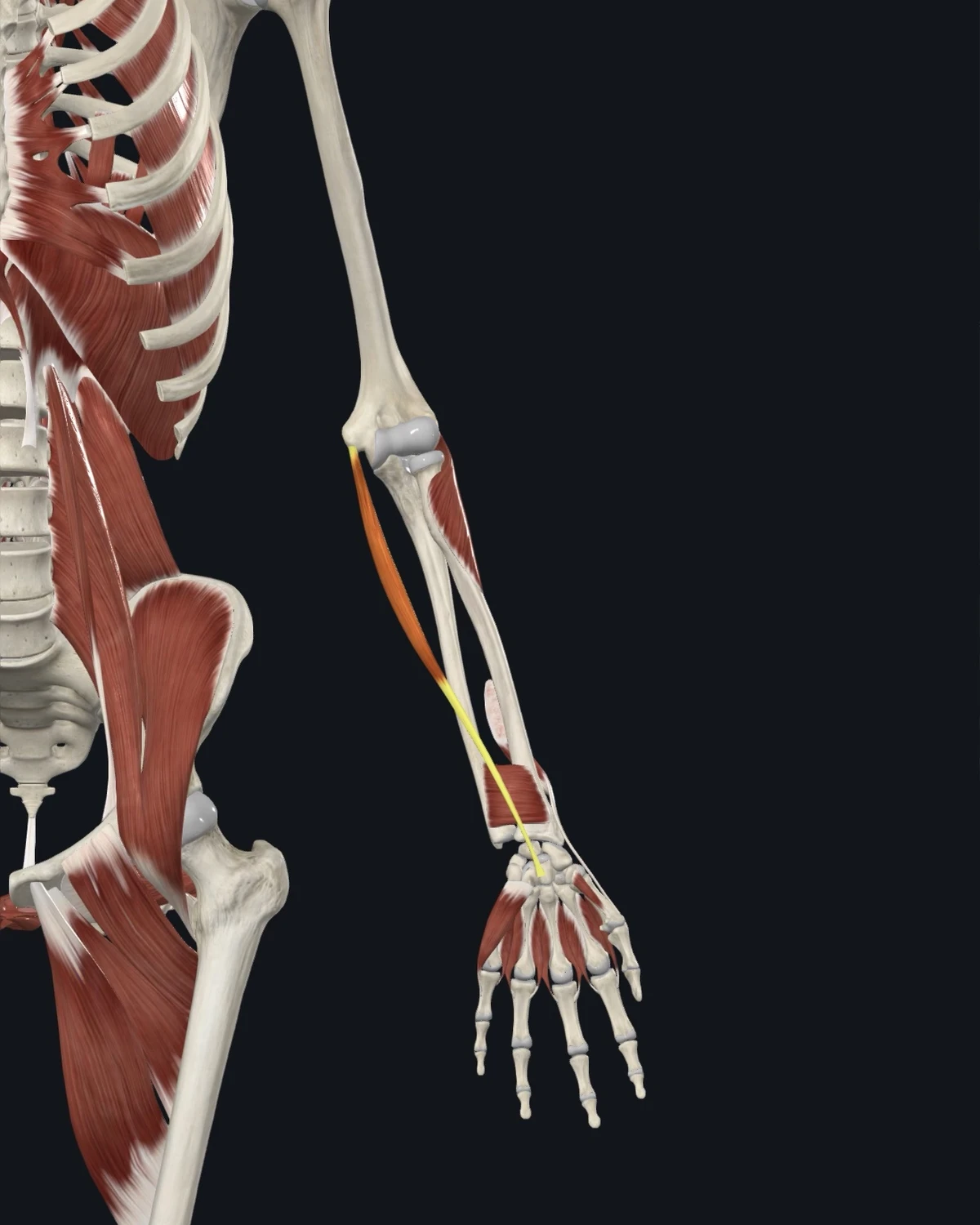
Attachments and action
Origin: The medial epicondyle of the humerus, through the common flexor tendon.
Insertion: The flexor retinaculum and the palmar aponeurosis.
Action: Tenses the palmar fascia; weakly flexes the wrist.
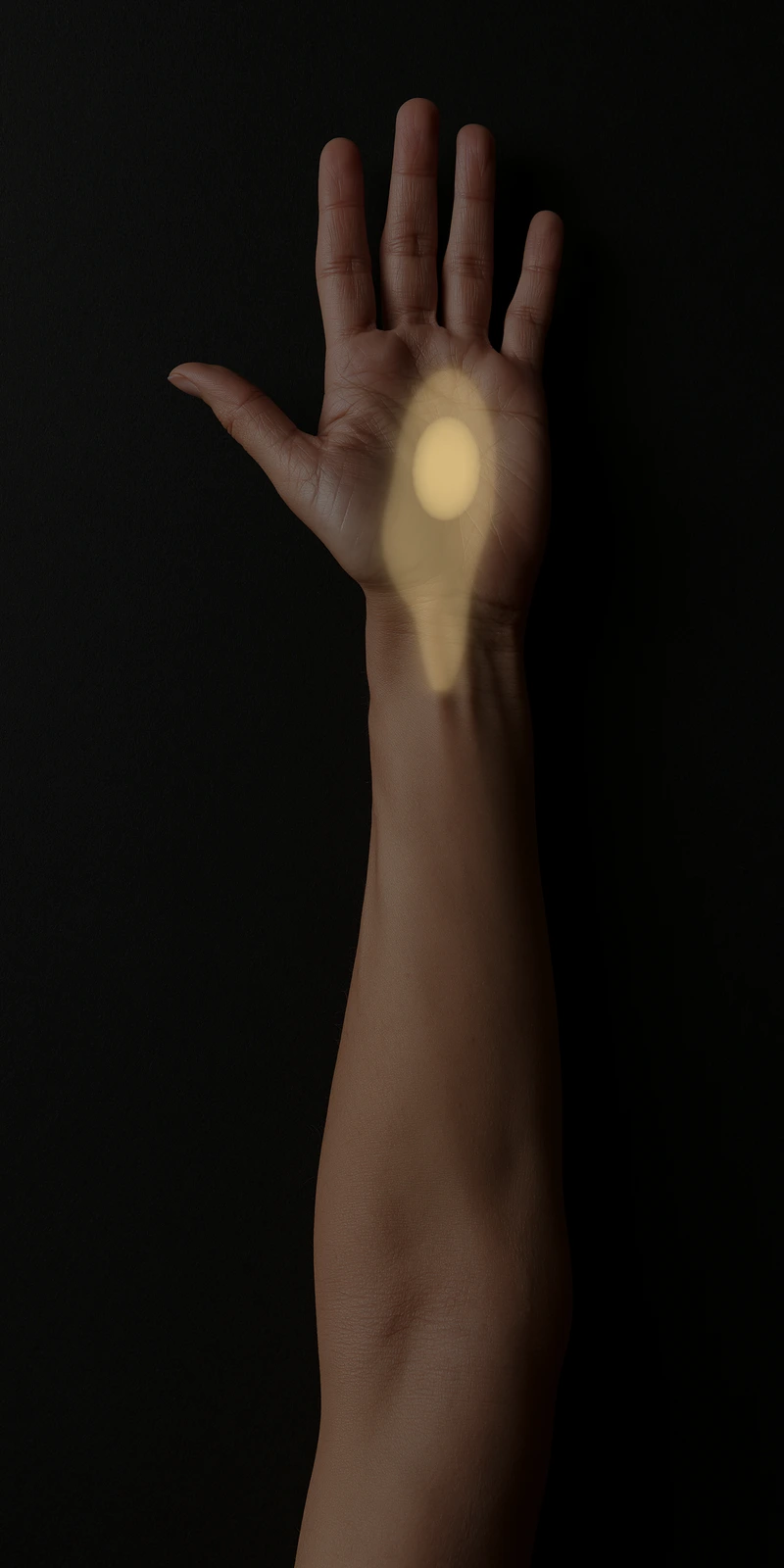
Where the pain is felt: In the middle of the palm, prickling and superficial. Toward the base of the thumb. The front of the forearm just above the wrist.
Common causes: Gripping a steering wheel, handlebars, or a racquet for hours; hand tools that press into the palm; a fall onto the heel of the hand; rowing and climbing; a cast that held the wrist bent.
Patients say: "It feels like needles in my palm." "Holding the steering wheel hurts my palm." A tender spot in the middle of the palm that a massage ball did not fix. "My palm is tight and I cannot flatten my hand."
When to get evaluated: A firm cord or nodule in the palm with a finger that will not straighten is Dupuytren contracture and needs a hand assessment for the contracture itself. Palm pain after a fall on the hand, with wrist swelling, needs an X-ray first. Numbness in the fingers with weakness needs a nerve assessment.
How this muscle is examined and treated
Examination has you cup the palm and flex the wrist to raise the tendon, then presses the muscle belly in the upper forearm for the point that reproduces the prickling in the palm, and checks the palm for cords and nodules. Needling here addresses the muscle in the front of the upper forearm, not the palm. Assessment and treatment happen in the same visit.
Related conditions
TendinitisChronic Pain PatternsSports & Performance Injuries
This page is educational. It describes muscle referral patterns commonly associated with pain; it does not diagnose your condition. Individual patterns vary. For evaluation of your specific pain, see a licensed clinician. Seek immediate medical care for emergencies. Eugene Baek, L.Ac. · New Jersey License 25MZ00080600