Flexor Pollicis Longus: Pain Pattern and Treatment
The flexor pollicis longus is a deep muscle on the thumb side of the front of the forearm whose tendon runs through the wrist to the tip of the thumb. It bends the last joint of the thumb and is the muscle behind every press of the thumb tip. Its documented pattern is pain along the palm side of the thumb to the tip, concentrated in the pad. It is the muscle behind thumb-tip pain from writing, texting, and gripping a knife, and the thumb itself is normal on examination. This is a sub-page of the forearm flexor group page; it relates to the thumb muscles page.
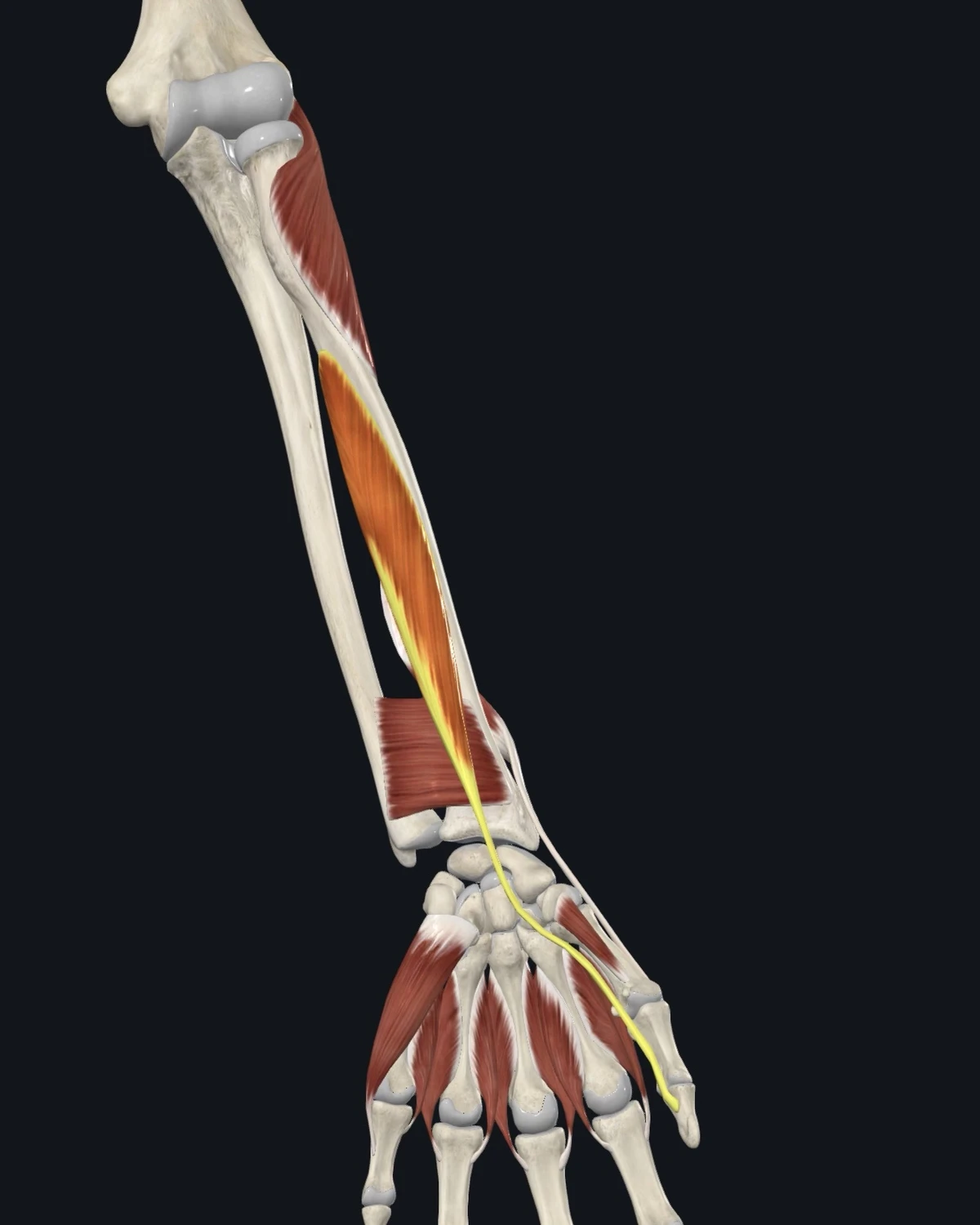
Attachments and action
Origin: The front of the radius below the radial tuberosity and the adjacent interosseous membrane, with a variable small head from the medial epicondyle or the coronoid process.
Insertion: The base of the distal phalanx of the thumb.
Action: Flexion of the thumb at the last joint, then at the base; it assists wrist flexion.
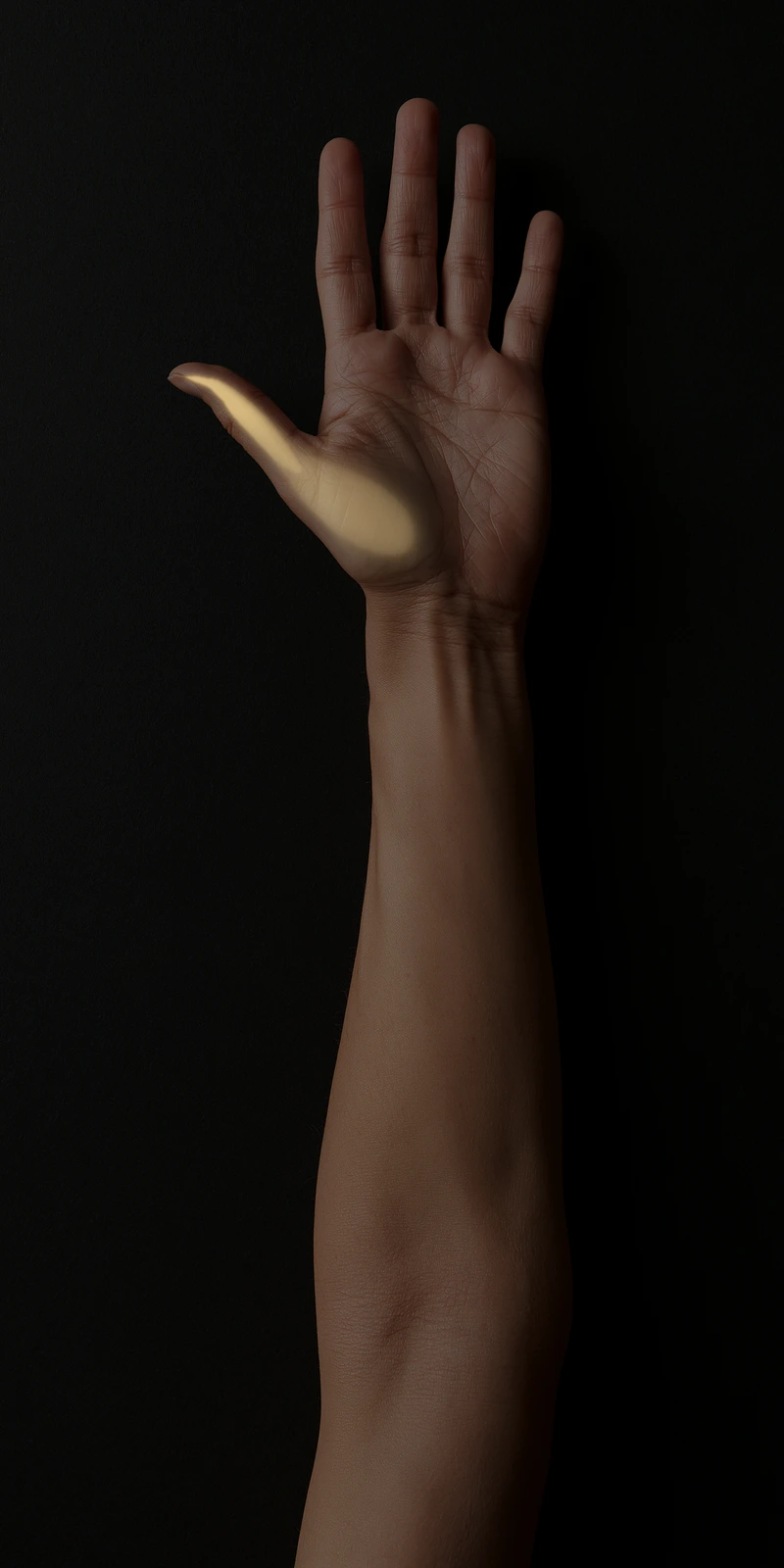
Where the pain is felt: Along the palm side of the thumb from the base to the tip. Strongest in the last joint and the pad. Sometimes the fleshy mound at the base of the thumb.
Common causes: Writing for hours; texting and scrolling with the thumb; pressing a phone screen or a stylus; chopping and knife work; gripping a racquet or a steering wheel with the thumb pressed in; pruning shears; a cast that held the thumb still.
Patients say: "The tip of my thumb aches after writing." "Texting sets it off." A thumb pad that hurts to press a button. "The hand doctor said the thumb is fine."
When to get evaluated: Thumb pain after a fall on the hand, especially with tenderness in the hollow at the base of the thumb, needs an X-ray for a scaphoid fracture first. A thumb that locks or clicks when bending points to a trigger thumb and needs a hand assessment. A thumb tip that goes numb with cold and white needs a circulation assessment.
How this muscle is examined and treated
Examination tests flexion of the last joint of the thumb against resistance with the base held still, presses the deep muscle on the thumb side of the front of the forearm for the point that reproduces the pain in the thumb pad, and checks the thumb joints and the base of the thumb to separate this from arthritis and a trigger thumb. Needling here addresses the muscle deep in the front of the forearm, not the thumb. Assessment and treatment happen in the same visit.
Related conditions
TendinitisChronic Pain PatternsSports & Performance Injuries
This page is educational. It describes muscle referral patterns commonly associated with pain; it does not diagnose your condition. Individual patterns vary. For evaluation of your specific pain, see a licensed clinician. Seek immediate medical care for emergencies. Eugene Baek, L.Ac. · New Jersey License 25MZ00080600