Extensor Digitorum: Pain Pattern and Treatment
The extensor digitorum runs down the middle of the back of the forearm and splits into four tendons, one to the back of each finger. It straightens the fingers and lifts them off a keyboard, a fretboard, or a steering wheel. Its documented pattern is pain down the back of the forearm, across the back of the hand, and into the back of one finger, the middle or the ring finger. It is the muscle behind fingers that are stiff in the morning and ache to make a fist when the joints themselves are normal. This is a sub-page of the forearm extensor group page.
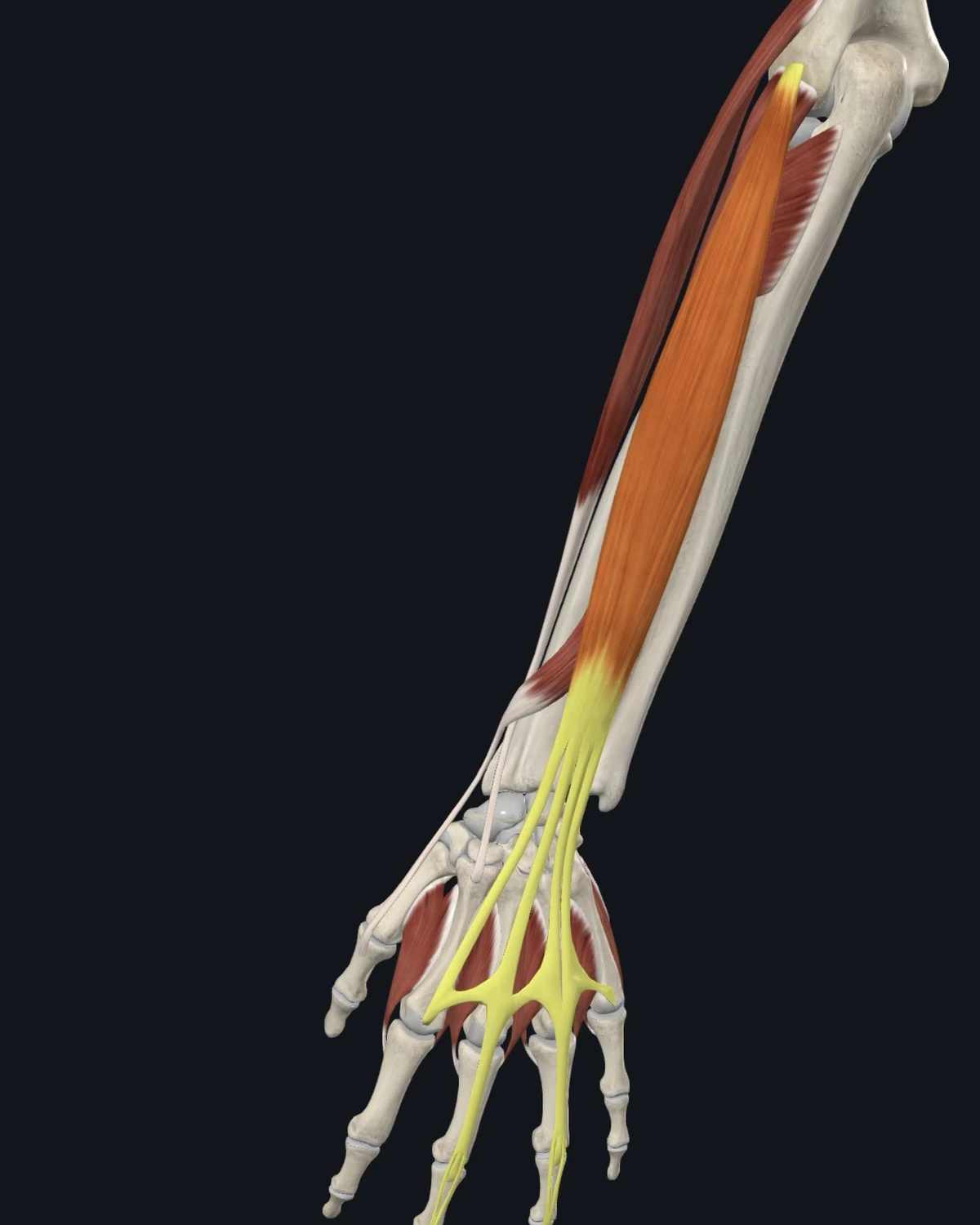
Attachments and action
Origin: The lateral epicondyle of the humerus through the common extensor tendon.
Insertion: The extensor expansions on the backs of the four fingers, to the middle and distal phalanges.
Action: Extension of the four fingers at the knuckles and, through the expansions, at the finger joints; it assists wrist extension.
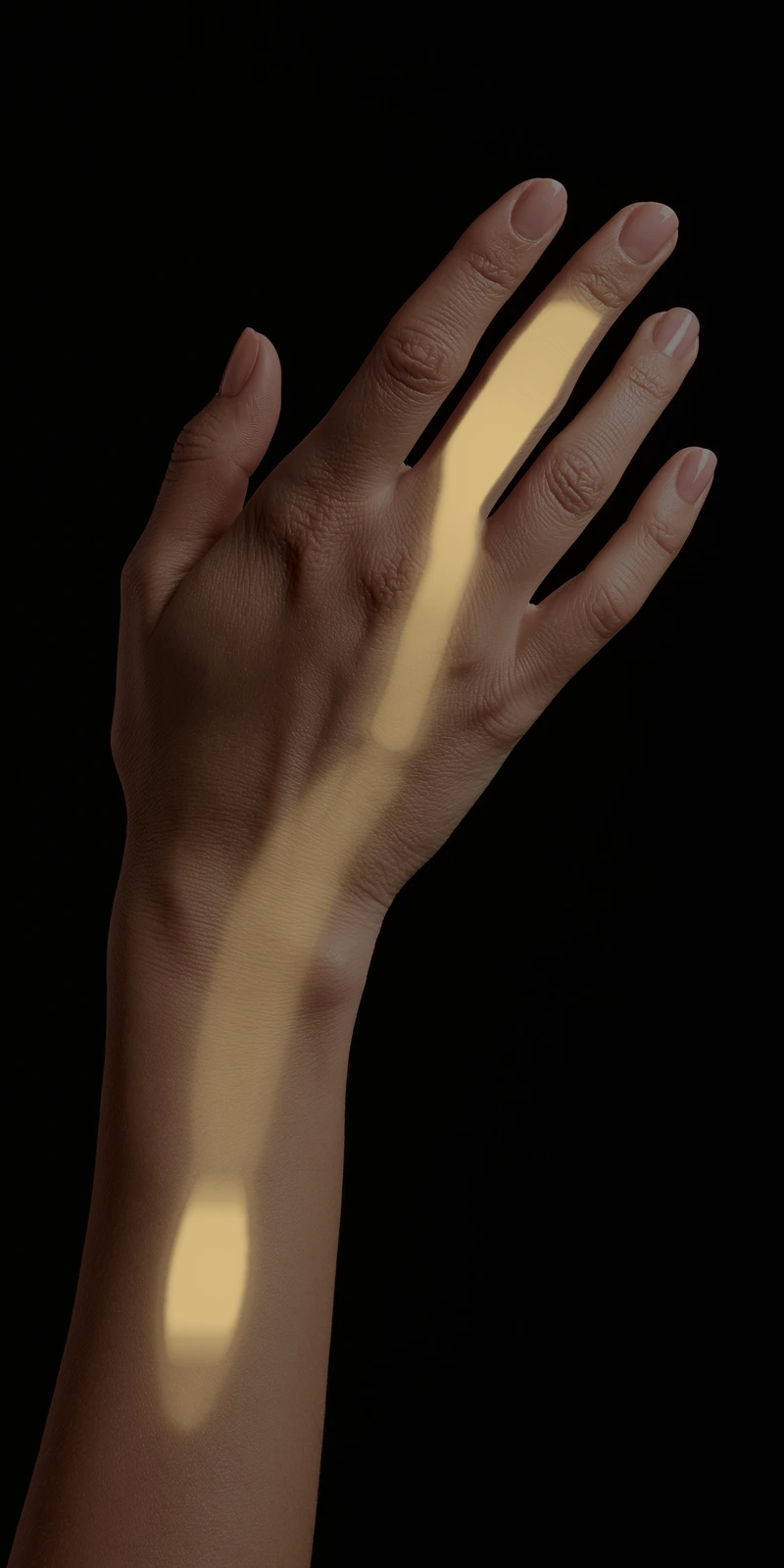
Where the pain is felt: Down the back of the forearm. Across the back of the hand and into the back of one finger, the middle or the ring finger, to its middle joint. Sometimes the outer elbow.
Common causes: Typing and mousing with the fingers held up; guitar and piano; a steering wheel gripped hard; hammering; racquet sports; hairdressing scissors; any grip that holds the fingers extended against a load.
Patients say: "My middle finger aches and the joint is normal." "My fingers are stiff every morning." Pain making a fist after a day at the keyboard. "It runs from my forearm into one finger."
When to get evaluated: Finger joints that are swollen, warm, and stiff for more than an hour in the morning, in several fingers or both hands, need medical evaluation for inflammatory arthritis. A finger that will not straighten after a jam or a cut needs a hand assessment for a tendon injury. Numbness or weakness lifting the fingers needs a nerve assessment.
How this muscle is examined and treated
Examination tests extension of each finger against resistance, which finds the slip that hurts, presses the muscle down the middle of the back of the upper forearm for the point that reproduces the pain into that finger, and checks the finger joints to separate this from arthritis. Needling here addresses the muscle in the back of the forearm, not the finger. Assessment and treatment happen in the same visit.
Related conditions
TendinitisChronic Pain PatternsSports & Performance Injuries
This page is educational. It describes muscle referral patterns commonly associated with pain; it does not diagnose your condition. Individual patterns vary. For evaluation of your specific pain, see a licensed clinician. Seek immediate medical care for emergencies. Eugene Baek, L.Ac. · New Jersey License 25MZ00080600