Forearm Extensor Group: Pain Pattern and Treatment
The extensor group covers the back of the forearm and lifts the wrist and fingers. Its documented patterns concentrate at the outer elbow and the back of the wrist, with a spread over the back of the forearm and, from the finger extensors, a line into the middle finger. This group is the classic source of tennis elbow.
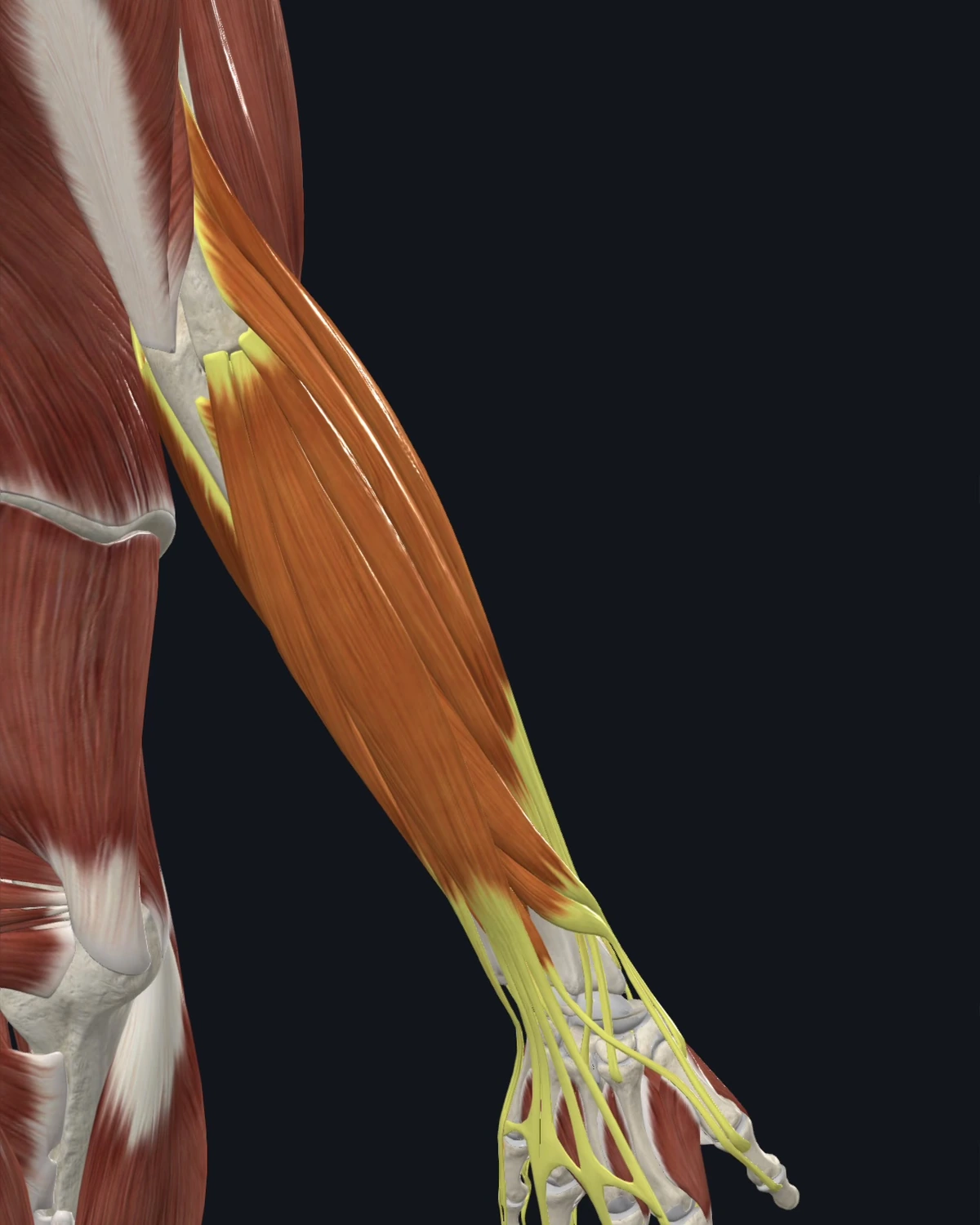
Attachments and action
Origin: The lateral epicondyle of the humerus through the common extensor tendon; the extensor carpi radialis longus arises from the ridge just above it.
Insertion: The bases of the second and third metacarpals (radial wrist extensors), the base of the fifth metacarpal (extensor carpi ulnaris), and the extensor expansions of the fingers (extensor digitorum).
Action: Extension of the wrist and fingers and side-to-side deviation of the wrist; the group stabilizes the wrist during every grip.
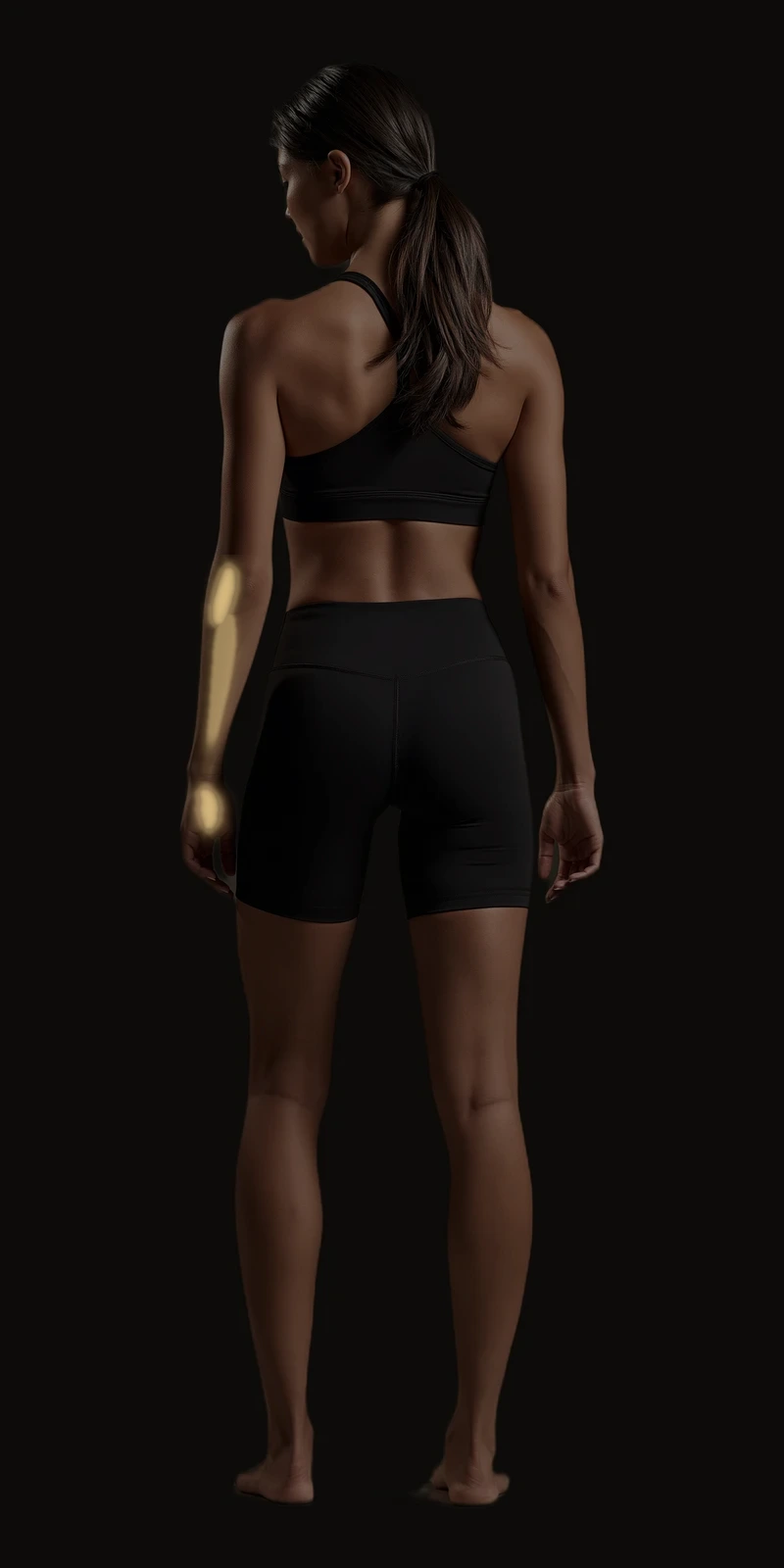
Where the pain is felt: At the outer elbow and the back of the wrist, spreading over the back of the forearm; the finger extensors add a line down the back of the hand into the middle finger.
Common causes: Gripping and lifting with the palm down, keyboard and mouse work, racket sports, wringing and scrubbing, unaccustomed tool use.
Patients say: “Tennis elbow.” A sore back of the wrist after a day of typing. Pain shaking hands or lifting a coffee pot.
When to get evaluated: Outer-elbow pain with true joint swelling, locking, or numbness into the hand gets orthopedic and nerve assessment before needling.
How this muscle is examined and treated
Examination tests resisted wrist and middle-finger extension, the standard tennis-elbow provocations, and maps the extensor bellies below the outer elbow for the points that reproduce the familiar ache. Needling addresses the group directly over the dorsal forearm. Assessment and treatment happen in the same visit.
Related conditions
TendinitisSports & Performance InjuriesChronic Pain Patterns
Treatment points: Forearm extensor motor points, LI11 Quchi, LI10 Shousanli, TE5 Waiguan
This page is educational. It describes muscle referral patterns commonly associated with pain; it does not diagnose your condition. Individual patterns vary. For evaluation of your specific pain, see a licensed clinician. Seek immediate medical care for emergencies. Eugene Baek, L.Ac. · New Jersey License 25MZ00080600