Lumbricals of the Hand: Pain Pattern and Treatment
The lumbricals are four slender muscles in the palm that arise from the tendons of the long finger flexors and pass to the backs of the fingers. They bend the knuckles while straightening the finger joints, the shape of a hand holding a pen or resting on a keyboard. Their documented pattern is the pattern of the deep hand muscles: pain along the side of one finger, palm side and back, from the knuckle to the tip. They are the muscles behind finger pain in writers, typists, and musicians when the joints are normal, and they sit in the palm, not the finger. They relate to the thumb muscles page and the interossei of the hand page.
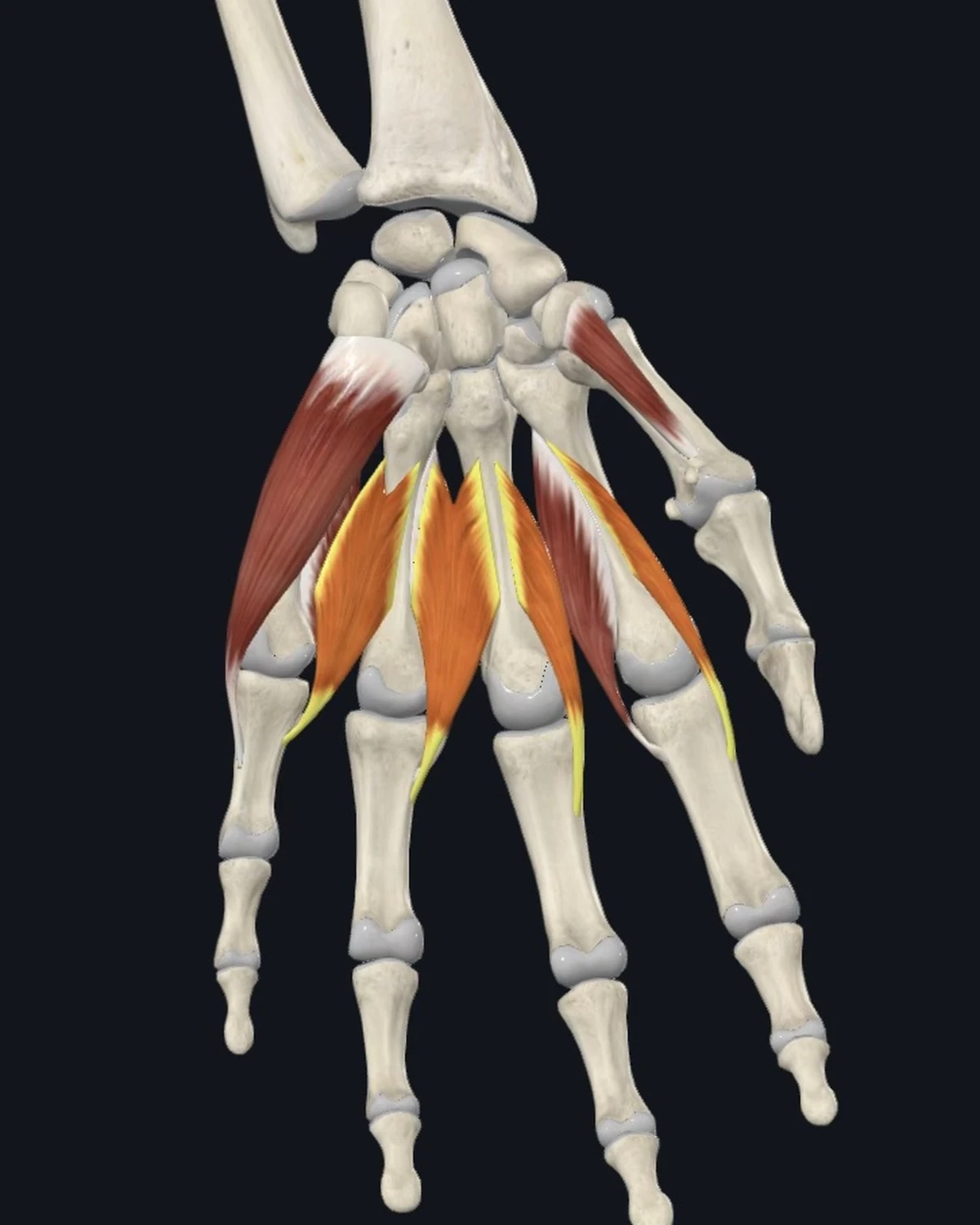
Attachments and action
Origin: The tendons of the flexor digitorum profundus in the palm; the first and second from one tendon each, the third and fourth from two.
Insertion: The extensor expansions on the backs of the second through fifth fingers.
Action: Flexion of the fingers at the knuckles with extension at the finger joints; they place the fingers for fine work.
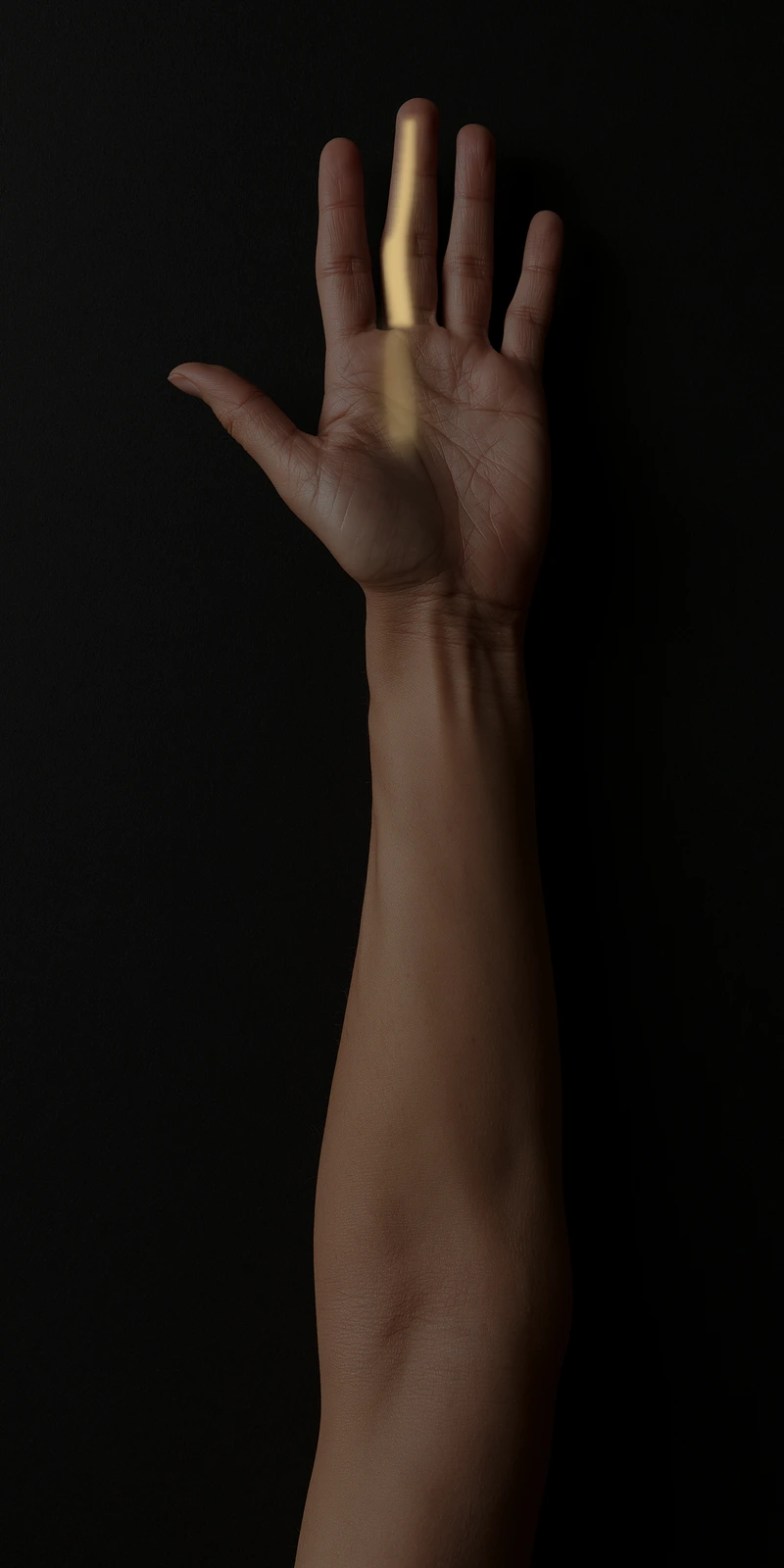
Where the pain is felt: Along the side of one finger, from the knuckle to the tip, on the palm side and the back. In the palm below that finger. Worst holding a pen, a phone, or a keyboard position, and flattening the hand.
Common causes: Writing for hours; typing and mousing; playing a stringed or keyboard instrument; knitting and needlework; gripping a phone in the writing position; a cast that held the fingers bent.
Patients say: "It hurts along the side of my middle finger after writing." "The joint is fine, the doctor says." An ache in my palm below the finger. "I cannot flatten my hand on the table."
When to get evaluated: Finger joints that are swollen, warm, and stiff for more than an hour in the morning, in several fingers or both hands, need medical evaluation for inflammatory arthritis. A finger that clicks or locks when bending points to a trigger finger and needs a hand assessment. Numbness in the fingers with weakness needs a nerve assessment.
How this muscle is examined and treated
Examination tests the writing position against resistance, knuckles bent and finger joints straight, then presses the palm between the long flexor tendons below the painful finger for the point that reproduces the pain along it, and checks the finger joints and the tendons to separate this from arthritis and a trigger finger. Needling here addresses the slender muscles in the palm, shallow, between the tendons. Assessment and treatment happen in the same visit.
Related conditions
TendinitisChronic Pain PatternsSports & Performance Injuries
This page is educational. It describes muscle referral patterns commonly associated with pain; it does not diagnose your condition. Individual patterns vary. For evaluation of your specific pain, see a licensed clinician. Seek immediate medical care for emergencies. Eugene Baek, L.Ac. · New Jersey License 25MZ00080600