Splenius Cervicis: Pain Pattern and Treatment
The splenius cervicis is the lower strap of the two splenius muscles. It runs from the upper thoracic spine to the sides of the upper neck vertebrae and turns the neck to its own side. Its documented pattern is unusual: pain that goes through the head to the back of the eye, sometimes with blurred vision, and a second pattern at the angle of the neck. It is a common finding in a neck that will not turn all the way.
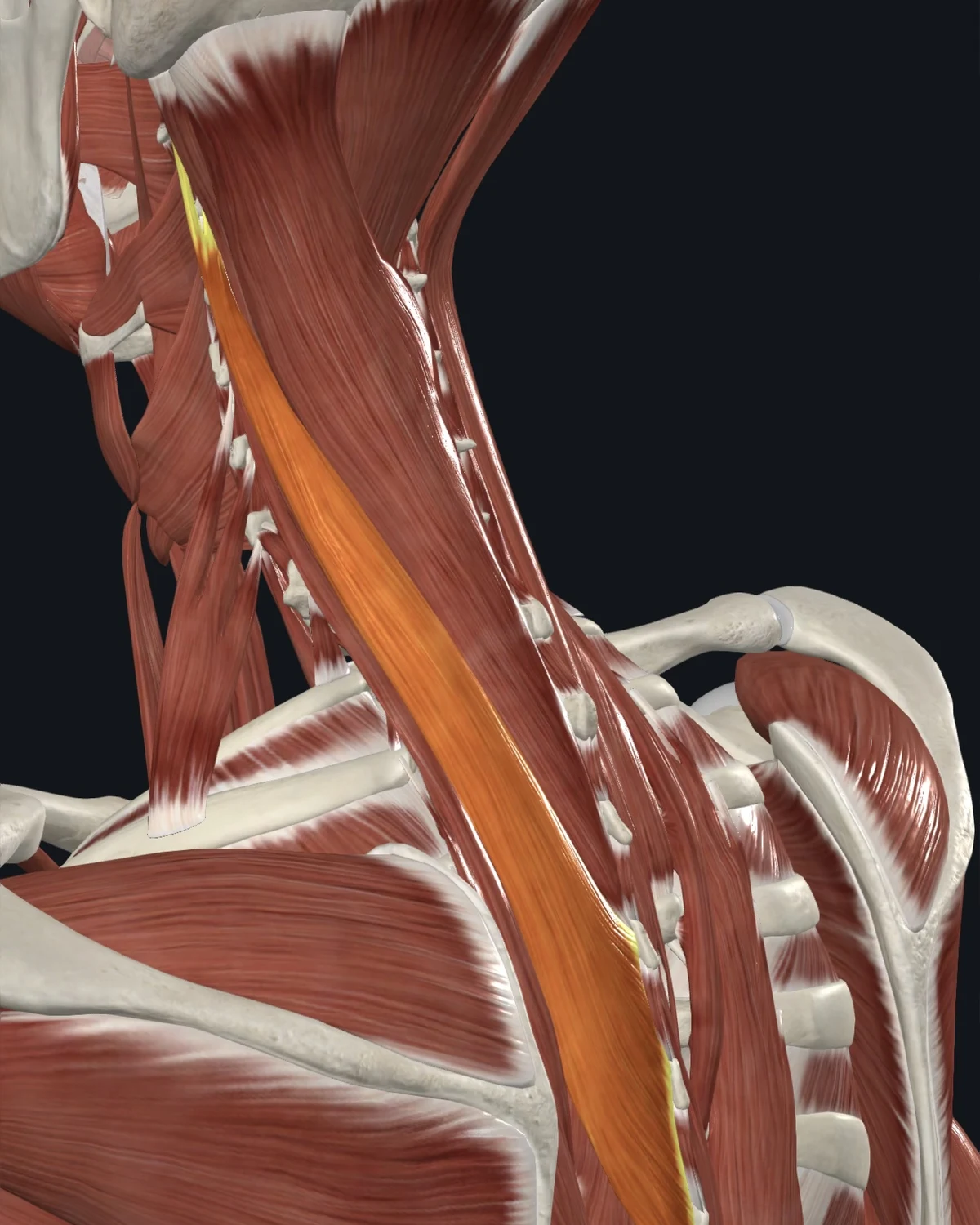
Attachments and action
Origin: The spinous processes of the third through sixth thoracic vertebrae.
Insertion: The posterior tubercles of the transverse processes of the first three cervical vertebrae.
Action: Extension of the neck; with one side working, rotation and side-bending of the neck to the same side.
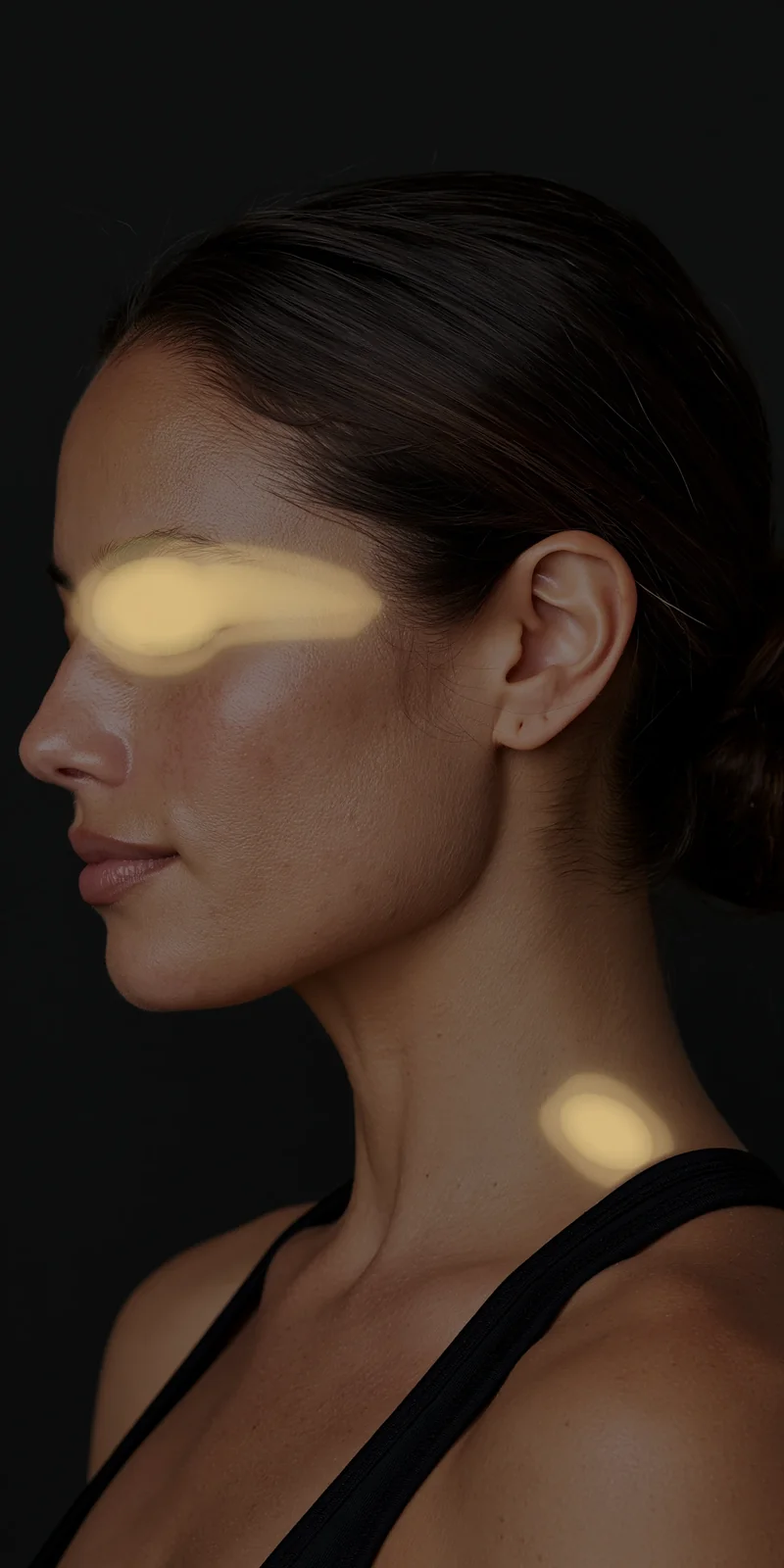
Where the pain is felt: Through the head to the back of the eye on the same side, with pressure behind the eye and sometimes blurred vision. At the angle of the neck, where the neck meets the shoulder. Sometimes the back of the head.
Common causes: A head held turned for hours; forward-head posture; a cold draft on the neck; whiplash; overhead work with the neck extended; craning to see a screen off to one side.
Patients say: "It feels like it is behind my eye." "My vision goes blurry on that side when the neck is bad." A stiff neck that stops short turning to one side. An ache right where the neck meets the shoulder.
When to get evaluated: Pain behind the eye with sudden vision loss, a drooping eyelid, a headache that is the worst of your life, or fever and a stiff neck needs emergency evaluation. Eye pain with redness or halos around lights needs an eye examination first.
How this muscle is examined and treated
Examination measures rotation to each side, then presses the muscle at the angle of the neck and higher, just below the splenius capitis, for the point that sends pain behind the eye. Needling here addresses the muscle at the side of the neck. Assessment and treatment happen in the same visit.
Related conditions
Headaches & MigrainesNeck & Cervical PainChronic Pain Patterns
This page is educational. It describes muscle referral patterns commonly associated with pain; it does not diagnose your condition. Individual patterns vary. For evaluation of your specific pain, see a licensed clinician. Seek immediate medical care for emergencies. Eugene Baek, L.Ac. · New Jersey License 25MZ00080600