Longus Colli and Longus Capitis: Pain Pattern and Treatment
The longus colli and longus capitis are the deep flexors of the neck, lying against the front of the spine behind the throat, from the upper chest to the base of the skull. They nod the head and hold the neck steady from the front, and they are the first muscles to weaken after whiplash. Their referral was mapped in a needling study of 35 volunteers: the pain is felt mainly in the front of the neck over the muscle, and it refers to the ear and to the area just outside the eye on the same side. Pain here comes with a head that is hard to lift off the pillow and a neck that will not turn without pain. They relate to the sternocleidomastoid and scalene pages, which lie in front of and beside them.
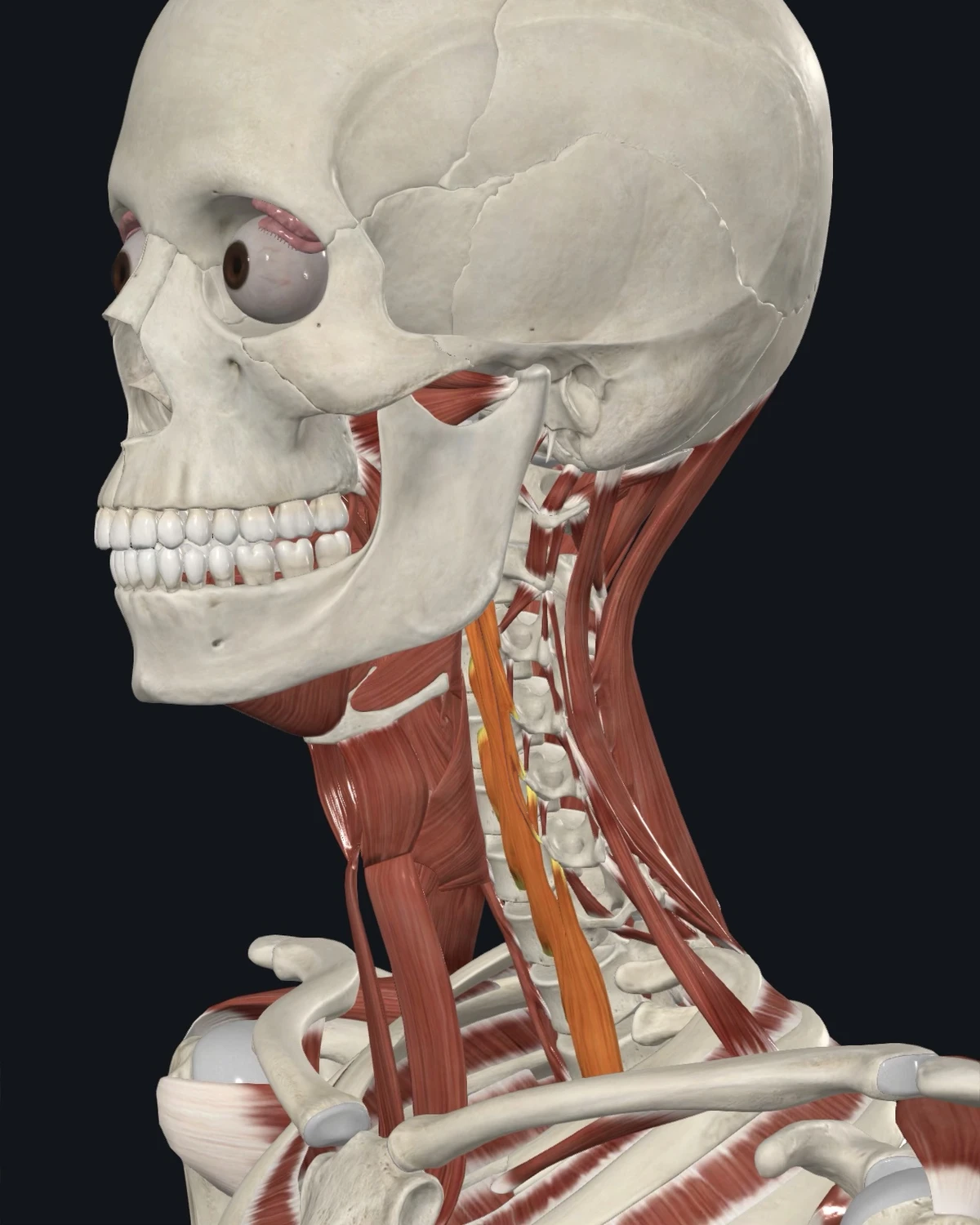
Attachments and action
Origin: Longus colli: the bodies of the upper three thoracic and lower cervical vertebrae, and the transverse processes of the third to sixth cervical vertebrae. Longus capitis: the transverse processes of the third to sixth cervical vertebrae.
Insertion: Longus colli: the anterior tubercle of the atlas and the bodies and transverse processes of the cervical vertebrae above each origin. Longus capitis: the base of the occipital bone.
Action: Flexion of the neck and the head; they steady the cervical spine from the front and control the head in the first inches of a nod.

Where the pain is felt: In the front of the neck, deep, beside the windpipe. Referred to the ear and to the skin just outside the eye on the same side. In some people, the other side of the neck. Pain and weakness lifting the head off a pillow. Neck pain and a stiff turn after a rear-end collision. A throat that feels tight when swallowing, with nothing found on the scope.
Common causes: Whiplash, above all; forward-head posture that leaves these muscles long and weak; a heavy helmet; a long period of looking down at a phone; a fall that snapped the head back; a sudden stop in a car.
Patients say: "I cannot lift my head off the pillow without using my hand." "My throat feels tight since the accident." Deep front-of-neck pain that the massage of the side muscles did not reach. "Turning my head in the car is the worst."
When to get evaluated: Neck pain after a crash or a fall, with numbness, weakness, or pain down the arms, needs imaging before any treatment. A tight throat with swallowing that is getting harder, hoarseness, or a lump you can feel needs medical evaluation. Neck pain with fever and stiffness, or with a severe headache, needs emergency evaluation.
How this muscle is examined and treated
Examination is the head-lift test, holding the chin tucked and the head an inch off the table, timed and compared to the expected hold, then gentle deep pressure beside the throat with the windpipe moved aside for the tenderness that reproduces the familiar deep pain. Needling here is deep and is done only with the throat structures moved aside and the vessels respected; in many cases the treatment is needling of the muscles around them and retraining of the deep flexors. Assessment and treatment happen in the same visit.
Related conditions
Neck & Cervical PainHeadaches & MigrainesChronic Pain Patterns
This page is educational. It describes muscle referral patterns commonly associated with pain; it does not diagnose your condition. Individual patterns vary. For evaluation of your specific pain, see a licensed clinician. Seek immediate medical care for emergencies. Eugene Baek, L.Ac. · New Jersey License 25MZ00080600