Suboccipitals: Pain Pattern and Treatment
Four small muscles connect the top two vertebrae to the base of the skull. Their documented pattern is a band of pain from the occiput to the eye and forehead, described in the source literature as poorly localized, felt inside the head rather than on it.
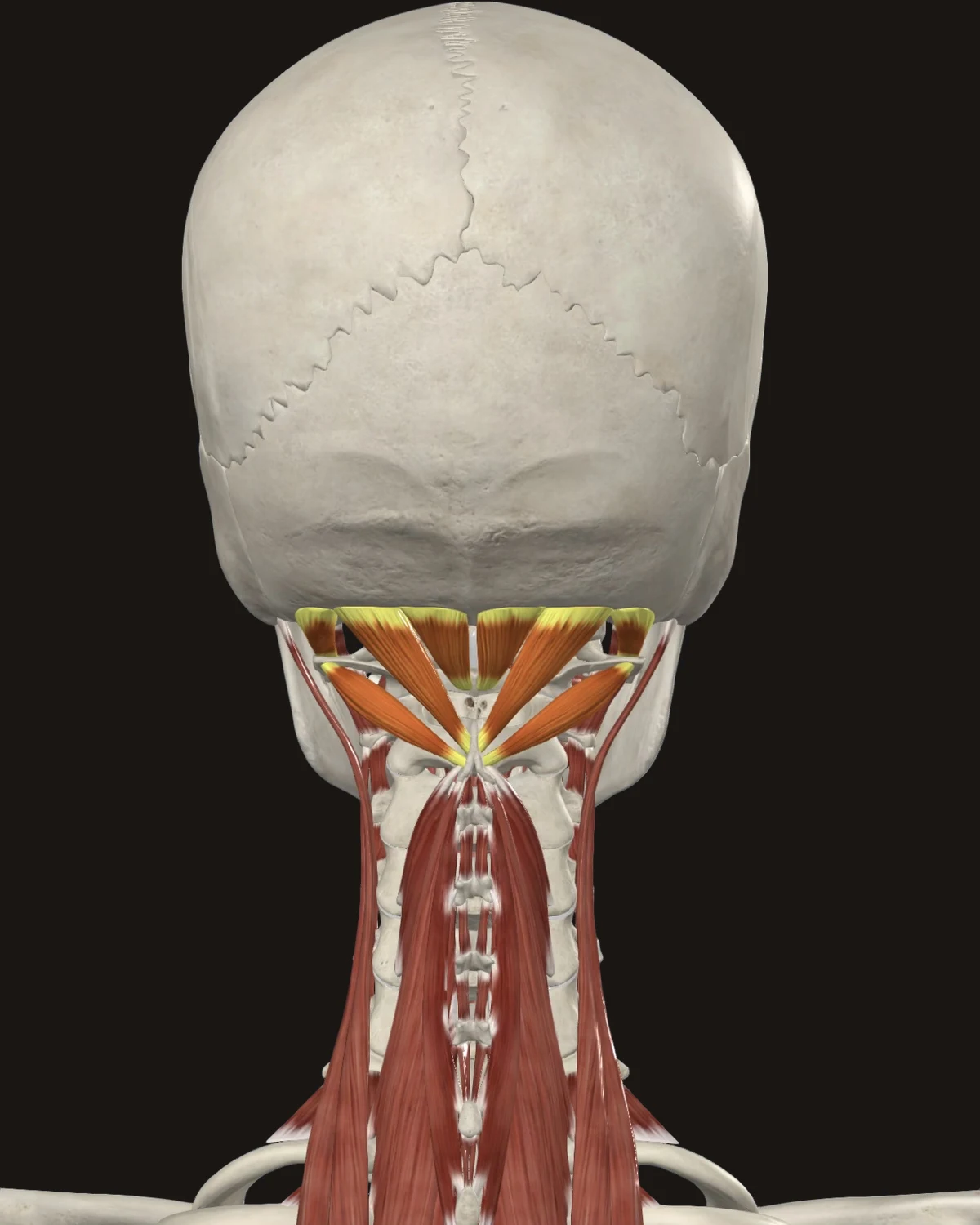
Attachments and action
Origin: Four paired muscles arising from the first and second cervical vertebrae: the spinous process of the axis and the posterior arch and transverse process of the atlas.
Insertion: The inferior nuchal line of the occipital bone for three of the four; the obliquus capitis inferior attaches to the transverse process of the atlas instead of the skull.
Action: Extension and rotation of the head on the upper neck, and fine postural control of head position. These muscles carry a high density of position sensors and work continuously to steady the head.
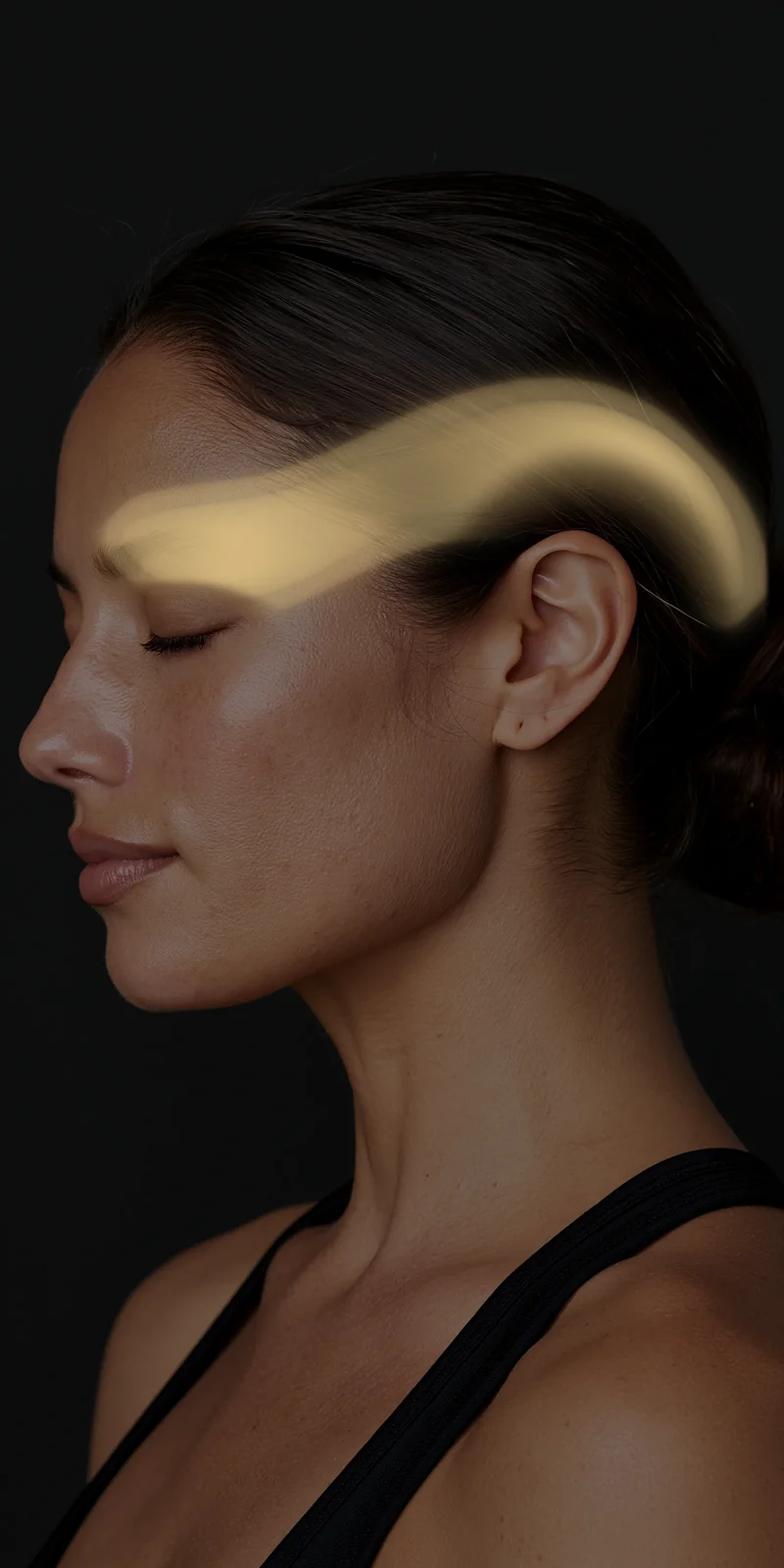
Where the pain is felt: A band from the base of the skull wrapping over the head to the eye. Described in the maps as pain inside the head rather than on it.
Common causes: Looking down at phones and laptops, reading glasses set too low, long driving, grinding through close-focus work.
Patients say: “It feels like a headband of pressure.” Ache at the skull base that climbs. Worse after a day of screens.
When to get evaluated: Headache that wakes you from sleep, worsens lying down, or arrives with nausea and vision change gets evaluated.
How this muscle is examined and treated
Examination palpates the groove at the skull base with the head supported, testing the small nodding and rotation movements these muscles own. These points sit deep; needling here is shallow, angled, and conservative by design. Close-focus habits, glasses prescription height, and pillow setup are part of the plan. Assessment and treatment happen in the same visit.
Related conditions
Headaches & MigrainesNeck & Cervical Pain
Treatment points: Suboccipital motor points
This page is educational. It describes muscle referral patterns commonly associated with pain; it does not diagnose your condition. Individual patterns vary. For evaluation of your specific pain, see a licensed clinician. Seek immediate medical care for emergencies. Eugene Baek, L.Ac. · New Jersey License 25MZ00080600