Masseter: Pain Pattern and Treatment
The masseter is the thick cheek muscle that closes the jaw and the strongest jaw muscle for its size. Its documented pattern covers the cheek and jaw, the temporomandibular joint region, and the molar teeth, and it is a common driver of what is felt as TMJ pain and unexplained tooth sensitivity.
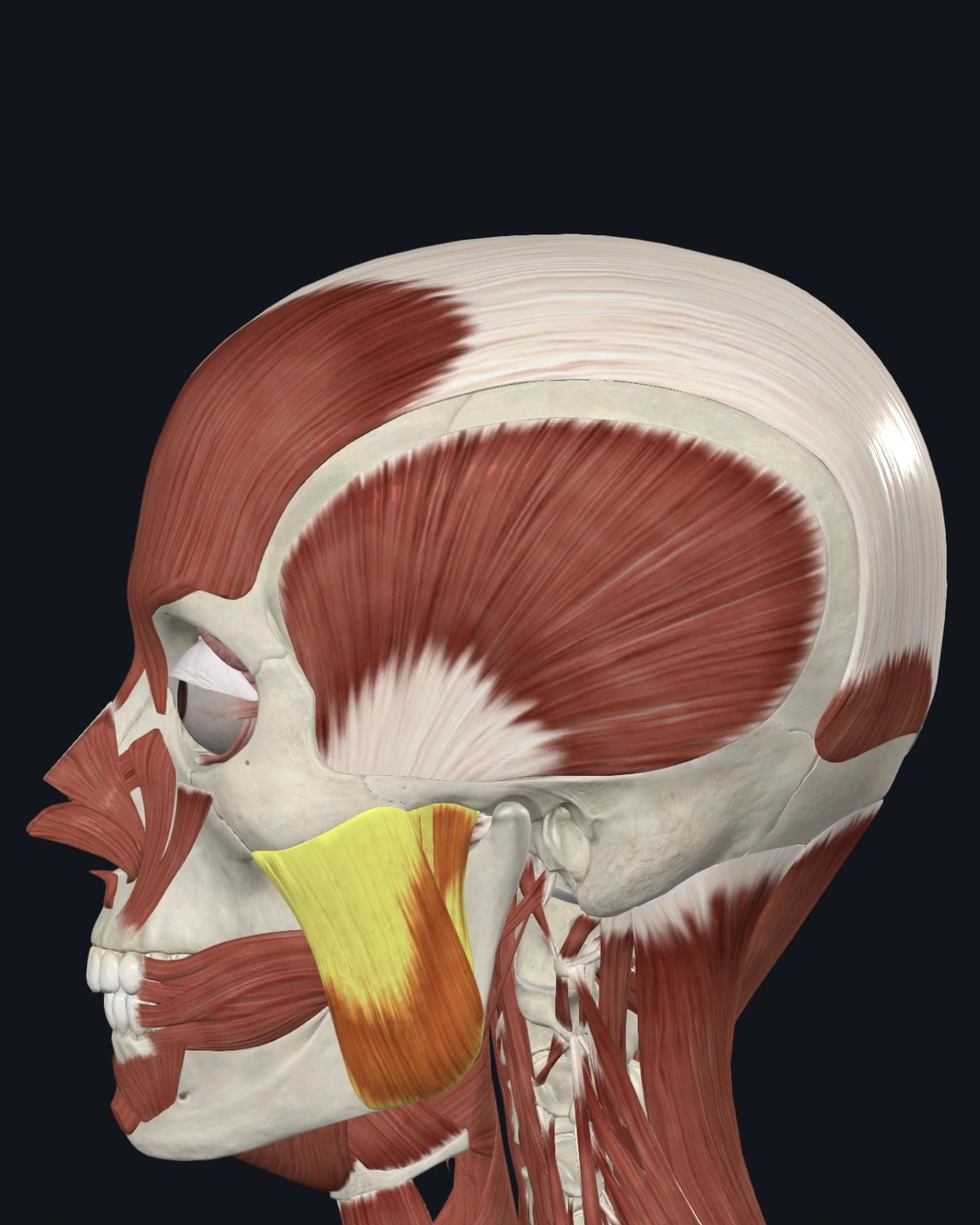
Attachments and action
Origin: The zygomatic arch and the maxillary process of the zygomatic bone.
Insertion: The lateral surface of the ramus and angle of the mandible.
Action: Elevation of the mandible to close the jaw with force; it is the primary power muscle of biting and clenching.
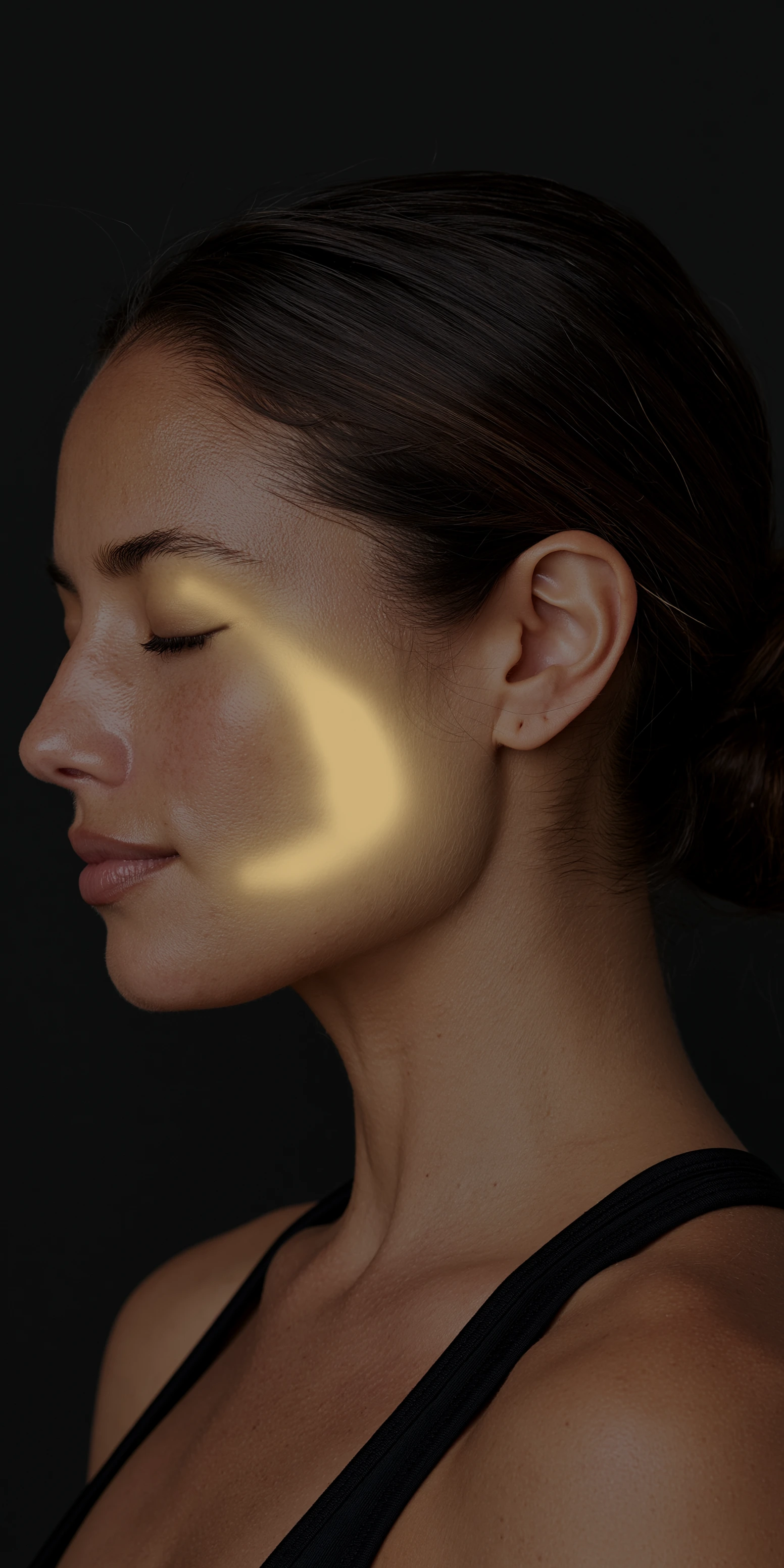
Where the pain is felt: The cheek and the body of the jaw, sweeping up toward the eyebrow, and over the TMJ in front of the ear. The superficial fibers refer into the upper and lower molar regions, felt as tooth pressure or sensitivity; the deep fibers refer into the ear and joint, felt as TMJ pain. Ringing in the ear without hearing loss is also documented from the deep fibers.
Common causes: Clenching and bruxism, gum chewing, nail biting, long dental work, chewing tough food on one side, stress-held jaw tension, and mouthpiece or bite-guard changes.
Patients say: “My TMJ acts up” with a normal joint on imaging. Molars that ache with nothing found at the dentist. A tight, tired jaw by evening. Pain in front of the ear when chewing.
When to get evaluated: Jaw pain brought on by exertion and relieved by rest, or arriving with chest pressure or shortness of breath, needs cardiac evaluation before any muscle assessment. A jaw that locks or an acutely limited bite needs joint evaluation.
How this muscle is examined and treated
Examination palpates the masseter between thumb and finger, outside and inside the cheek, comparing the superficial belly and the deep fibers near the joint for the bands that reproduce the familiar jaw, tooth, or ear symptoms. Bite opening is measured before and after. Assessment and treatment happen in the same visit.
Related conditions
Headaches & MigrainesNeck & Cervical Pain
This page is educational. It describes muscle referral patterns commonly associated with pain; it does not diagnose your condition. Individual patterns vary. For evaluation of your specific pain, see a licensed clinician. Seek immediate medical care for emergencies. Eugene Baek, L.Ac. · New Jersey License 25MZ00080600