Orbicularis Oculi: Pain Pattern and Treatment
The orbicularis oculi is the ring of muscle around the eye that closes the lids, squints, and blinks. Its documented pattern is pain along the bridge and side of the nose, in the cheek just below the eye, and in the upper lip on the same side, from a trigger point in the lower or outer part of the ring. It is the muscle behind a twitching lower eyelid, and behind print that seems to jump on the page when the eye exam is normal. It relates to the temporalis and sternocleidomastoid pages.
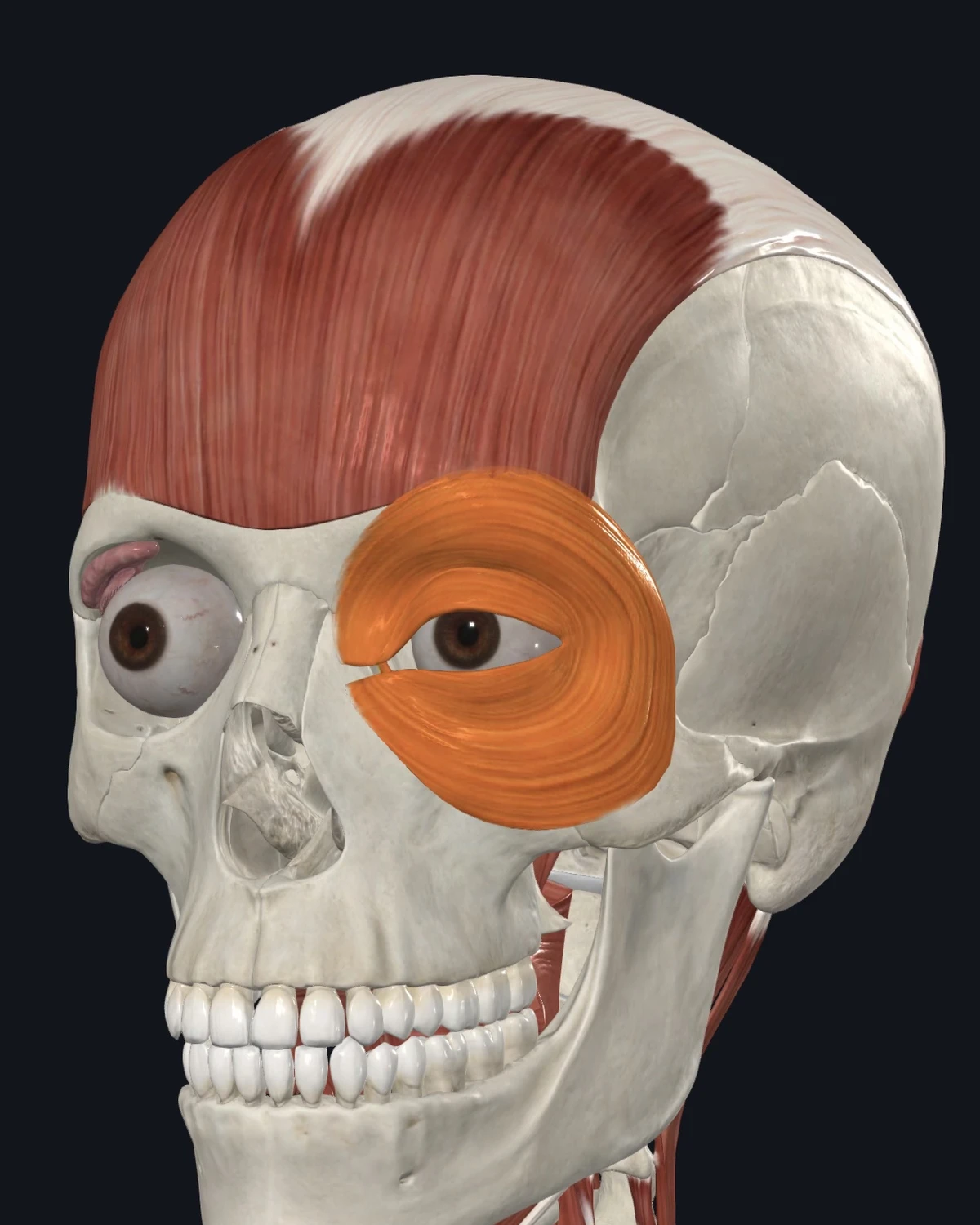
Attachments and action
Origin: The medial orbital margin, the medial palpebral ligament, and the lacrimal bone.
Insertion: The skin around the orbit, the lateral palpebral raphe, and the tarsal plates of the eyelids.
Action: Closure of the eyelids; the orbital part squints and screws the eye shut, the palpebral part blinks, the lacrimal part drains the tear duct.
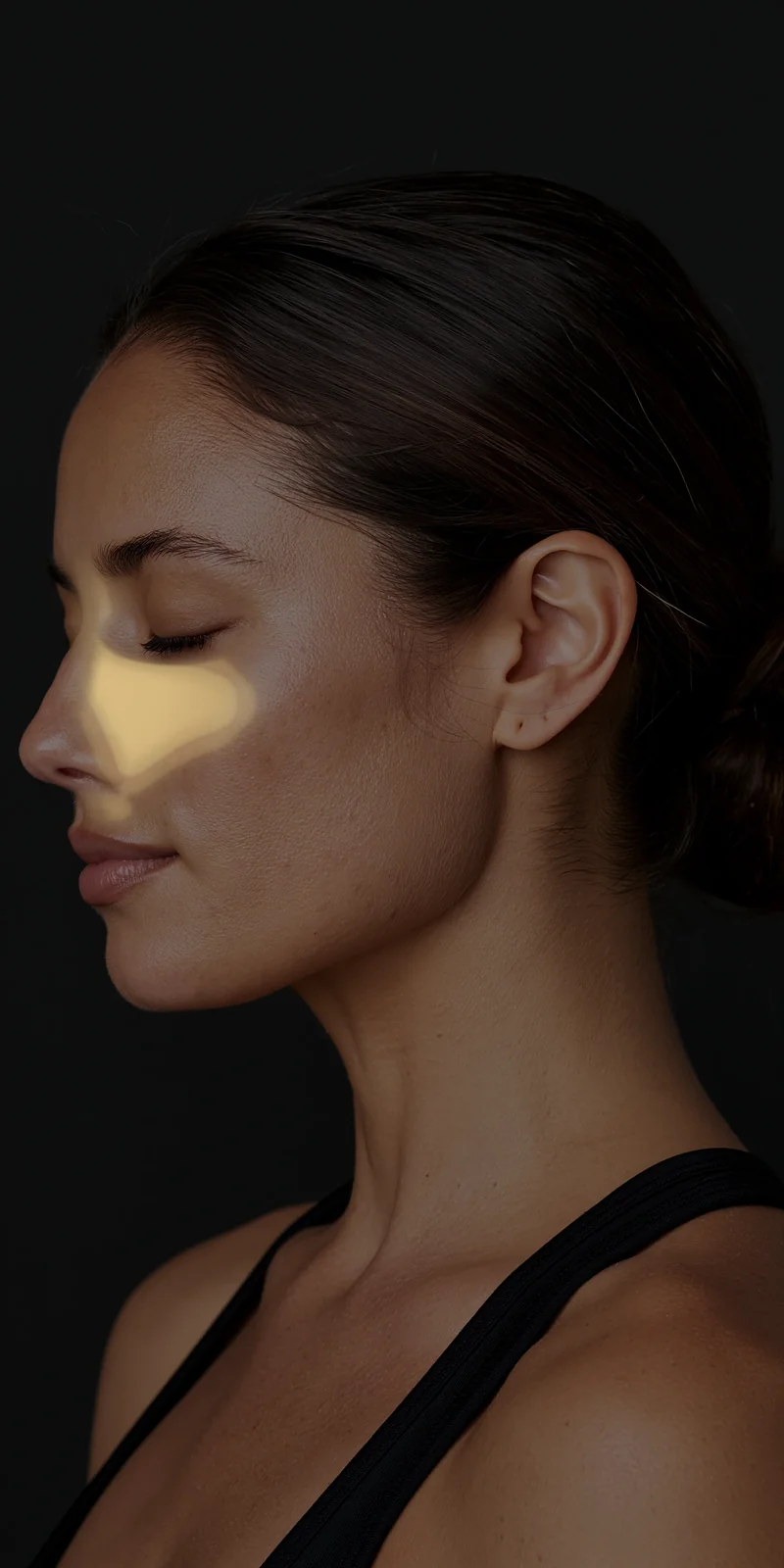
Where the pain is felt: Along the bridge and side of the nose. In the cheek just below the eye. In the upper lip on the same side. A lower eyelid that twitches. Print that jumps when reading.
Common causes: Squinting at a screen or in bright light; an old glasses prescription; reading in dim light; crying; allergies that keep the eyes rubbed; a habit of screwing the eyes shut; sternocleidomastoid trigger points that keep the eye area tense.
Patients say: "My lower eyelid twitches for weeks." "The print jumps when I read." An ache along the side of my nose. "The eye doctor says my eyes are fine."
When to get evaluated: Eye pain with redness, halos around lights, or a change in vision needs an eye examination first. Drooping of the eyelid, double vision, or weakness of one side of the face needs medical assessment the same day. A twitch that spreads to the whole side of the face needs a neurological assessment.
How this muscle is examined and treated
Examination has you squeeze the eyes shut against resistance, then presses the lower and outer rim of the eye socket for the point that reproduces the nose and cheek pain and the lid twitch, and checks the sternocleidomastoid, which drives this muscle. Needling here addresses the muscle at the rim of the eye socket, very shallow, with fine needles. Assessment and treatment happen in the same visit.
Related conditions
Headaches & MigrainesNeck & Cervical PainChronic Pain Patterns
This page is educational. It describes muscle referral patterns commonly associated with pain; it does not diagnose your condition. Individual patterns vary. For evaluation of your specific pain, see a licensed clinician. Seek immediate medical care for emergencies. Eugene Baek, L.Ac. · New Jersey License 25MZ00080600