Lateral Pterygoid: Pain Pattern and Treatment
The lateral pterygoid is a short, two-headed muscle deep inside the cheek. It pulls the jaw forward and opens it, and its upper head holds the joint’s disc. Its documented pattern is pain deep in the jaw joint and across the cheek below the eye, the area often called the sinus. Of all the jaw muscles, this is the one most often behind pain in the joint itself.
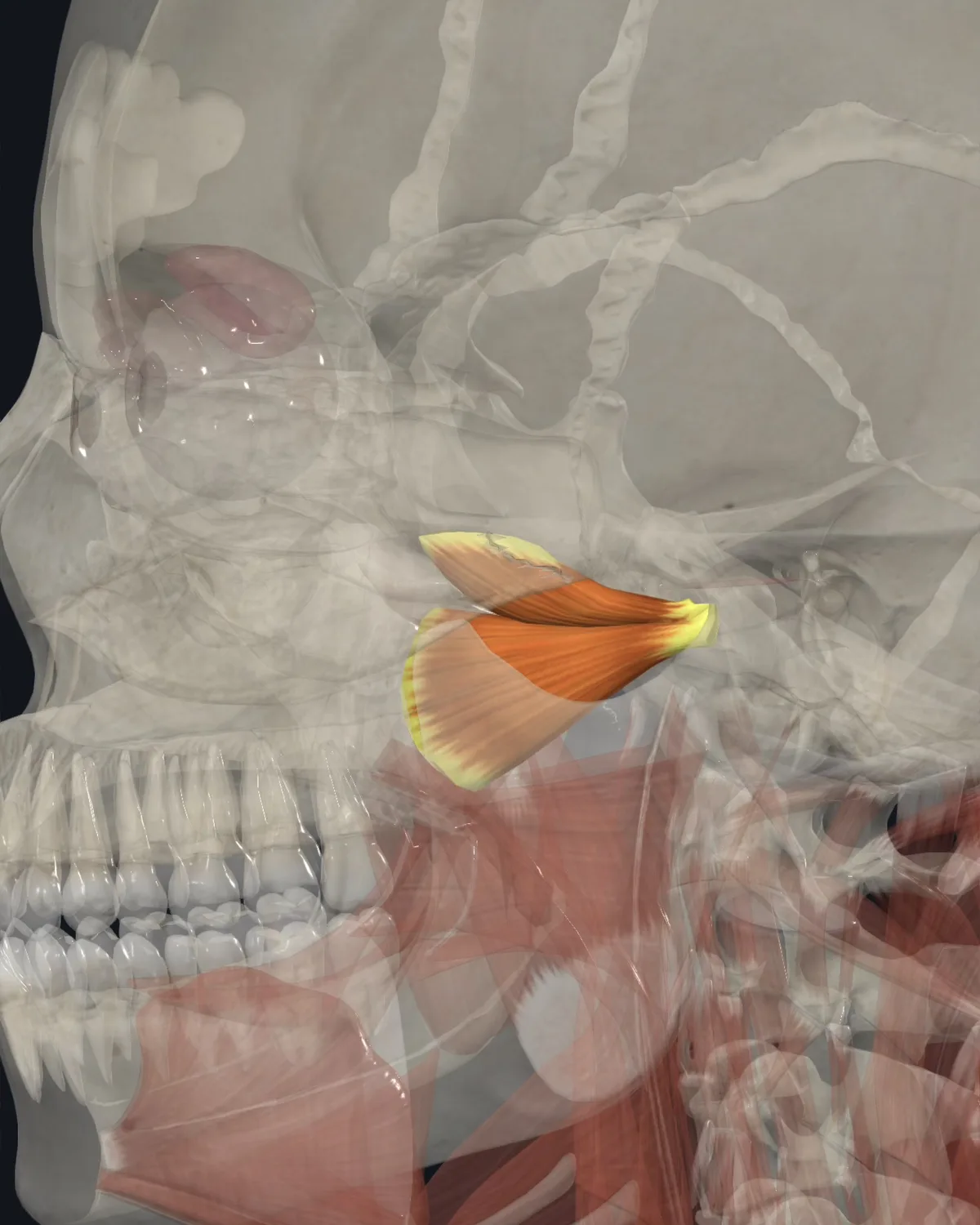
Attachments and action
Origin: Upper head from the infratemporal surface and crest of the greater wing of the sphenoid; lower head from the outer surface of the lateral pterygoid plate.
Insertion: The pterygoid fovea on the neck of the mandibular condyle, with the upper head reaching the articular disc and capsule.
Action: Protrusion of the jaw, opening (with the suprahyoids), and side-to-side movement toward the opposite side; the upper head steadies the disc on closing.
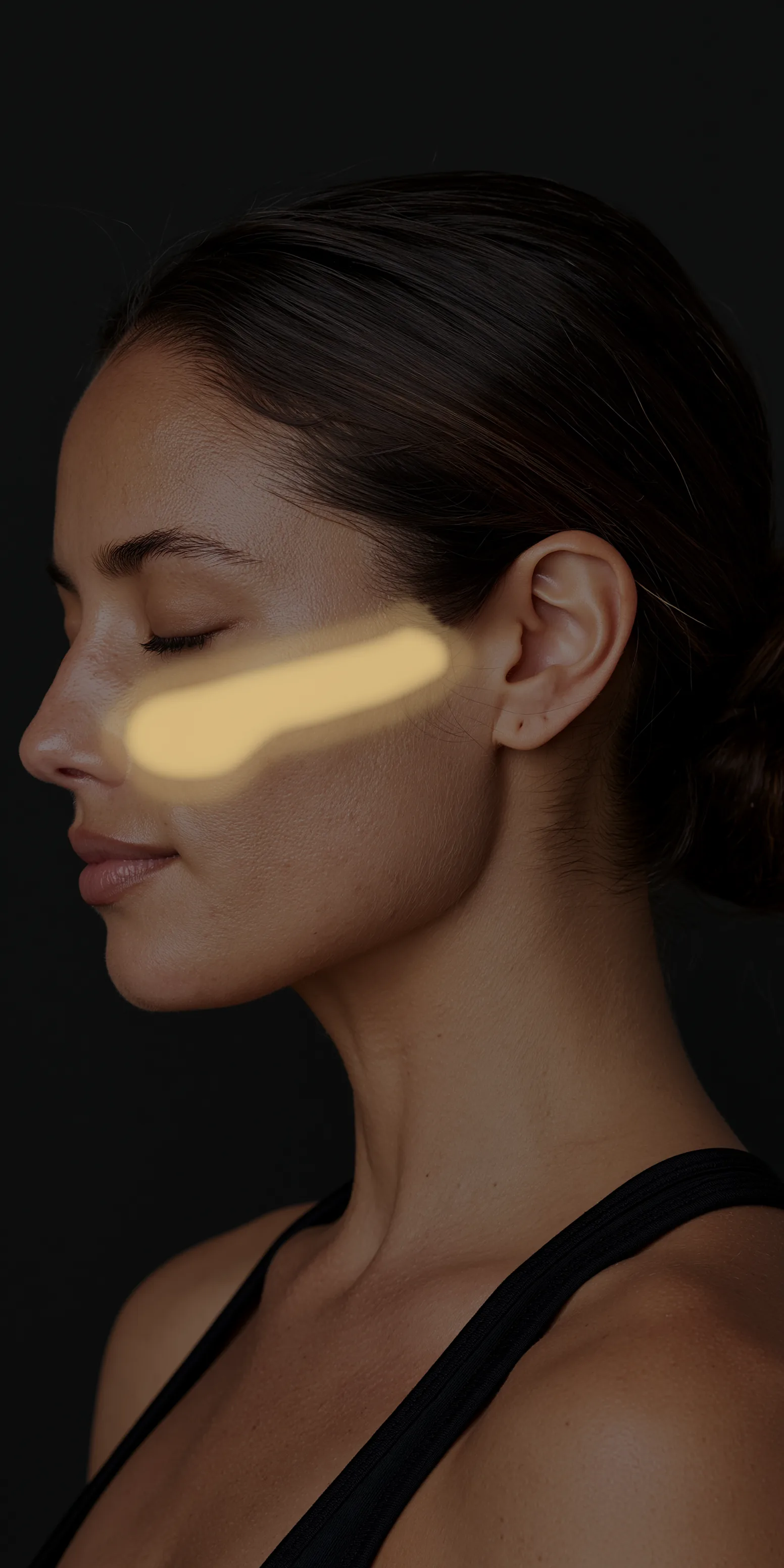
Where the pain is felt: Deep in the jaw joint, just in front of the ear. Across the cheek below the eye, where the sinus sits. The jaw may click, shift to one side on opening, or feel like the teeth no longer meet right.
Common causes: Clenching and grinding; chewing gum; a bite that has changed after dental work; long dental procedures with the mouth held wide; a blow to the jaw; pushing the jaw forward when concentrating.
Patients say: “Sinus pain that antibiotics did not touch.” “My jaw clicks and drifts to one side when I open.” A deep ache right in front of the ear that no amount of jaw massage reaches.
When to get evaluated: Jaw pain with fever, facial swelling, or a tooth that is hot or cold sensitive needs a dentist first. Jaw pain that arrives with exertion or chest pressure needs cardiac evaluation before anything else. A jaw that locks and cannot open needs assessment of the joint itself.
How this muscle is examined and treated
Examination watches the opening path for deviation, listens and feels for the click, and tests protrusion against resistance. The muscle is reached from inside the cheek. Needling here addresses the lower head through the cheek in front of the joint. Assessment and treatment happen in the same visit.
Related conditions
Headaches & MigrainesNeck & Cervical PainChronic Pain Patterns
This page is educational. It describes muscle referral patterns commonly associated with pain; it does not diagnose your condition. Individual patterns vary. For evaluation of your specific pain, see a licensed clinician. Seek immediate medical care for emergencies. Eugene Baek, L.Ac. · New Jersey License 25MZ00080600