Levator Scapulae: Pain Pattern and Treatment
The levator scapulae runs from the upper neck vertebrae to the top corner of the shoulder blade. Its documented pattern projects to the angle of the neck, along the inner border of the shoulder blade, and to the back of the shoulder. It is a recognized source of acute stiff neck with blocked same-side rotation.
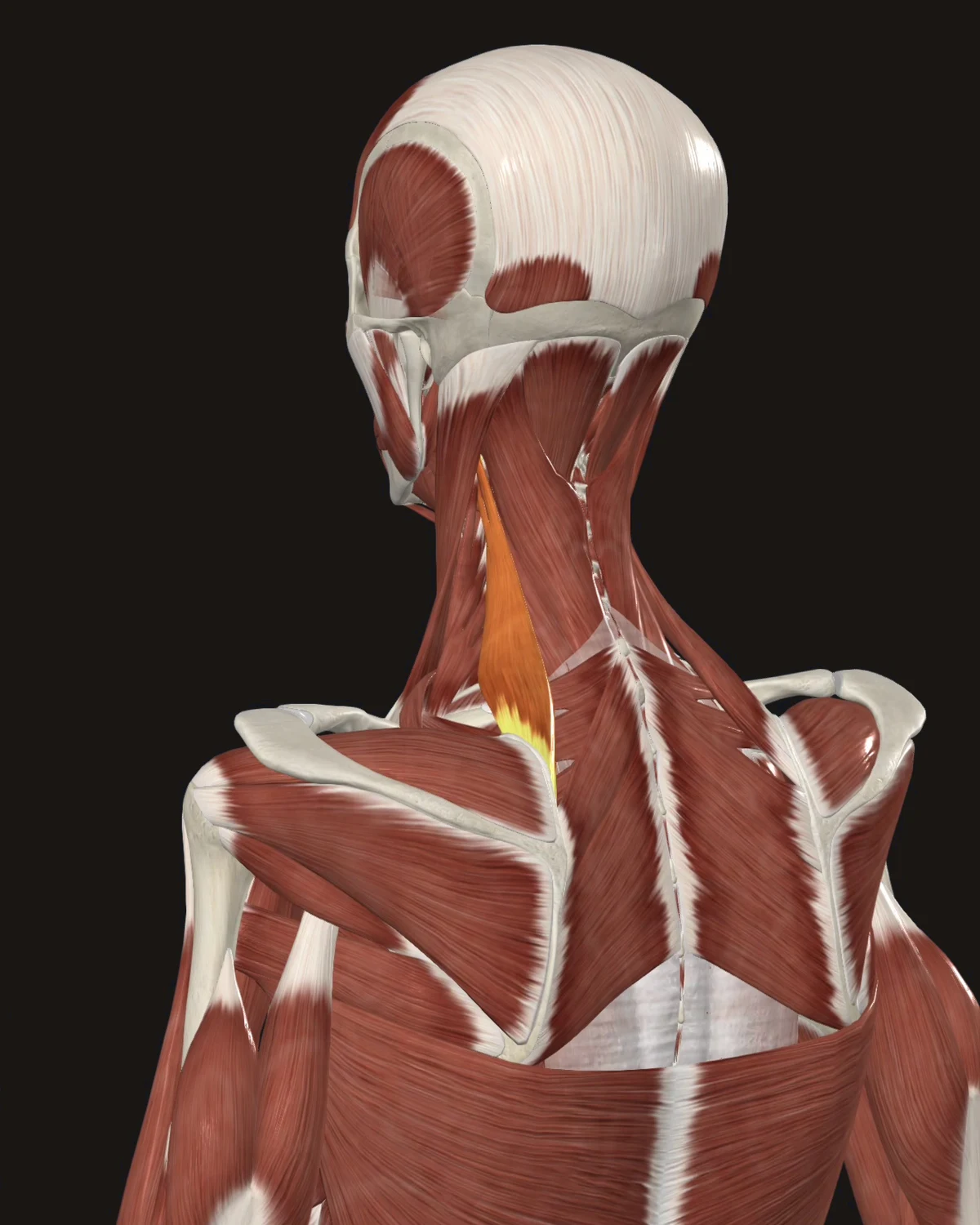
Attachments and action
Origin: The transverse processes of the first four cervical vertebrae.
Insertion: The superior angle and upper medial border of the scapula.
Action: Elevation of the scapula and downward rotation of its socket; lateral flexion and rotation of the neck to the same side when the scapula is fixed.

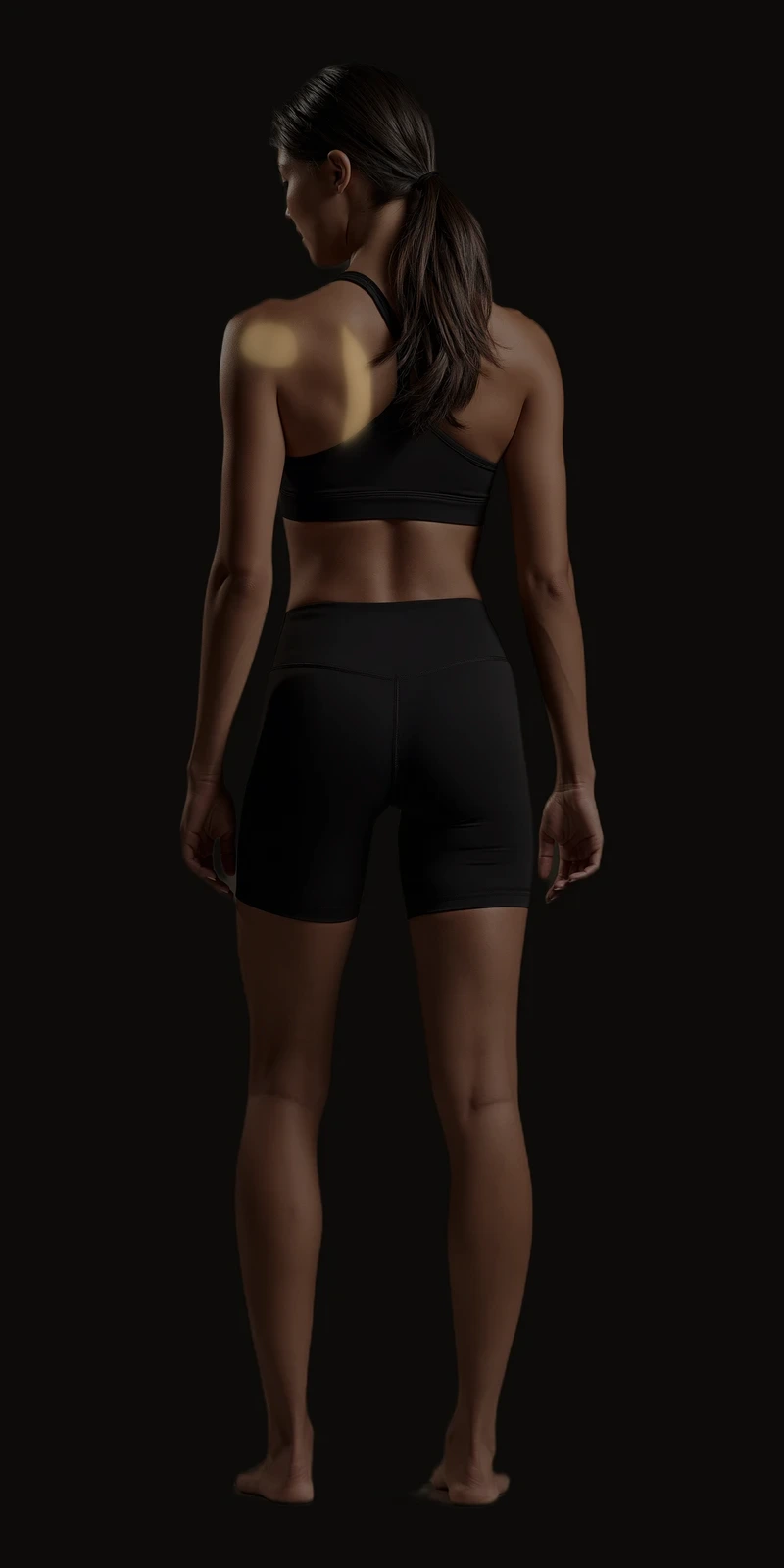
Where the pain is felt: The angle where the neck meets the shoulder, with a stiff line up the side of the neck. The signature restriction: turning the head to the same side.
Common causes: Sleeping with the neck bent, long phone calls, monitors set off-center, backpacks and shoulder bags, sustained stress posture.
Patients say: “I can’t check my blind spot.” Waking with a stiff neck. Pain at the exact corner of the neck and shoulder.
When to get evaluated: Neck stiffness with fever, or stiffness after an accident, is evaluated before any needling plan.
How this muscle is examined and treated
Examination tests head rotation to each side and palpates just above the shoulder blade’s upper corner, where the muscle’s points sit beneath the trapezius. Reproducing the familiar corner-of-the-neck pain confirms the source. Needling reaches the points the thumb cannot; sleep position and monitor placement are addressed alongside. Assessment and treatment happen in the same visit.
Related conditions
Neck & Cervical PainShoulder Dysfunction
This page is educational. It describes muscle referral patterns commonly associated with pain; it does not diagnose your condition. Individual patterns vary. For evaluation of your specific pain, see a licensed clinician. Seek immediate medical care for emergencies. Eugene Baek, L.Ac. · New Jersey License 25MZ00080600