Semispinalis Capitis: Pain Pattern and Treatment
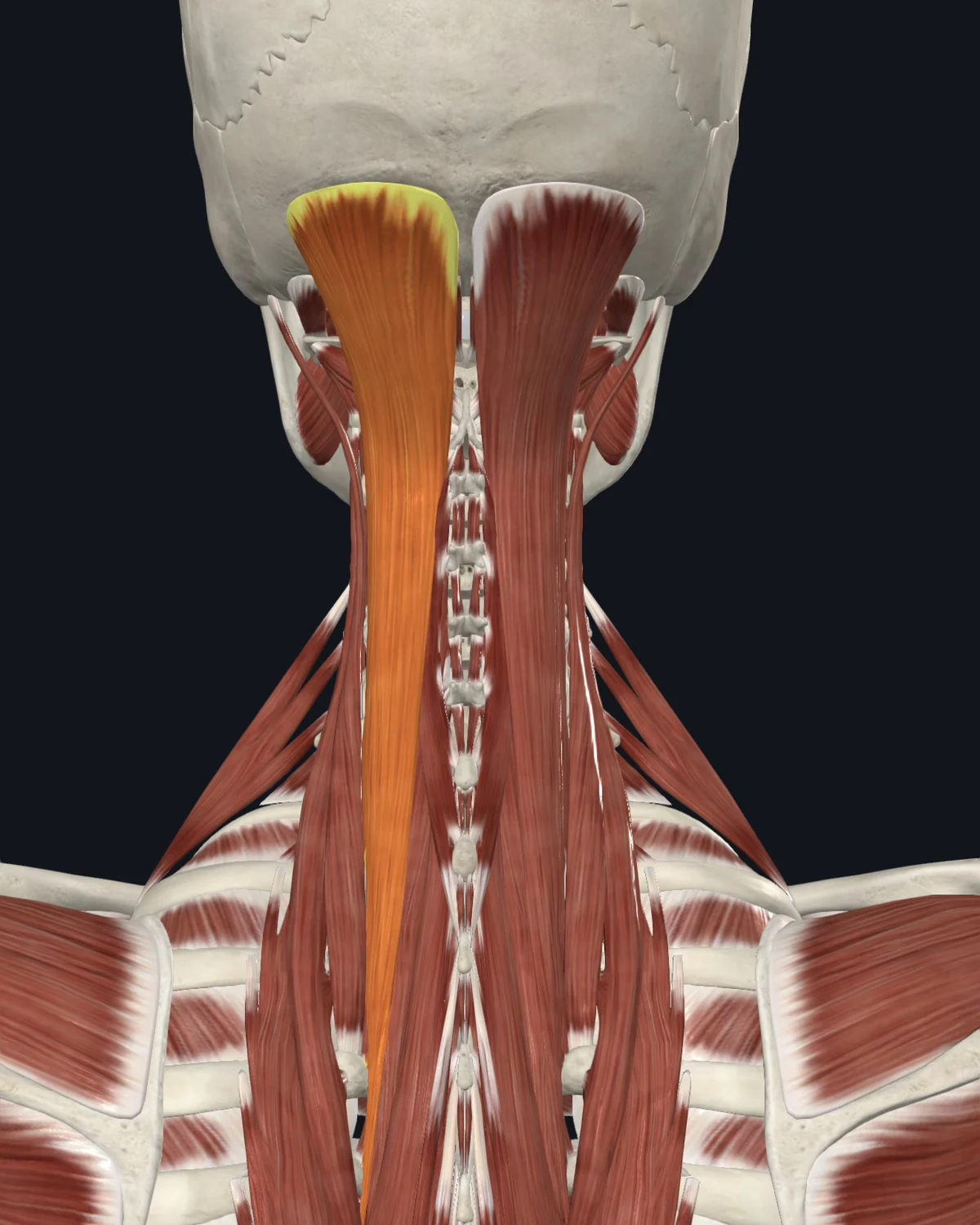
The semispinalis capitis is the thick column at the back of the neck, under the trapezius, running from the upper thoracic spine to the base of the skull. It holds the head up against gravity all day. Its documented pattern is a band of headache around the side of the head to the temple and forehead, and pain at the back of the head. The nerve to the back of the scalp passes through this muscle, so a tight one can also make the scalp numb or burn.
Attachments and action
Origin: The transverse processes of the upper six or seven thoracic vertebrae and the seventh cervical, and the articular processes of the fourth through sixth cervical vertebrae.
Insertion: The occipital bone between the superior and inferior nuchal lines.
Action: Extension of the head and neck; it is the main muscle holding the head up in forward-head posture.
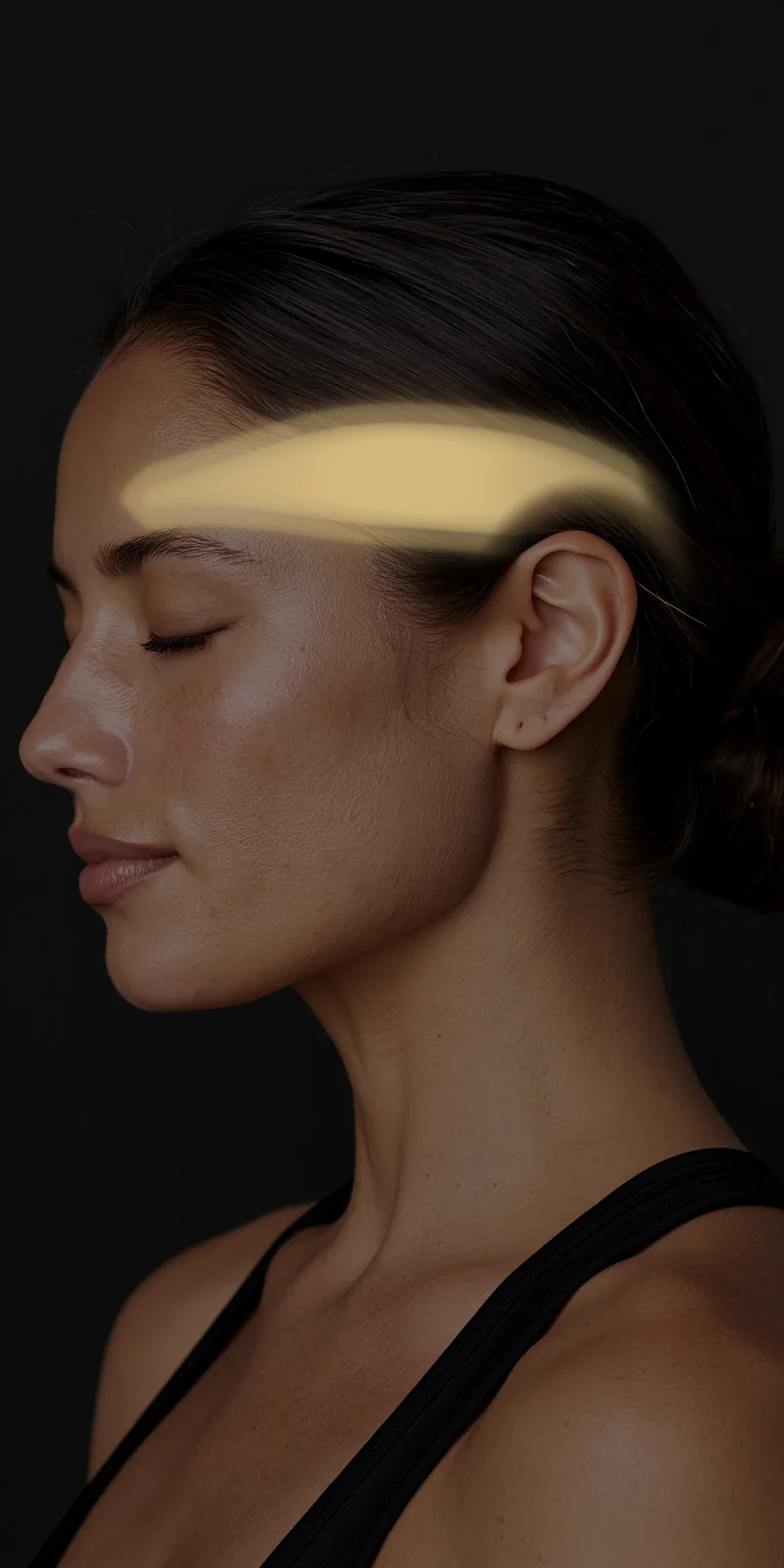
Where the pain is felt: A band around the side of the head, from the back over the ear to the temple and the forehead above the eye. The back of the head on the same side. A scalp that feels numb, tingling, or burning.
Common causes: Forward-head posture at a desk or a phone; reading in bed with the head propped; a heavy helmet or headset; whiplash; a cold draft on the neck; holding the head up through a long drive.
Patients say: "A tight band around my head." "The back of my scalp goes numb." Headache at the back of the head every afternoon. "My hair hurts to touch on that side."
When to get evaluated: A headache that is the worst of your life, that arrives with fever and a stiff neck, or with weakness, confusion, or vision change needs emergency evaluation. A new headache after a head injury needs medical assessment before anything else.
How this muscle is examined and treated
Examination tests the head held against gravity and pressed back against resistance, then presses the column just below the skull and again at mid-neck for the points that reproduce the band and the occipital ache. Needling here addresses the muscle at the back of the neck. Assessment and treatment happen in the same visit.
Related conditions
Headaches & MigrainesNeck & Cervical PainChronic Pain Patterns
Treatment points: BL10 Tianzhu
This page is educational. It describes muscle referral patterns commonly associated with pain; it does not diagnose your condition. Individual patterns vary. For evaluation of your specific pain, see a licensed clinician. Seek immediate medical care for emergencies. Eugene Baek, L.Ac. · New Jersey License 25MZ00080600