Occipitofrontalis: Pain Pattern and Treatment
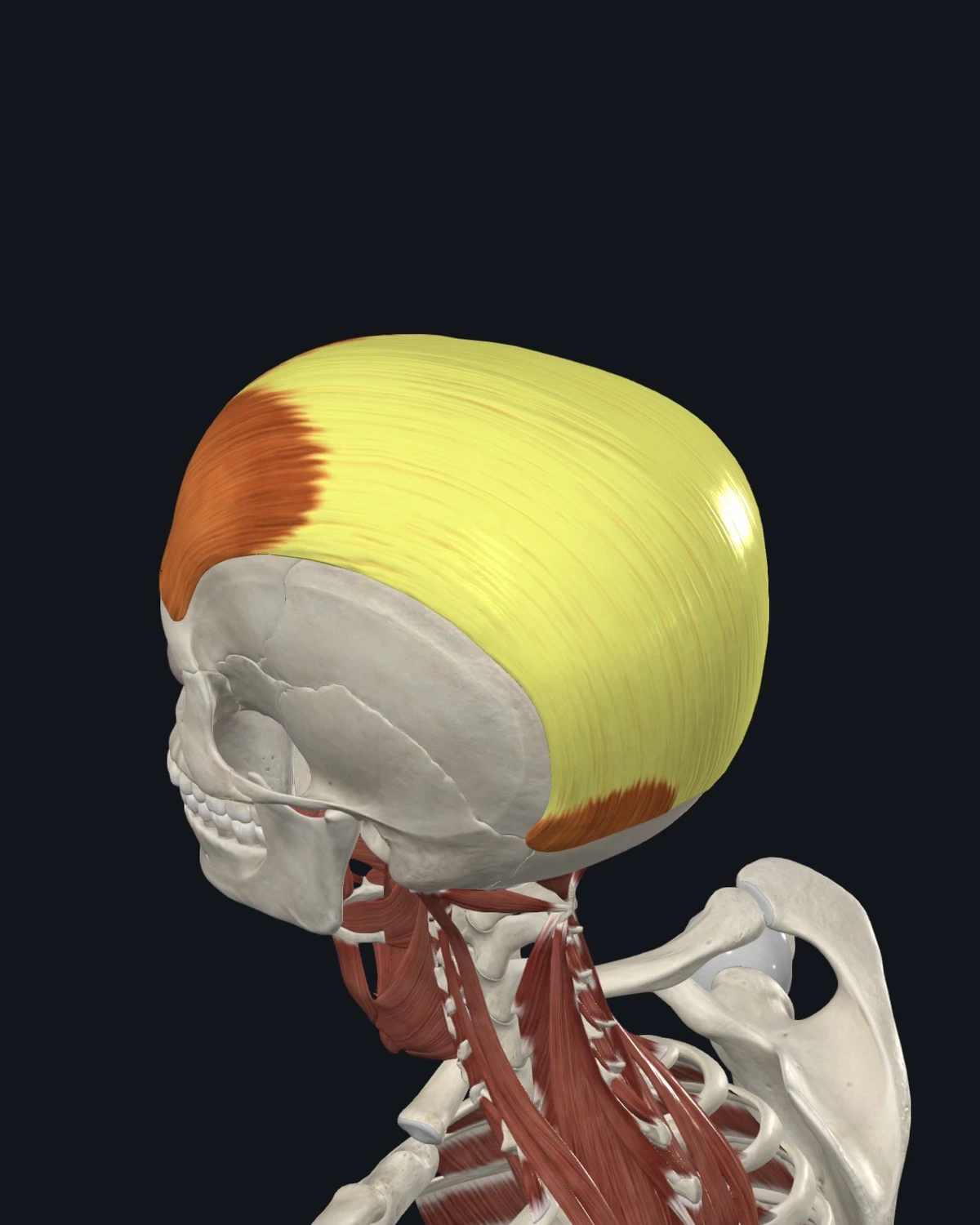
The occipitofrontalis is the muscle of the scalp: a belly over the forehead that raises the eyebrows and a belly at the back of the head, joined by a tendon sheet over the top of the skull. It moves with every frown and every raised brow. Its documented pattern is a headache in the forehead above one eyebrow, and pain at the back of the head that goes through the skull to behind the eye. It is the muscle behind a forehead headache that squinting and frowning make worse, and behind a back of the head that cannot rest on a pillow. It relates to the suboccipitals and temporalis pages.
Attachments and action
Origin: Frontal belly: the galea aponeurotica, the tendon sheet over the top of the skull. Occipital belly: the outer two thirds of the superior nuchal line of the occipital bone and the mastoid process.
Insertion: Frontal belly: the skin of the eyebrows and the root of the nose. Occipital belly: the galea aponeurotica.
Action: The frontal belly raises the eyebrows and wrinkles the forehead; the occipital belly draws the scalp back; together they move the scalp.
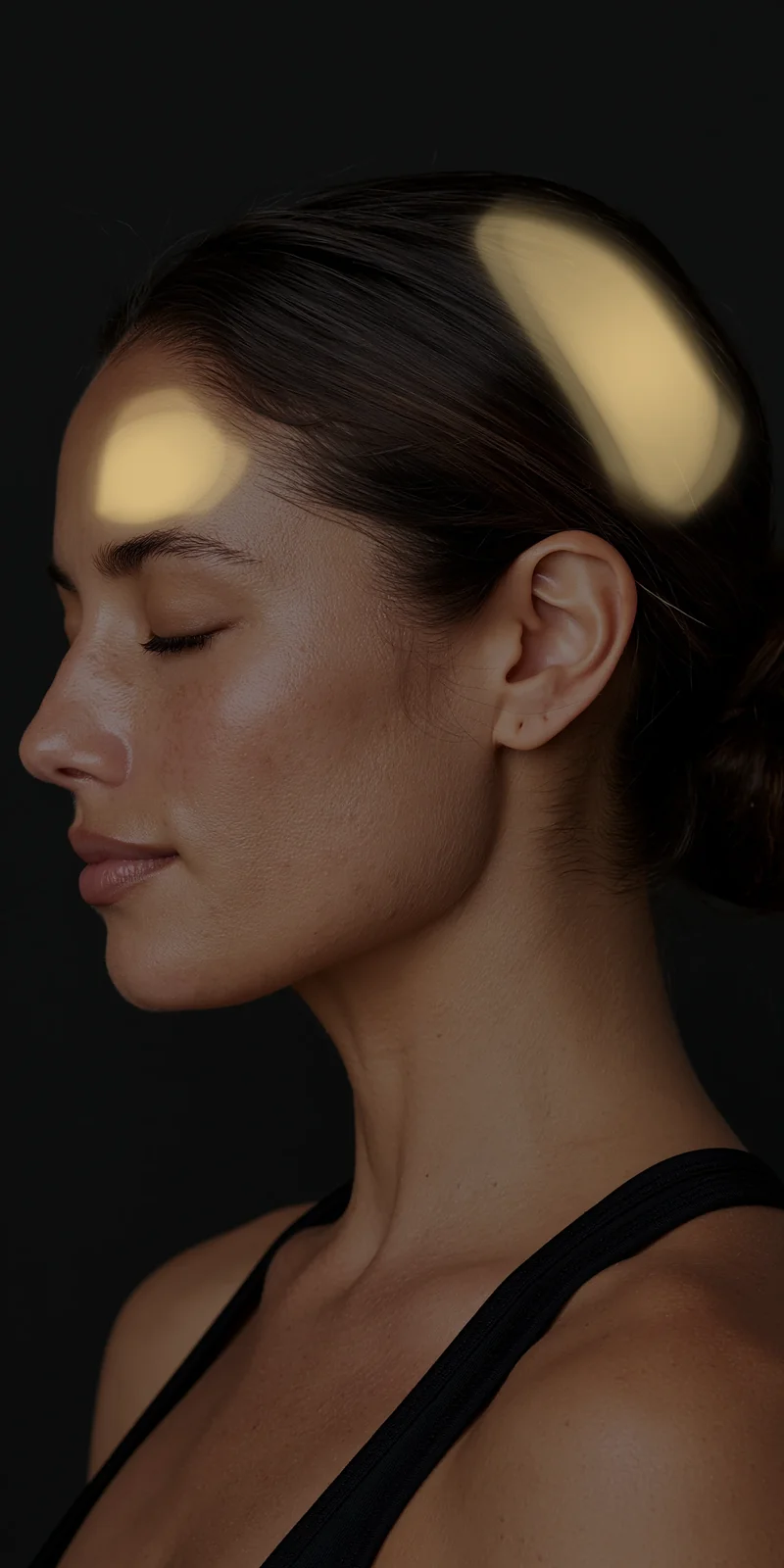
Where the pain is felt: In the forehead above one eyebrow, spreading upward. At the back of the head on the same side. Through the skull to behind the eye and the eyelid. The back of the head hurts to rest on a pillow.
Common causes: Squinting and frowning at a screen or in bright light; a tight hat or headband; anxiety that keeps the brow raised; eyestrain from an old prescription; a head held forward all day; a blow to the back of the head.
Patients say: "A headache right over my eyebrow." "I cannot lie on the back of my head." Pain behind the eye with a normal eye exam. "My scalp is tender to brush."
When to get evaluated: A headache that is the worst of your life, that arrives with fever and a stiff neck, or with weakness, confusion, or vision change needs emergency evaluation. A new headache after a head injury needs medical assessment first. A forehead headache with a red eye or halos around lights needs an eye examination. In anyone over 50, a new headache with a tender scalp over the temple and jaw pain when chewing needs blood tests the same day for temporal arteritis.
How this muscle is examined and treated
Examination has you raise the eyebrows against resistance, then presses the forehead above the brow and the back of the head just above the skull's base for the points that reproduce the familiar headache, and checks the neck muscles that share these patterns. Needling here addresses the two bellies in the scalp, shallow, with fine needles. Assessment and treatment happen in the same visit.
Related conditions
Headaches & MigrainesNeck & Cervical PainChronic Pain Patterns
This page is educational. It describes muscle referral patterns commonly associated with pain; it does not diagnose your condition. Individual patterns vary. For evaluation of your specific pain, see a licensed clinician. Seek immediate medical care for emergencies. Eugene Baek, L.Ac. · New Jersey License 25MZ00080600