Extensor Digitorum Longus: Pain Pattern and Treatment
The extensor digitorum longus runs down the outer front of the shin and fans over the top of the foot to the four smaller toes. It lifts those toes and helps lift the foot in every step. Its documented pattern is pain on the top of the foot toward the smaller toes, with a spill up the front of the ankle. The nerve to the front of the shin passes under this muscle, so a tight one can also weaken the lift of the foot and numb the skin between the first two toes.
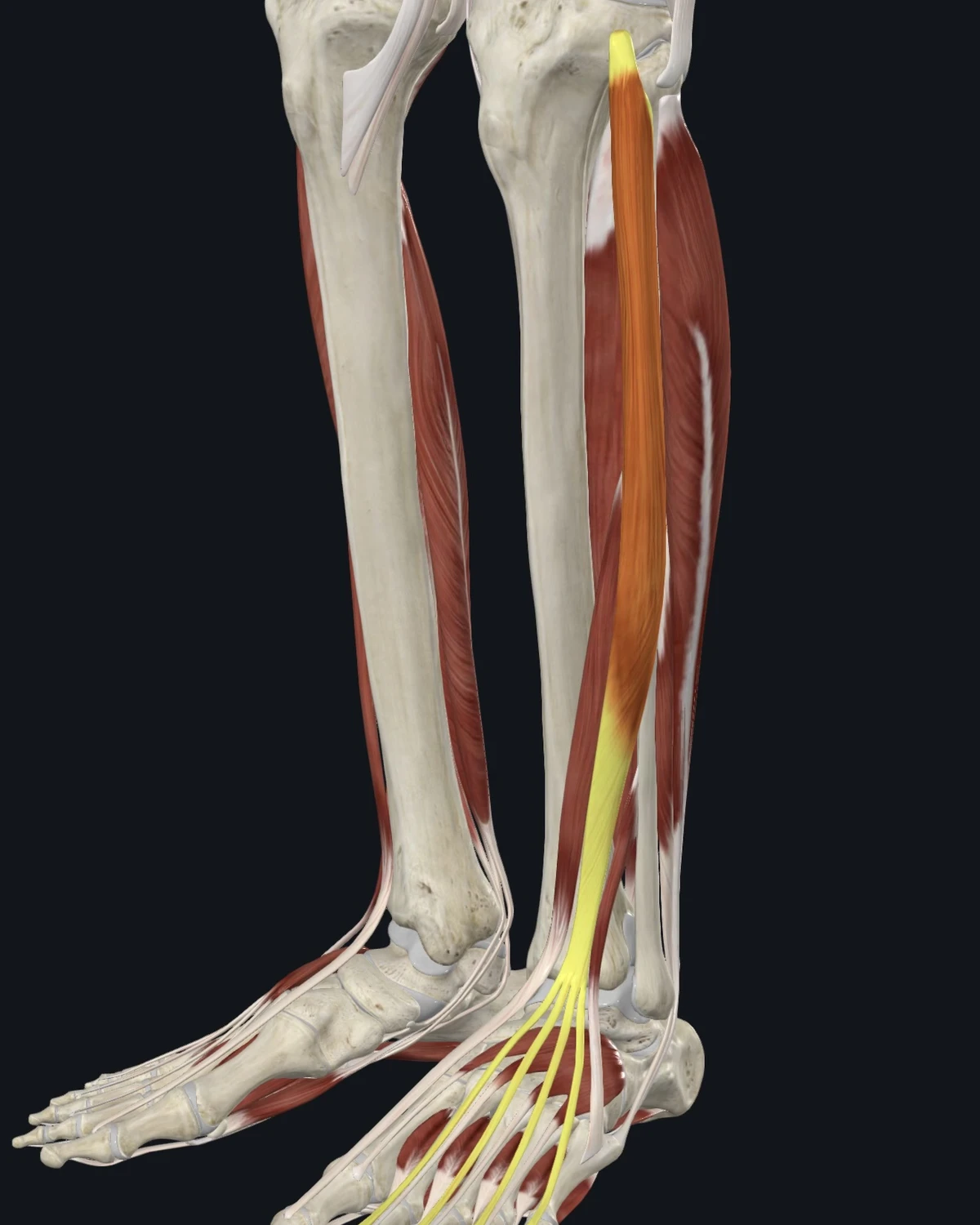
Attachments and action
Origin: The lateral condyle of the tibia, the upper three quarters of the front of the fibula, and the interosseous membrane.
Insertion: The middle and distal phalanges of the second through fifth toes through the extensor expansions.
Action: Extension of the four lesser toes; dorsiflexion and eversion of the foot.

Where the pain is felt: The top of the foot, spreading toward the four smaller toes. Up the front of the ankle and the outer shin. When the nerve beneath it is compressed: weakness lifting the foot and numbness between the first two toes.
Common causes: Running or walking uphill; tight laces or a boot that presses the top of the foot; a long drive with the foot held up on the pedal; kicking; a sprained ankle that healed with the foot held up; kneeling with the feet pointed.
Patients say: "The top of my foot aches, especially in tight shoes." "My foot catches on the step." A numb patch between the big toe and the second toe.
When to get evaluated: A foot that drops or catches with weakness that arrived suddenly, or with back pain, needs the nerve and the spine assessed. Pain and swelling on the top of the foot after a sudden increase in activity needs a stress fracture ruled out. Shin pain with tightness and numbness that worsens with exercise needs compartment syndrome assessed.
How this muscle is examined and treated
Examination tests toe extension and foot lift against resistance, checks the skin between the first two toes, and presses the outer front of the shin for the point that reproduces the top-of-foot pain. Needling here addresses the muscle on the front of the shin. Assessment and treatment happen in the same visit.
Related conditions
Ankle & Foot PainSports & Performance InjuriesChronic Pain Patterns
This page is educational. It describes muscle referral patterns commonly associated with pain; it does not diagnose your condition. Individual patterns vary. For evaluation of your specific pain, see a licensed clinician. Seek immediate medical care for emergencies. Eugene Baek, L.Ac. · New Jersey License 25MZ00080600