Flexor Hallucis Brevis: Pain Pattern and Treatment
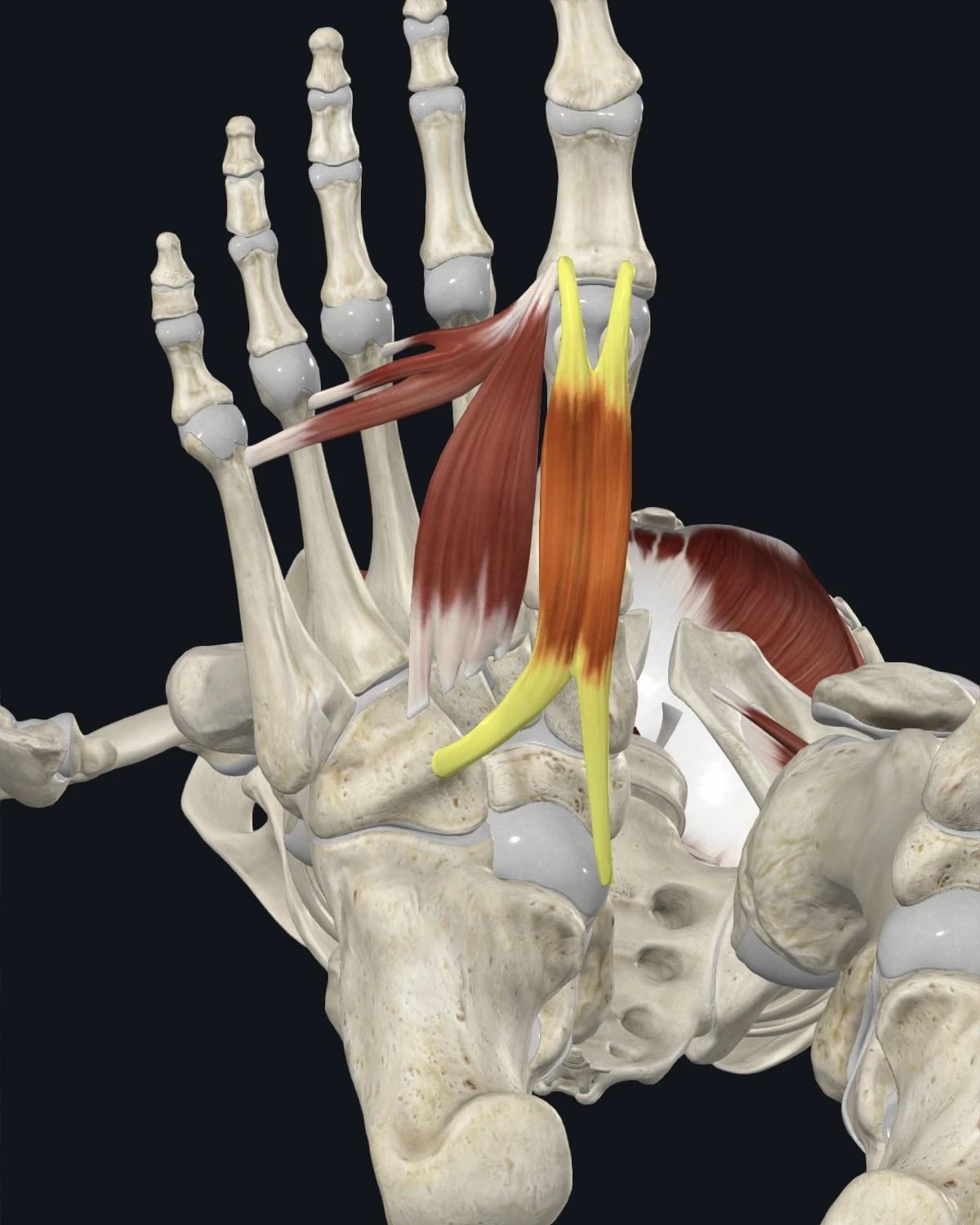
The flexor hallucis brevis is the short muscle under the big toe's ball, running from the middle of the sole to the base of the big toe with a sesamoid bone in each of its two tendons. It bends the big toe at its base and carries the last push of every step. Its documented pattern is pain under the ball of the big toe and along the inner forefoot, worst pushing off. It is the muscle behind sesamoiditis pain when the X-ray of the sesamoids is normal, and it keeps company with a bunion. It relates to the deep foot muscles page.
Attachments and action
Origin: The cuboid and the lateral cuneiform, and the tendon of the tibialis posterior.
Insertion: The inner and outer sides of the base of the proximal phalanx of the big toe, through the two sesamoid bones.
Action: Flexion of the big toe at its base; it stabilizes the big toe at push-off.
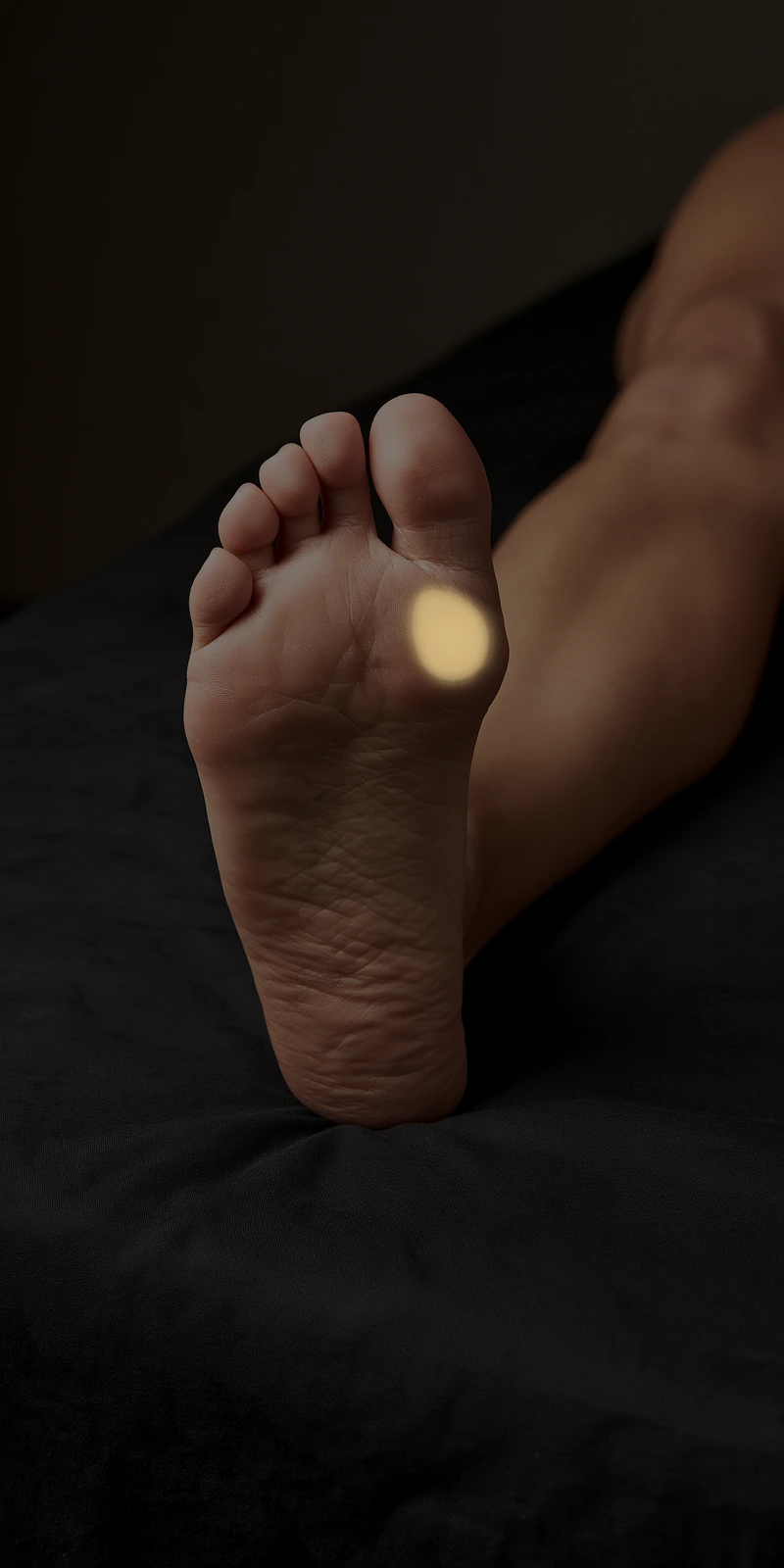
Where the pain is felt: Under the ball of the big toe, at the head of the first metatarsal. Along the inner side of the forefoot. Sometimes into the big toe. Worst pushing off and standing on tiptoe.
Common causes: Running and jumping on the forefoot; dancing on pointe or demi-pointe; high heels; a stiff-soled shoe that will not bend at the toe; a bunion; a fall onto the ball of the foot; a long period in a cast.
Patients say: "Right under the ball of my big toe." "They said sesamoiditis and the X-ray was normal." Pain pushing off with every step. "Tiptoes are impossible."
When to get evaluated: Pain under the big toe's ball after a jump or a fall, with swelling, needs an X-ray for a sesamoid fracture first; a bone scan or MRI if the X-ray is normal and the pain continues. A red, hot, swollen big toe joint, especially at night, needs medical evaluation for gout. A hot, red, swollen foot with fever needs medical evaluation.
How this muscle is examined and treated
Examination tests big-toe flexion against resistance, presses the sole under the first metatarsal head on either side of the sesamoids for the point that reproduces the familiar push-off pain, and checks the sesamoids and the big toe joint. Needling here addresses the short muscle under the ball of the big toe, from the sole, with the sesamoids avoided. Assessment and treatment happen in the same visit.
Related conditions
Ankle & Foot PainSports & Performance InjuriesTendinitis
This page is educational. It describes muscle referral patterns commonly associated with pain; it does not diagnose your condition. Individual patterns vary. For evaluation of your specific pain, see a licensed clinician. Seek immediate medical care for emergencies. Eugene Baek, L.Ac. · New Jersey License 25MZ00080600