Gastrocnemius: Pain Pattern and Treatment
The gastrocnemius is the two-headed surface muscle of the calf, crossing both the knee and the ankle through the Achilles tendon. Its documented pattern concentrates in the calf itself, with the strongest points in the medial head, and extends to the instep of the foot. Night calf cramps sit in this muscle’s documented territory.
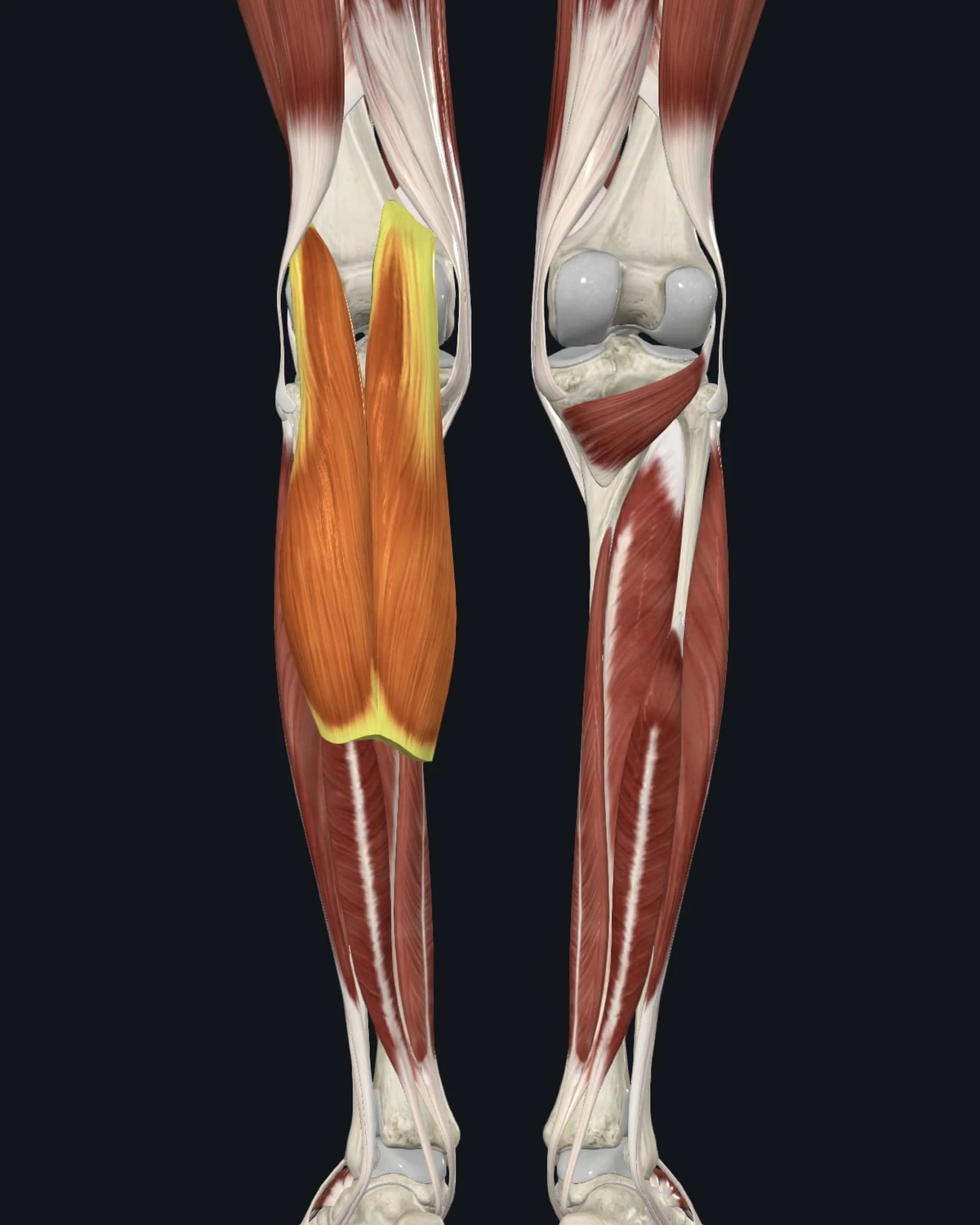
Attachments and action
Origin: The medial head from the medial femoral condyle and the lateral head from the lateral femoral condyle, above the knee joint.
Insertion: The calcaneus through the Achilles tendon, shared with the soleus.
Action: Plantarflexion of the ankle and assistance in knee flexion; the propulsion muscle of walking, running, and jumping.
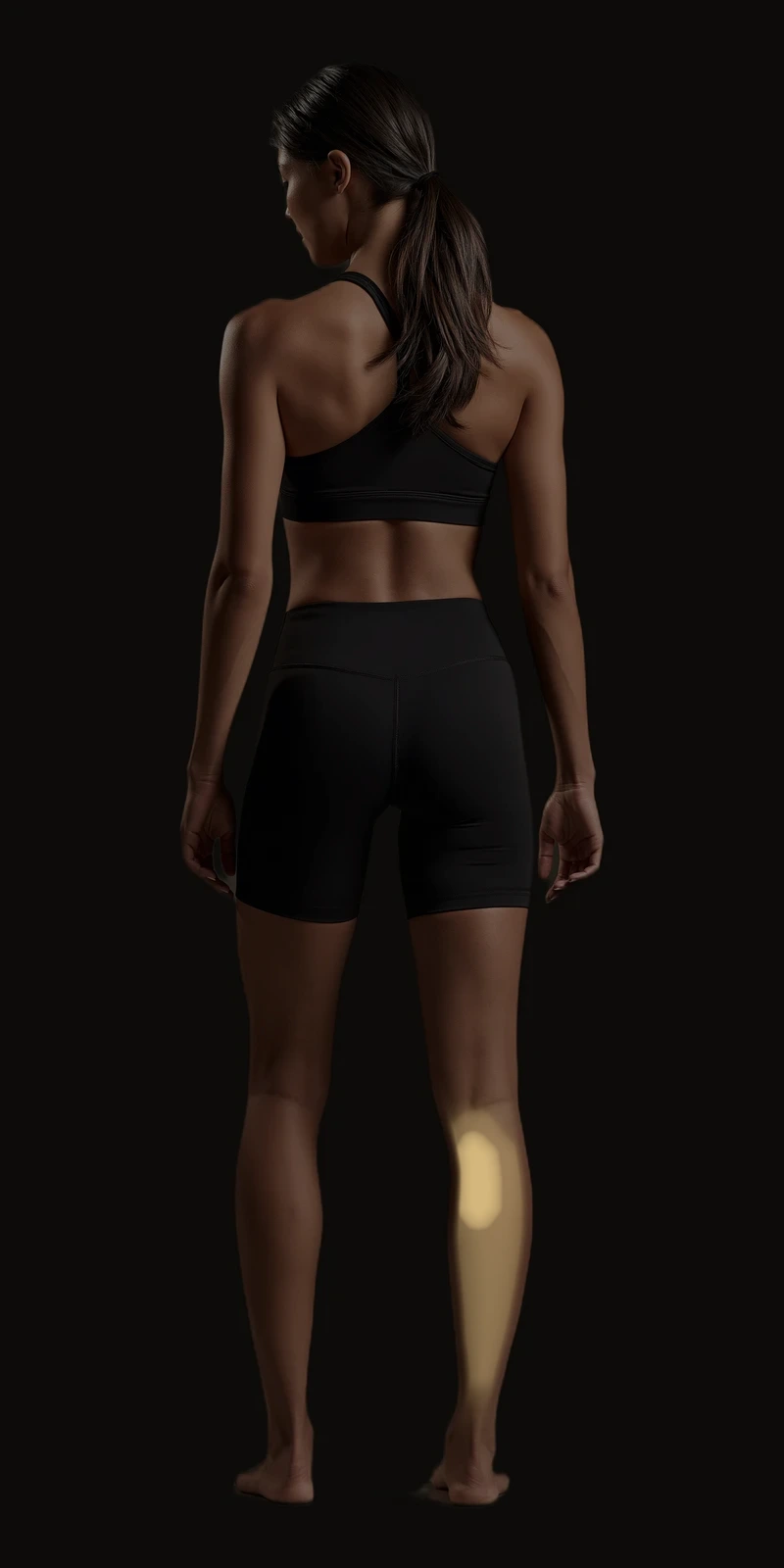
Where the pain is felt: The calf itself, strongest over the medial belly, spreading to the back of the knee and faintly into the lower thigh. The documented pattern also reaches the instep of the foot, on the sole side, which the standing figure cannot show; instep ache with calf tightness belongs to this map.
Common causes: Hill work, high heels and stiff dress shoes, cold-weather running, dehydration, long drives with a pointed foot, cycling with a low saddle.
Patients say: Instep ache after runs. Calf cramps that strike at night. Tightness that never stretches out. A calf that fatigues on hills.
When to get evaluated: One calf that is swollen, warm, red, or tender without injury is evaluated for a clot the same day. This is not a wait-and-see finding.
How this muscle is examined and treated
Examination compares calf bulk and flexibility side to side, tests single-leg heel raises, and maps the medial and lateral bellies for the points that reproduce the familiar calf and instep ache. Needling addresses the gastrocnemius bellies directly, with the depth kept superficial to the deeper vessel compartment. Assessment and treatment happen in the same visit.
Related conditions
Ankle & Foot PainTendinitisChronic Pain Patterns
Treatment points: Gastrocnemius motor points, BL57 Chengshan
This page is educational. It describes muscle referral patterns commonly associated with pain; it does not diagnose your condition. Individual patterns vary. For evaluation of your specific pain, see a licensed clinician. Seek immediate medical care for emergencies. Eugene Baek, L.Ac. · New Jersey License 25MZ00080600