Abductor Hallucis: Pain Pattern and Treatment
The abductor hallucis is the muscle along the inner edge of the sole, running from the heel bone to the big toe. It supports the inner arch and pulls the big toe away from the others. Its documented pattern is pain along the inner side of the heel and the inner edge of the foot, forward along the arch. It is a common finding in heel pain that has been called plantar fasciitis and has not answered to heel cups or stretching. The nerves to the sole pass beneath it at the inner ankle, so a tight one can also make the sole burn or go numb. It relates to the deep foot muscles page.
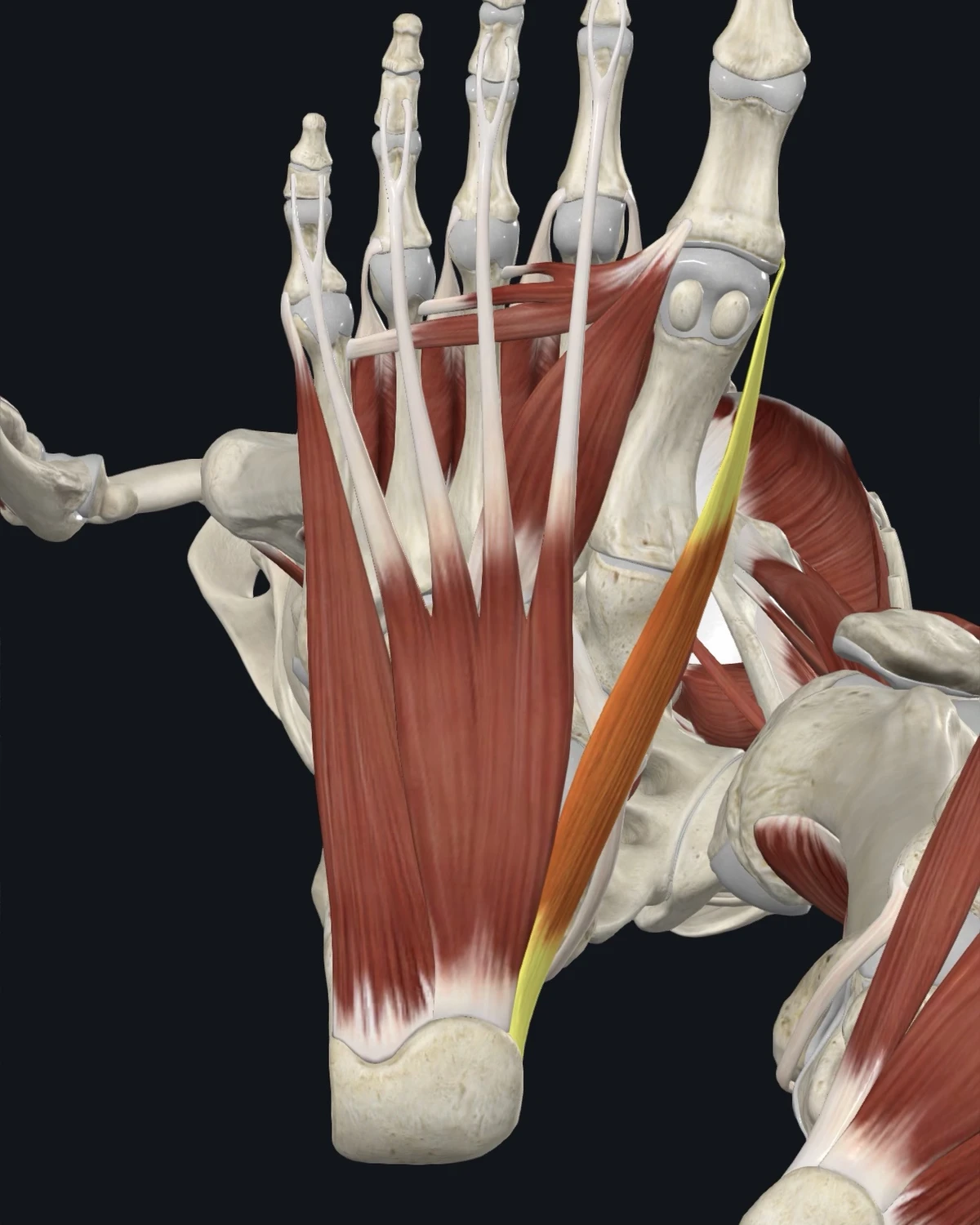
Attachments and action
Origin: The inner process of the calcaneal tuberosity, the flexor retinaculum, and the plantar aponeurosis.
Insertion: The inner side of the base of the proximal phalanx of the big toe, with the medial sesamoid.
Action: Abduction and flexion of the big toe at its base; it supports the inner arch with every step.
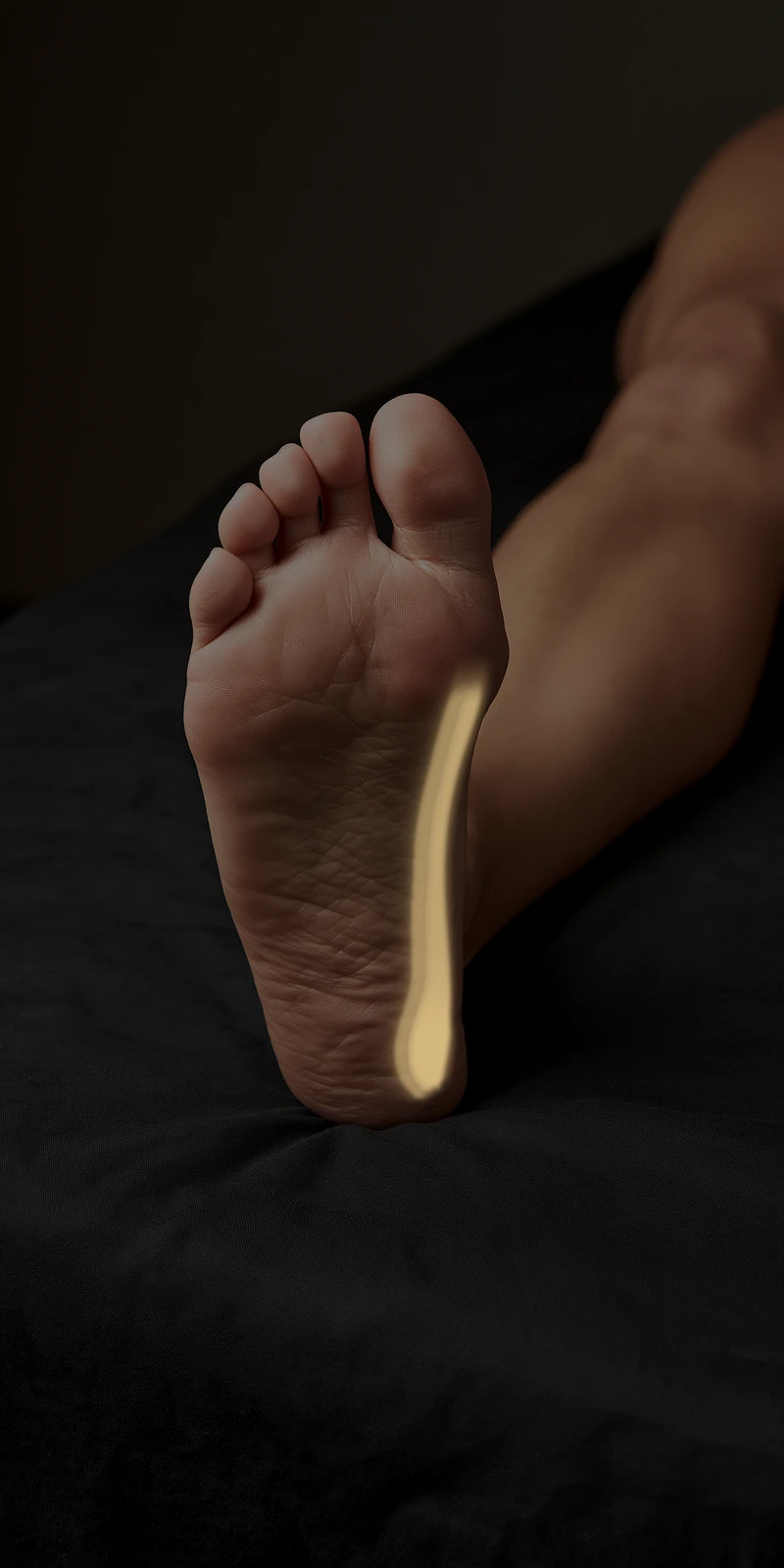
Where the pain is felt: Along the inner side of the heel. Along the inner edge of the foot, forward along the arch. Sometimes toward the ball of the big toe. With nerve involvement, burning or numbness in the sole.
Common causes: Flat feet or a foot that rolls in; shoes with no arch support; standing all day on hard floors; running in worn shoes; a sudden increase in walking or running; a long period in a boot or cast.
Patients say: "It is the inside of my heel, not the bottom." "The heel cups and the stretching did nothing." An ache along the inner edge of my foot after a long walk. "The sole of my foot burns at night."
When to get evaluated: Heel pain after a fall from a height, with swelling and an inability to bear weight, needs an X-ray first. A hot, red, swollen foot with fever needs medical evaluation. Numbness in the foot with weakness, or in both feet, needs a neurological assessment.
How this muscle is examined and treated
Examination presses along the inner edge of the sole from the heel forward for the point that reproduces the familiar inner-heel pain, tests big-toe abduction, and checks the inner ankle for the nerve signs. Needling here addresses the muscle along the inner edge of the foot. Assessment and treatment happen in the same visit.
Related conditions
Ankle & Foot PainTendinitisChronic Pain Patterns
This page is educational. It describes muscle referral patterns commonly associated with pain; it does not diagnose your condition. Individual patterns vary. For evaluation of your specific pain, see a licensed clinician. Seek immediate medical care for emergencies. Eugene Baek, L.Ac. · New Jersey License 25MZ00080600