Extensor Digitorum Brevis and Extensor Hallucis Brevis: Pain Pattern and Treatment
The extensor digitorum brevis and extensor hallucis brevis are the small muscles on the top of the foot, the fleshy mound in front of the outer ankle, running forward to the toes. They lift the toes with the long extensors from the shin. Their documented pattern is local: a coin-sized patch of pain on the top of the foot over the muscle, worse in a tight or laced shoe. It is the muscle behind a top-of-foot pain that has been X-rayed for a stress fracture and found normal. They relate to the tibialis anterior page and the deep foot muscles page.
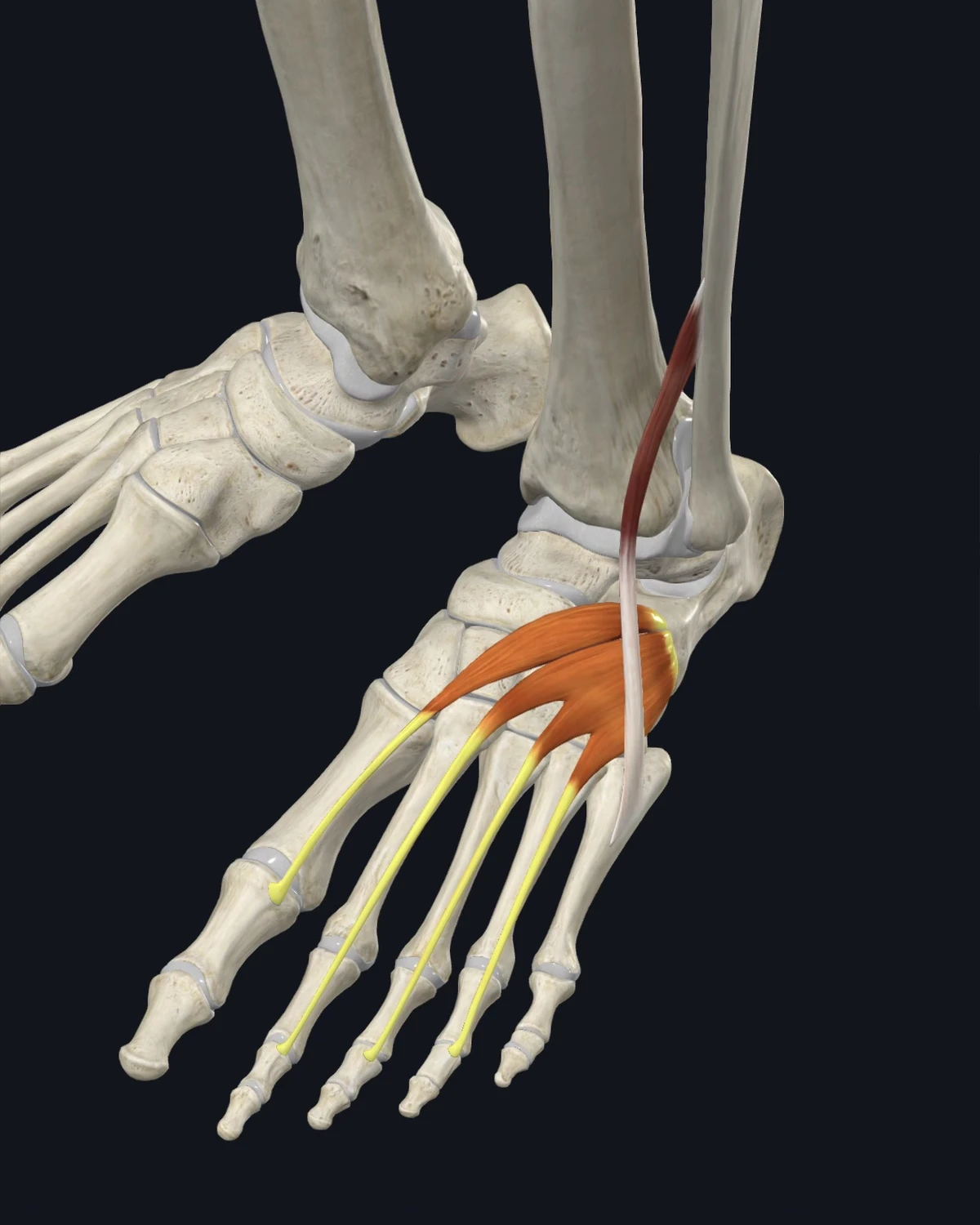
Attachments and action
Origin: The upper and outer surface of the calcaneus, in front of the outer ankle.
Insertion: Extensor hallucis brevis: the base of the proximal phalanx of the big toe. Extensor digitorum brevis: the extensor tendons of the second through fourth toes.
Action: Extension of the big toe and the second through fourth toes at their bases; they assist the long extensors.

Where the pain is felt: On the top of the foot in front of the outer ankle, a patch the size of a large coin. Worse in a tight shoe or a laced boot, and with the toes pulled up.
Common causes: Tight laces or a boot that presses the top of the foot; high heels that push the foot forward; a stubbed foot; a heavy object dropped on the foot; running on hard ground in thin shoes; a long period in a cast.
Patients say: "Right on top of my foot, in front of the ankle bone." "Tying my shoe tight sets it off." A stress fracture workup that was normal. "It is tender to one thumb."
When to get evaluated: Top-of-foot pain that started with a sudden increase in running, with swelling over one long bone, needs an X-ray for a stress fracture first, and a repeat or a scan if the first film is normal and the pain continues. Foot pain after a crush injury, with swelling and an inability to bear weight, needs an X-ray. A hot, red, swollen foot with fever needs medical evaluation.
How this muscle is examined and treated
Examination tests lifting the toes against resistance and presses the fleshy mound on the top of the foot for the point that reproduces the familiar patch of pain, and checks the long bones of the foot for the tenderness of a stress fracture. Needling here addresses the small muscles on the top of the foot, shallow. Assessment and treatment happen in the same visit.
Related conditions
Ankle & Foot PainTendinitisSports & Performance Injuries
This page is educational. It describes muscle referral patterns commonly associated with pain; it does not diagnose your condition. Individual patterns vary. For evaluation of your specific pain, see a licensed clinician. Seek immediate medical care for emergencies. Eugene Baek, L.Ac. · New Jersey License 25MZ00080600