Soleus: Pain Pattern and Treatment
The soleus is the deep, flat calf muscle beneath the gastrocnemius, working continuously in standing and gait. Its documented pattern concentrates on the heel and the Achilles line, with a diffuse upper-calf zone and a rare, small sacroiliac patch. A large share of persistent plantar heel pain examined in clinic involves this map.
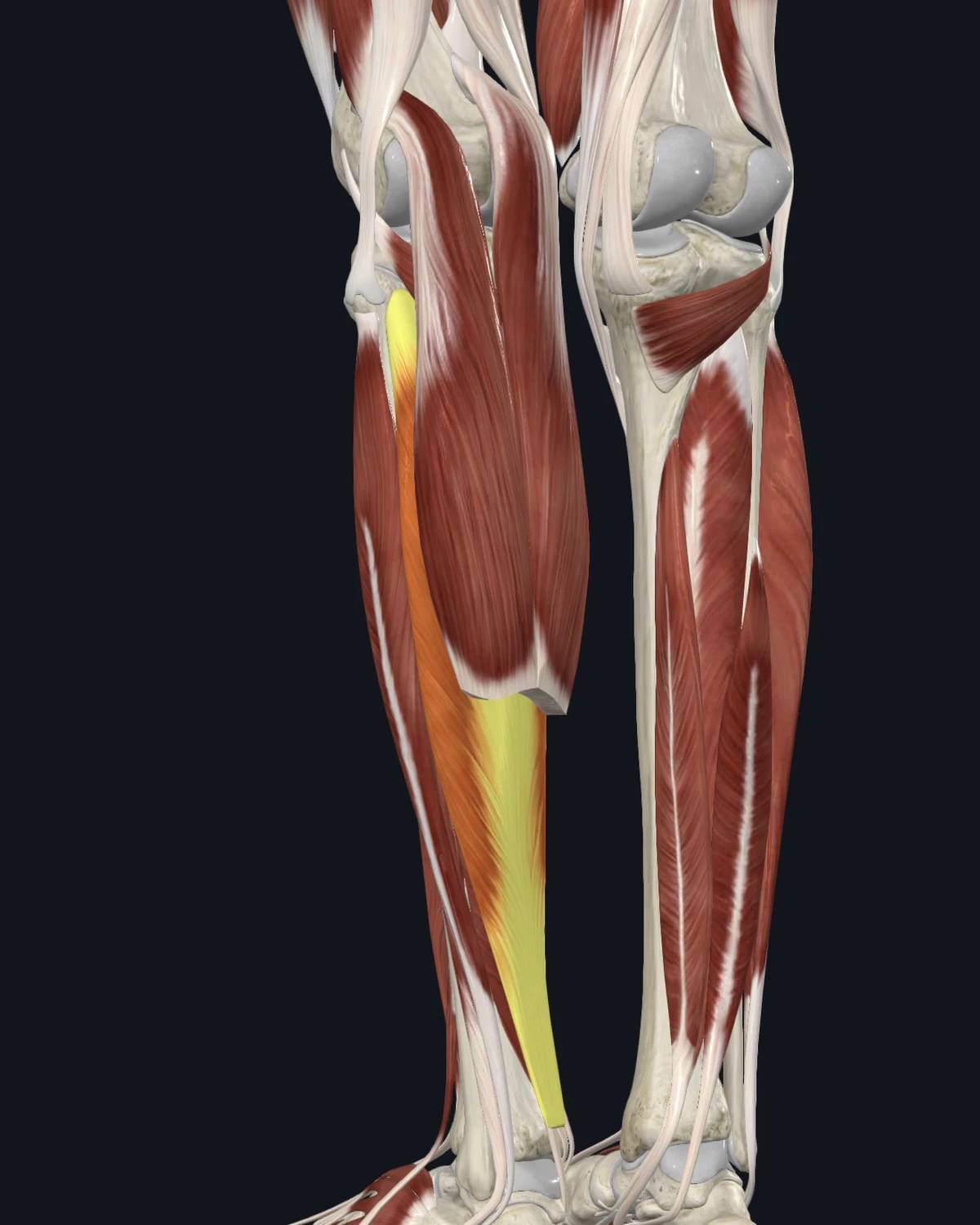
Attachments and action
Origin: The posterior surface of the tibia along the soleal line and the upper posterior fibula.
Insertion: The calcaneus through the Achilles tendon, shared with the gastrocnemius.
Action: Plantarflexion of the ankle regardless of knee position, and continuous postural work holding the body upright over the foot.
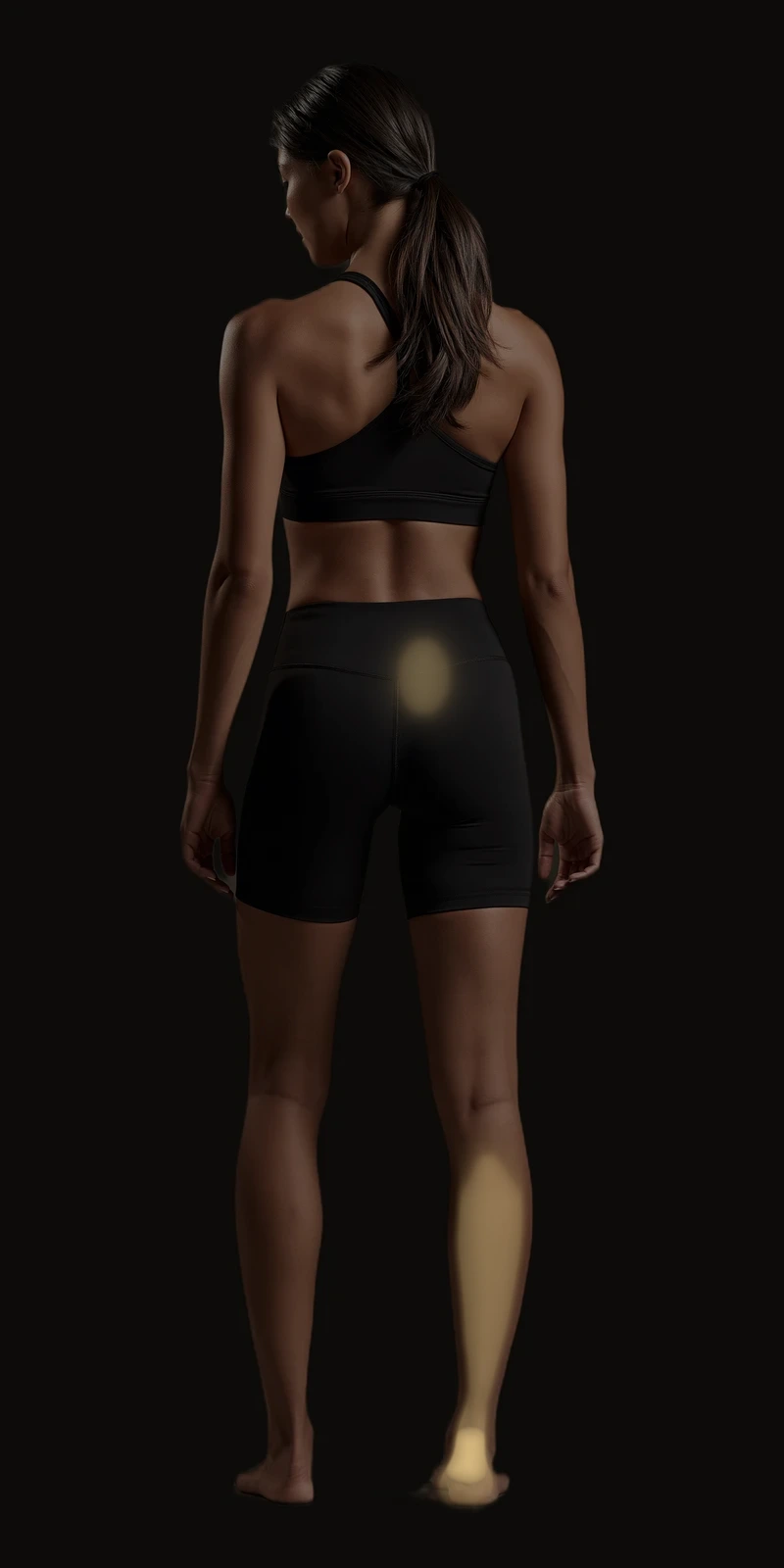
Where the pain is felt: The back of the heel and the lower Achilles line, with the strongest documented zone wrapping the heel itself, including its underside where the standing figure cannot show it. A second, more diffuse zone covers the upper half of the calf, and a rare small patch appears near the sacroiliac joint on the same side.
Common causes: Running volume, calf-dominant sports, footwear changes to flat shoes, prolonged tiptoe work, walking in soft sand, long uphill days.
Patients say: Heel pain with the first steps of the morning. An ache up the Achilles line. Calf fatigue climbing stairs. Heel pain diagnosed as plantar fasciitis that has not resolved.
When to get evaluated: A sudden snap in the calf or heel with immediate weakness is assessed for tendon rupture before anything else. One calf that is swollen, warm, or red without injury is evaluated for a clot the same day.
How this muscle is examined and treated
Examination tests bent-knee heel raises to isolate the soleus from the gastrocnemius, compares ankle dorsiflexion range, and maps the deep calf for the points that reproduce the heel and Achilles pain. Needling reaches the soleus through or beside the gastrocnemius at examined depth. Assessment and treatment happen in the same visit. Dry needling for plantar heel pain carries meta-analysis support.
Related conditions
Ankle & Foot PainTendinitisChronic Pain Patterns
Treatment points: Soleus motor point, BL60 Kunlun, KI3 Taixi
This page is educational. It describes muscle referral patterns commonly associated with pain; it does not diagnose your condition. Individual patterns vary. For evaluation of your specific pain, see a licensed clinician. Seek immediate medical care for emergencies. Eugene Baek, L.Ac. · New Jersey License 25MZ00080600