Deep Foot Muscles: Pain Pattern and Treatment
The deep foot muscles, including the quadratus plantae, flexor digitorum brevis, and abductor hallucis, form the working layers of the sole. Their documented patterns produce deep plantar heel pain, ache under the metatarsal heads, and inner-heel pain. This territory is where persistent pain labeled plantar fasciitis or blamed on a heel spur frequently lives.
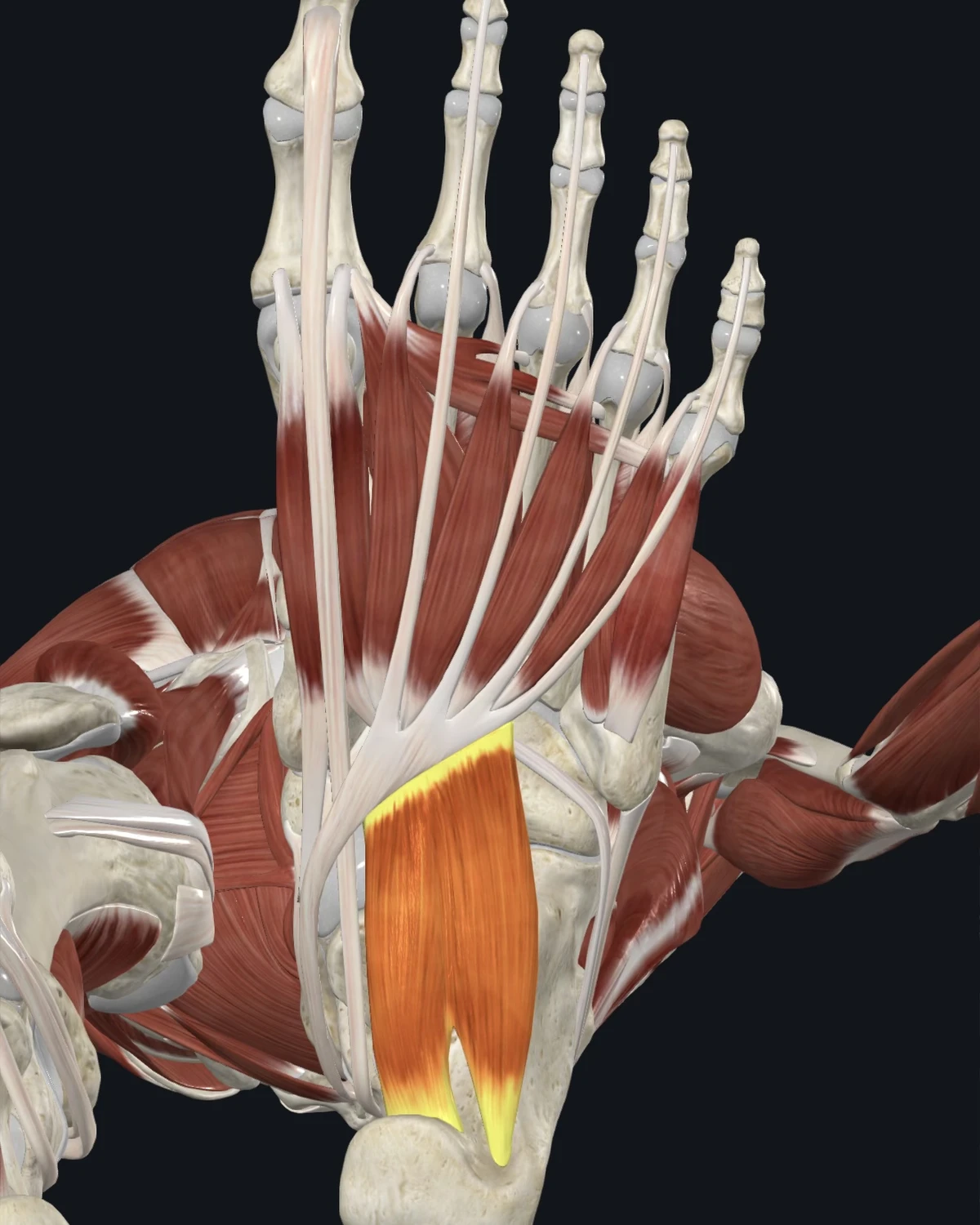
Attachments and action
Origin: The quadratus plantae from the calcaneus; the flexor digitorum brevis from the calcaneus and plantar fascia; the abductor hallucis from the medial calcaneus.
Insertion: The quadratus plantae into the flexor digitorum longus tendons; the flexor digitorum brevis into the middle phalanges of the lesser toes; the abductor hallucis into the great toe’s proximal phalanx.
Action: Toe flexion aligned with the foot’s axis, arch support under load, and pressure distribution across the sole in stance and push-off.
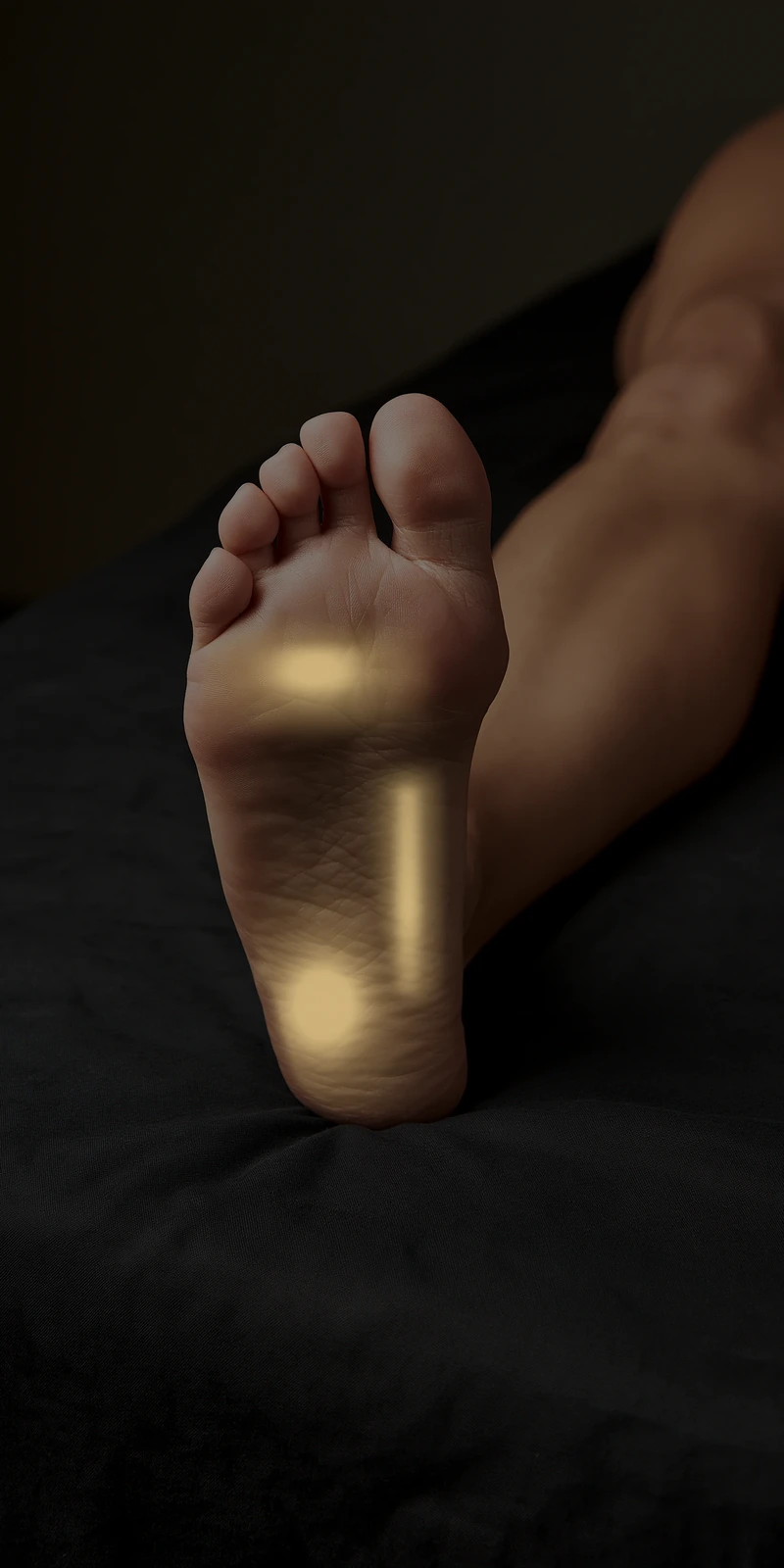
Where the pain is felt: Deep in the plantar heel for the quadratus plantae, the sole under the metatarsal heads for the flexor digitorum brevis, and the inner heel and medial arch border for the abductor hallucis. The pattern is shown on a plantar view because the territory lives on the sole.
Common causes: Unsupportive footwear, sudden barefoot volume, standing occupations, high-arch and flat-foot mechanics, toe-gripping gait habits.
Patients say: Arch ache by afternoon. Ball-of-foot burning in thin shoes. Heel pain that moved in and stayed. A heel that hurts deep under the pad, not at the fascia’s edge.
When to get evaluated: Numbness or burning in a defined band of the sole is assessed for nerve entrapment. Foot pain with fever, spreading redness, or in a person with diabetes goes to medical evaluation first.
How this muscle is examined and treated
Examination distinguishes deep heel-pad pain from fascial-edge pain, tests intrinsic toe strength, and maps the sole’s layers for the points that reproduce the familiar heel and ball ache. Needling addresses the deep sole musculature at examined depth. Assessment and treatment happen in the same visit. Dry needling for plantar heel pain carries meta-analysis support.
Related conditions
Ankle & Foot PainTendinitisChronic Pain Patterns
This page is educational. It describes muscle referral patterns commonly associated with pain; it does not diagnose your condition. Individual patterns vary. For evaluation of your specific pain, see a licensed clinician. Seek immediate medical care for emergencies. Eugene Baek, L.Ac. · New Jersey License 25MZ00080600