Tibialis Anterior: Pain Pattern and Treatment
The tibialis anterior runs along the front of the shin and lifts the foot with every step. Its documented pattern refers primarily to the great toe itself and to the front of the ankle, with a band running down the anteromedial shin. It sits inside many “shin splints” complaints and big-toe pain with a normal toe exam.
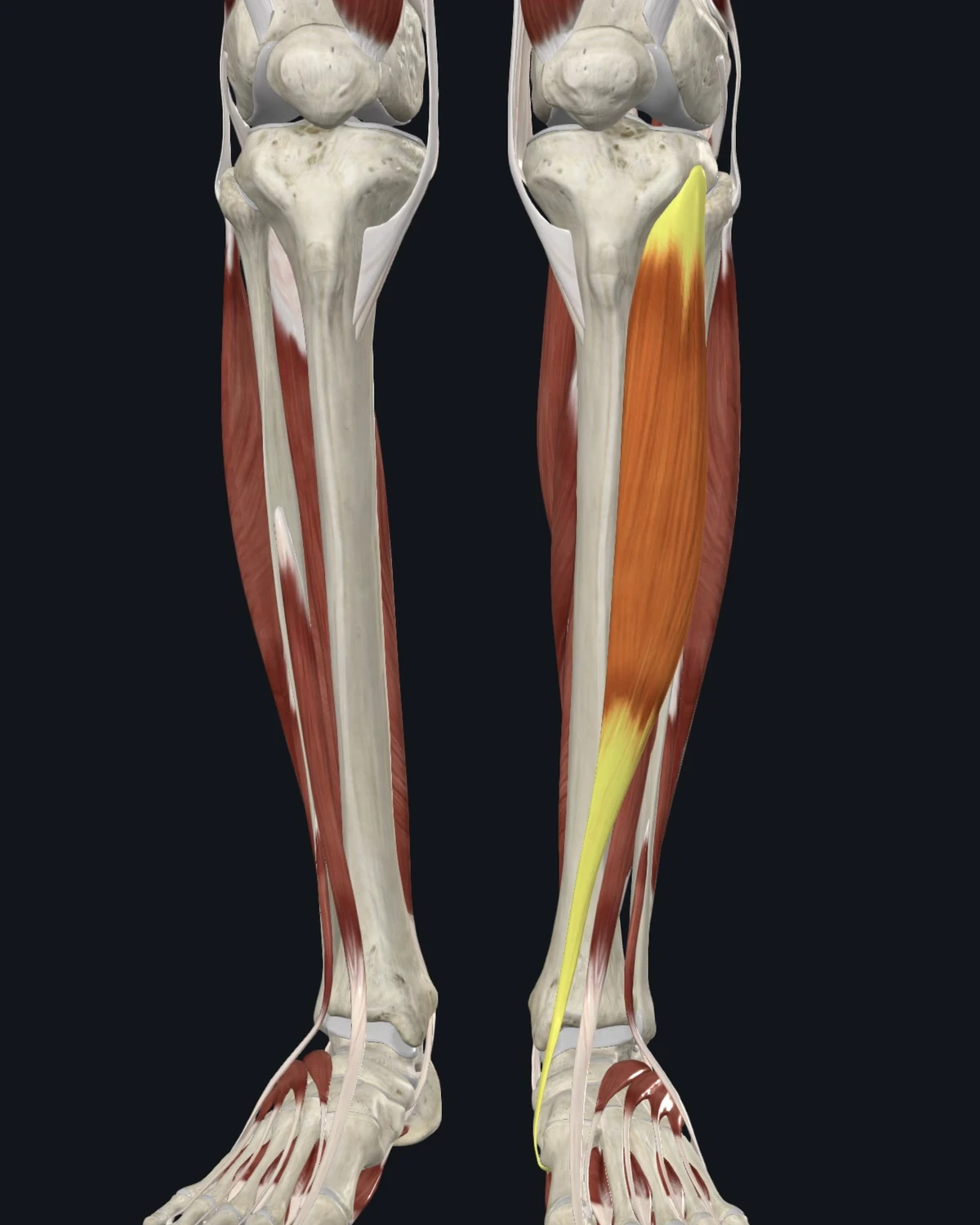
Attachments and action
Origin: The lateral condyle and upper lateral surface of the tibia and the interosseous membrane.
Insertion: The medial cuneiform and the base of the first metatarsal, on the inner border of the midfoot.
Action: Dorsiflexion of the ankle and inversion of the foot; controls the forefoot’s descent after heel strike and supports the medial arch.
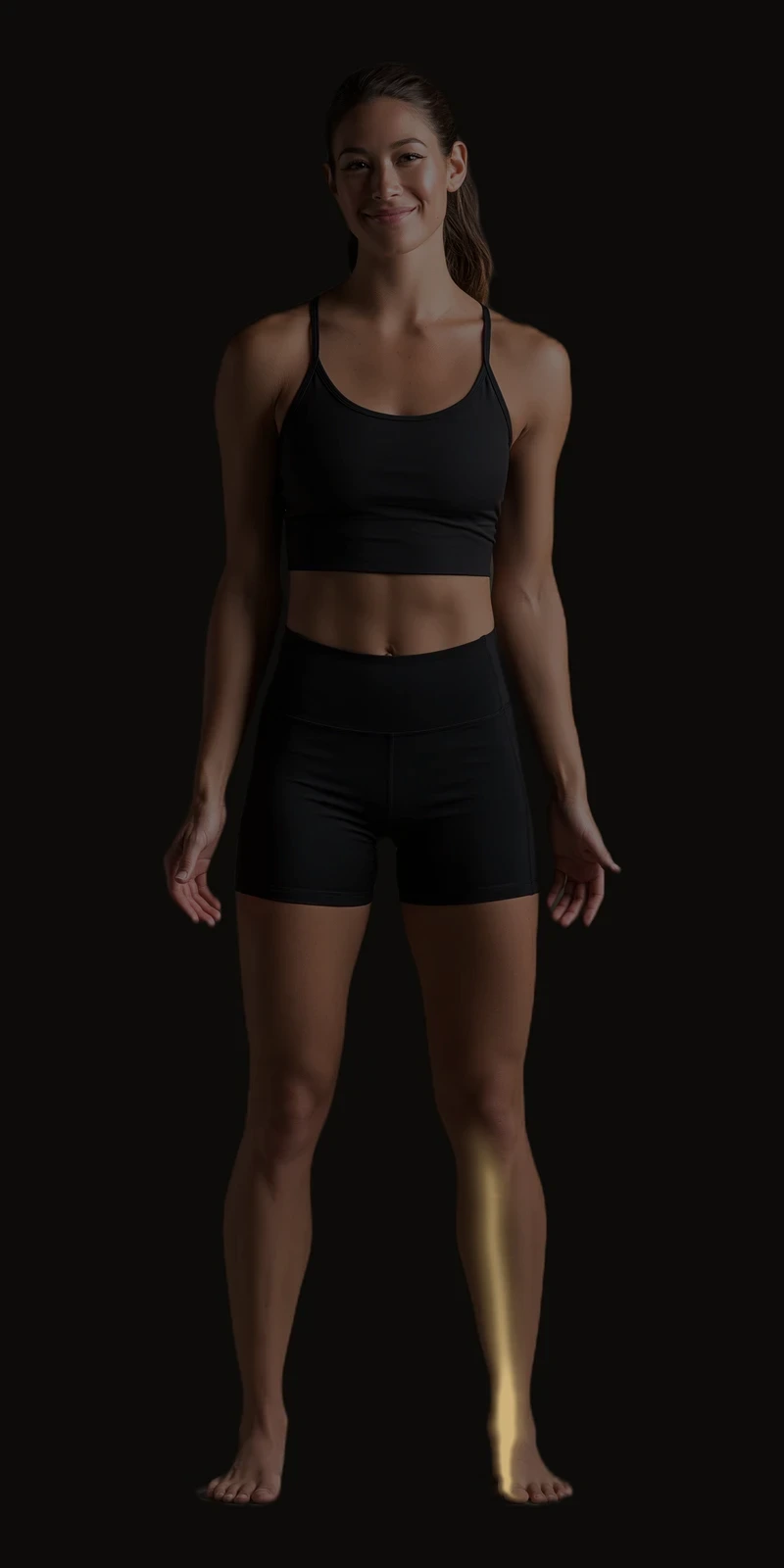
Where the pain is felt: The front of the ankle and the big toe, connected by a line across the top of the foot. The documented maps mark this muscle’s referral as strongest at the ankle and the great toe itself, with a spill band descending the anteromedial shin from below the knee.
Common causes: New or increased running, downhill loads, tight calves forcing extra lift work, hard-surface walking in flat shoes, long braking drives.
Patients say: “Shin splints” along the front. Ankle ache with a clean ankle exam. A big toe that hurts to lift. Dragging or slapping of the foot when fatigued.
When to get evaluated: Shin pain that is focal on the bone, worse with every impact, and present at rest is assessed for stress fracture. A tight, hard, severely painful shin compartment after exertion, especially with numbness, is an emergency evaluation.
How this muscle is examined and treated
Examination tests resisted dorsiflexion and heel walking, compares the shin’s muscle belly against the bone line, and maps the upper third of the muscle for the points that reproduce the ankle and toe pain. Needling addresses the belly beside the tibial crest at safe depth from the neurovascular bundle. Assessment and treatment happen in the same visit.
Related conditions
Ankle & Foot PainTendinitisChronic Pain Patterns
Treatment points: ST36 Zusanli, ST41 Jiexi
This page is educational. It describes muscle referral patterns commonly associated with pain; it does not diagnose your condition. Individual patterns vary. For evaluation of your specific pain, see a licensed clinician. Seek immediate medical care for emergencies. Eugene Baek, L.Ac. · New Jersey License 25MZ00080600