Vastus Medialis: Pain Pattern and Treatment
The vastus medialis is the teardrop-shaped head of the quadriceps just above the inner knee. It straightens the last few degrees of the knee and holds the kneecap in from the inside. Its documented pattern is pain at the inner front of the knee, around the inner edge of the kneecap, and a knee that buckles without warning. The pain can fade over weeks while the buckling stays. This is a sub-page of the quadriceps group page.
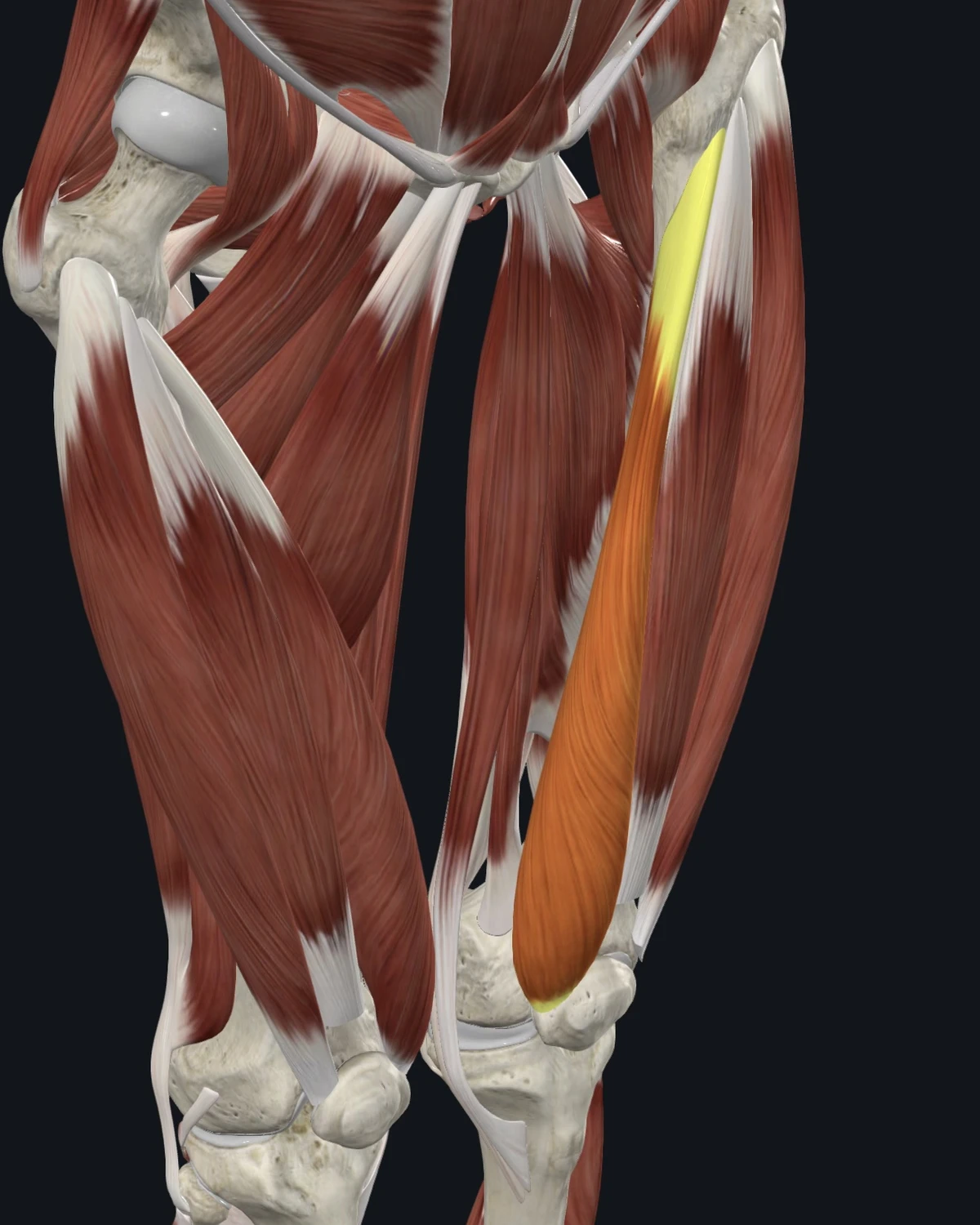
Attachments and action
Origin: The lower half of the intertrochanteric line, the inner lip of the linea aspera, and the medial supracondylar line of the femur.
Insertion: The inner border of the patella and, through the quadriceps tendon and patellar ligament, the tibial tuberosity.
Action: Extension of the knee, especially the final degrees; it pulls the kneecap inward against the vastus lateralis.
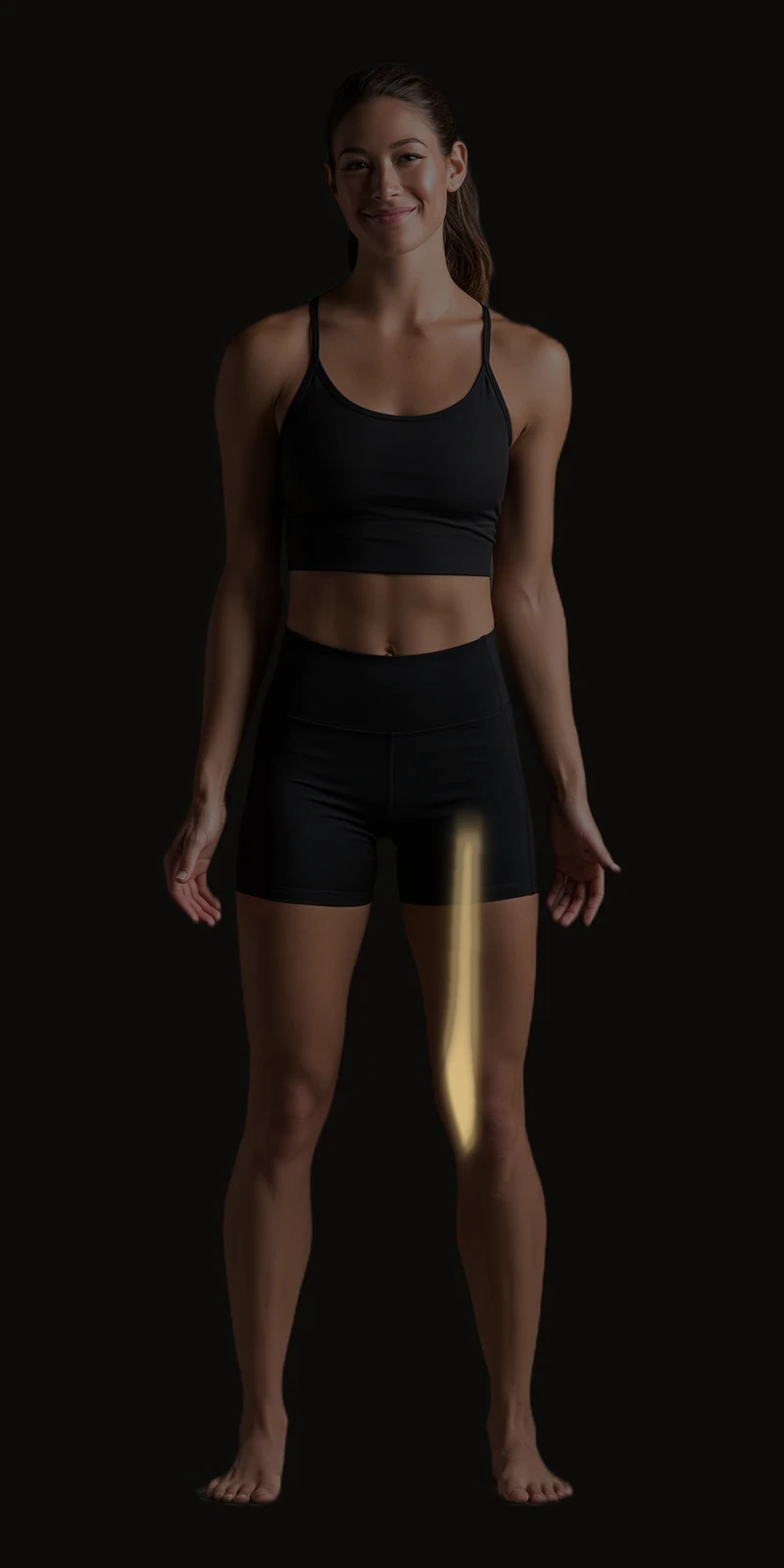
Where the pain is felt: The inner front of the knee, around and above the inner edge of the kneecap. A line along the inner front of the thigh. A knee that buckles or gives way, sometimes without much pain at all.
Common causes: A slip or a twist that jarred the knee; running on cambered roads; flat feet that roll in and turn the knee inward; deep squats and lunges; kneeling on the inner knee; a long period of limping.
Patients say: "My knee gives out on stairs." "It aches on the inside of my kneecap." Pain kneeling. "The pain went away, but it still buckles."
When to get evaluated: A knee that buckles with swelling, a pop at the moment of injury, or an inability to bear weight needs assessment for a ligament or cartilage injury. Inner-knee pain with calf swelling, warmth, or redness needs a blood clot ruled out first.
How this muscle is examined and treated
Examination tests the last degrees of knee extension against resistance, watches for the give-way, and presses the teardrop above the inner knee and higher on the inner thigh for the points that reproduce the pain. Needling here addresses the muscle above the inner knee. Assessment and treatment happen in the same visit.
Related conditions
Knee PainSports & Performance InjuriesChronic Pain Patterns
This page is educational. It describes muscle referral patterns commonly associated with pain; it does not diagnose your condition. Individual patterns vary. For evaluation of your specific pain, see a licensed clinician. Seek immediate medical care for emergencies. Eugene Baek, L.Ac. · New Jersey License 25MZ00080600