Rectus Femoris: Pain Pattern and Treatment
The rectus femoris is the middle head of the quadriceps and the only one that crosses both the hip and the knee. It runs from the front of the hip bone straight down the thigh to the kneecap. Its documented pattern is a deep ache in the front of the knee, in and under the kneecap, worst going down stairs and at night. The trigger point sits far from the pain, high in the thigh just below the hip, which is why the knee gets examined and the hip does not. This is a sub-page of the quadriceps group page.
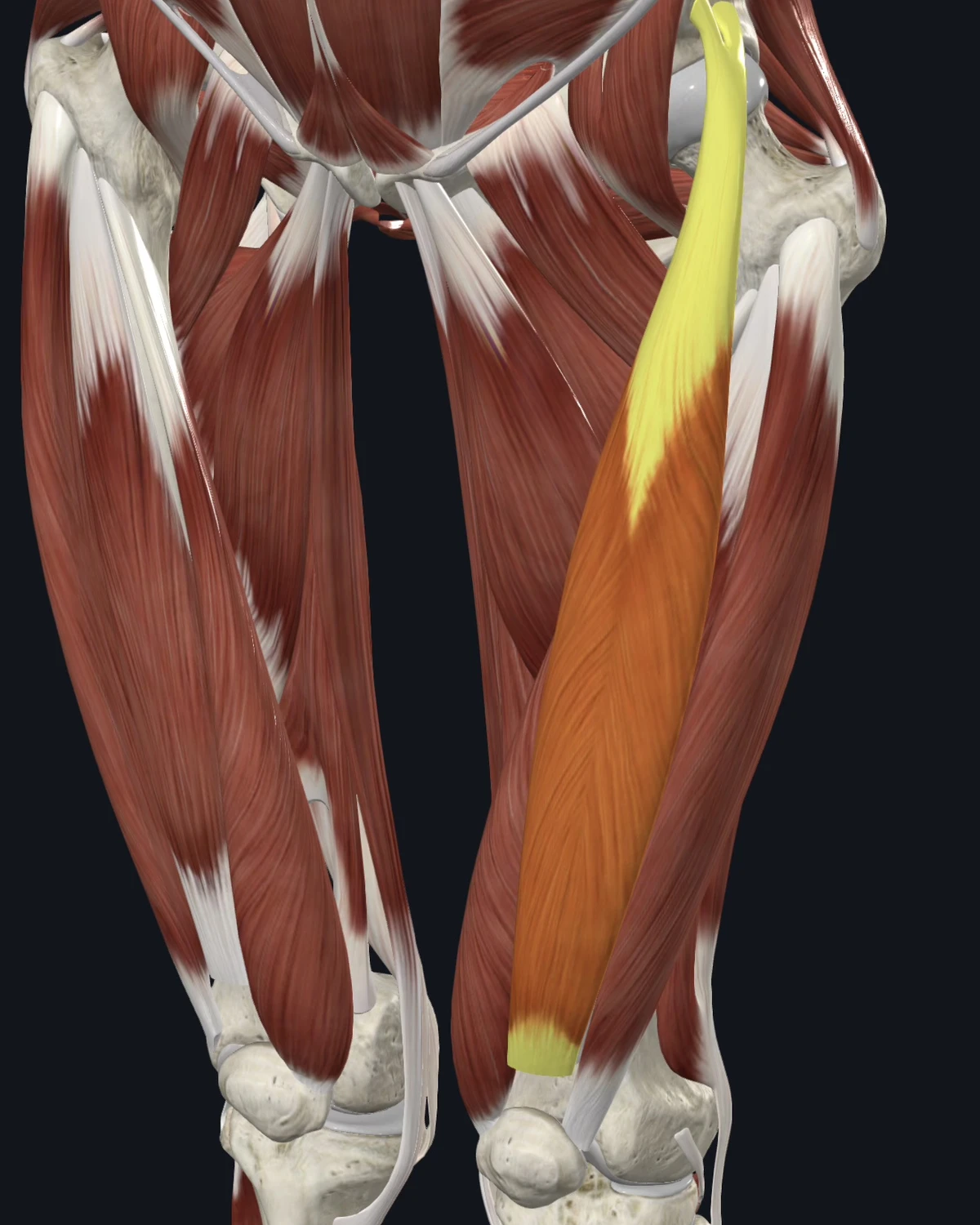
Attachments and action
Origin: The anterior inferior iliac spine and the groove above the rim of the acetabulum.
Insertion: The base of the patella and, through the patellar ligament, the tibial tuberosity.
Action: Extension of the knee and flexion of the hip; it is the quadriceps head that swings the leg forward in a kick.
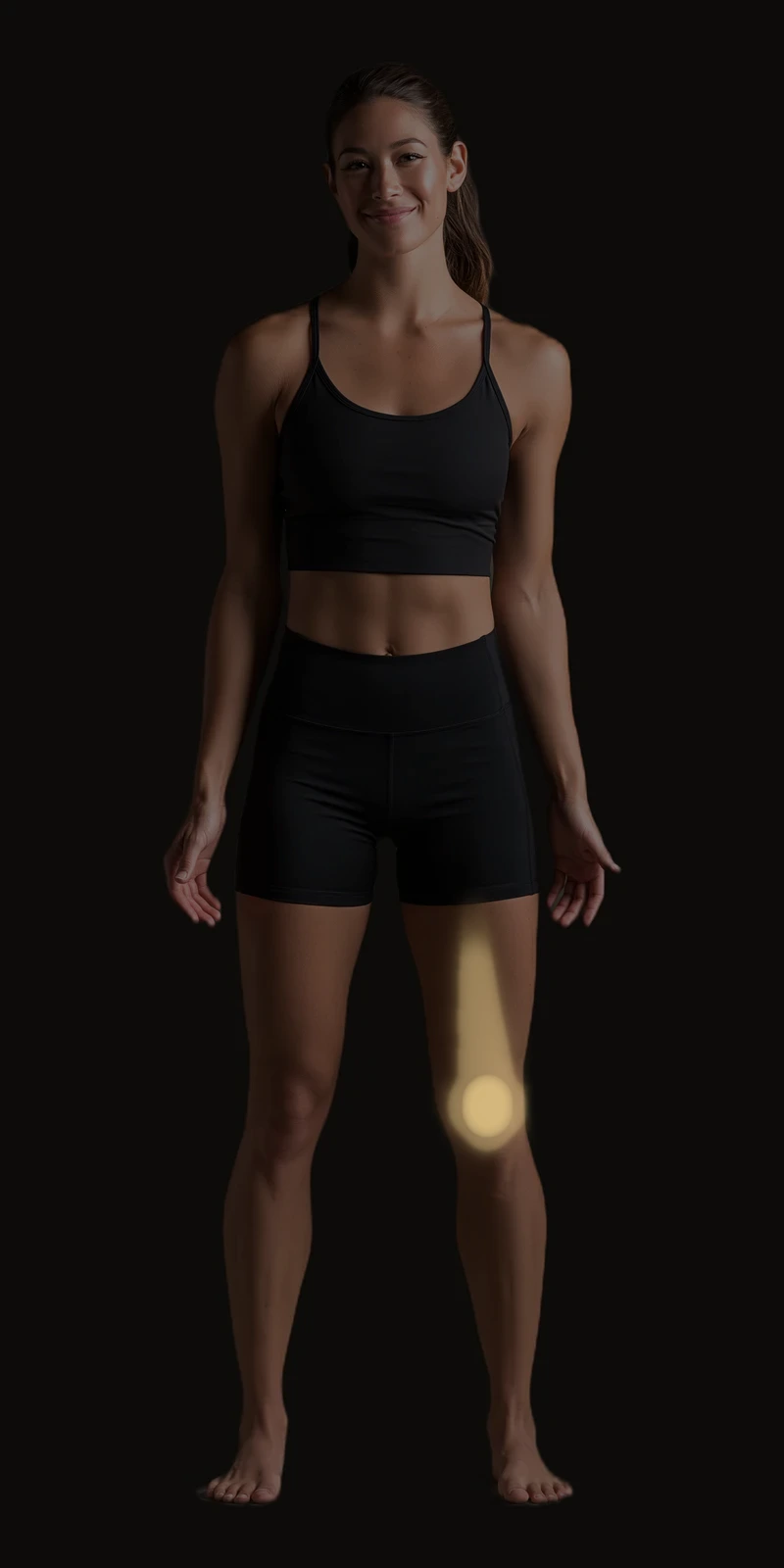
Where the pain is felt: The front of the knee, in and around the kneecap and deep beneath it. A lighter ache up the front of the thigh above the knee, worst at night. Worst going down stairs and at night.
Common causes: Kicking sports; sprinting; a fall that jammed the hip into extension; a long stretch sitting with the hip flexed; hip surgery or a hip cast; a leg-length difference.
Patients say: "It is deep in my kneecap." "Going down stairs is worse than going up." A knee that aches at night. "The knee scan was clean."
When to get evaluated: Front-of-knee pain with swelling, a pop at injury, or an inability to bear weight needs assessment for a ligament or tendon injury. Front-of-hip pain in an older adult after a fall needs a hip fracture ruled out first.
How this muscle is examined and treated
Examination tests hip flexion and knee extension together, measures the muscle's length with the patient face down, and presses high on the front of the thigh just below the hip for the point that sends pain to the knee. Needling here addresses the muscle high in the thigh, not at the knee. Assessment and treatment happen in the same visit.
Related conditions
Knee PainHip & Glute PainSports & Performance Injuries
This page is educational. It describes muscle referral patterns commonly associated with pain; it does not diagnose your condition. Individual patterns vary. For evaluation of your specific pain, see a licensed clinician. Seek immediate medical care for emergencies. Eugene Baek, L.Ac. · New Jersey License 25MZ00080600