Vastus Intermedius: Pain Pattern and Treatment
The vastus intermedius is the deepest of the four quadriceps, lying against the front of the femur under the rectus femoris. It straightens the knee with the other three and is the hardest of them to reach by hand. Its documented pattern is pain in the middle of the front of the thigh, spreading up over the muscle, with a knee that is stiff to straighten after sitting and weak climbing stairs. It is the muscle behind thigh pain, not knee pain, in a knee that is slow to get going. This is a sub-page of the quadriceps page.
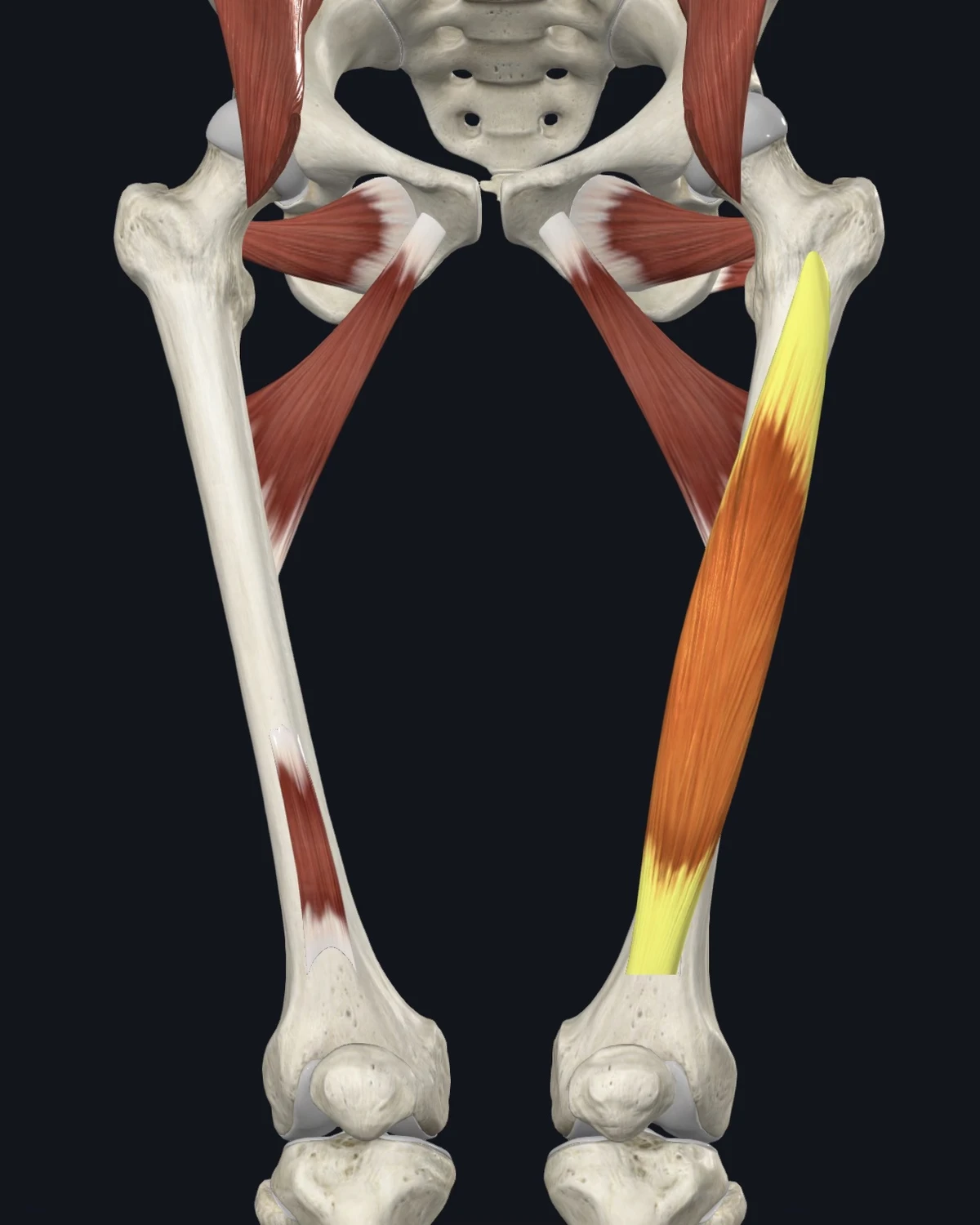
Attachments and action
Origin: The front and outer surfaces of the upper two thirds of the femur.
Insertion: The quadriceps tendon, and through it the patella and the tibial tuberosity.
Action: Extension of the knee, with the other three quadriceps; it works in every knee extension regardless of hip position.
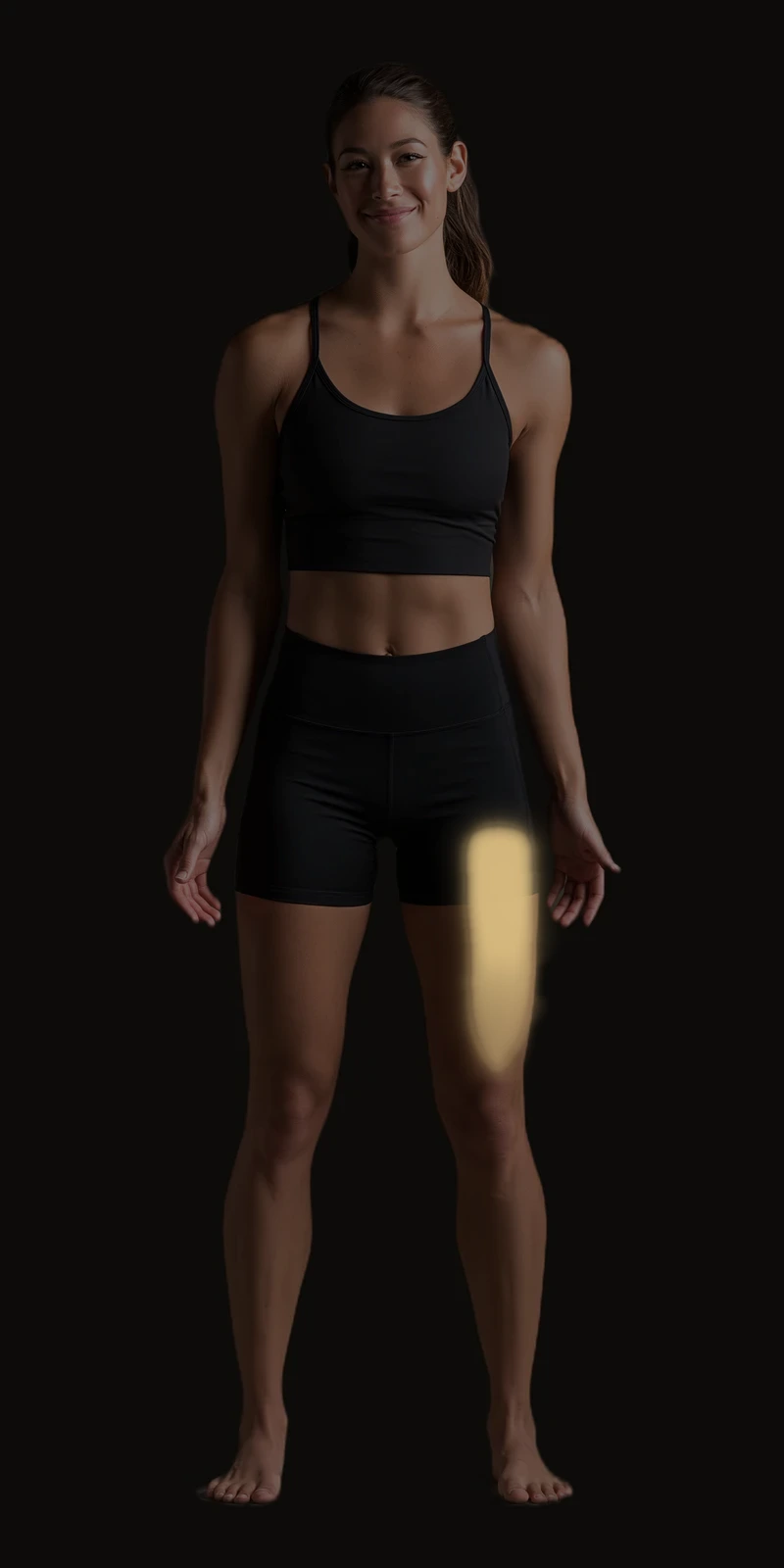
Where the pain is felt: In the middle of the front of the thigh, spreading upward. A knee that is stiff to straighten after sitting. Weakness and pain climbing stairs. The knee itself is spared.
Common causes: A direct blow to the front of the thigh, a "dead leg"; a fall onto the knee; deep squats and lunges; a long period with the knee bent, as on a flight; the weeks after knee surgery; kicking sports.
Patients say: "My thigh aches, not my knee." "I cannot straighten my knee right away after sitting." Stairs are weak on that side. "It started after a knee to the thigh in a game."
When to get evaluated: Thigh pain after a blow, with swelling that is getting bigger, a hard lump, or an inability to bend the knee, needs medical evaluation for a deep bleed or a bone bruise. Thigh pain with calf swelling, warmth, or shortness of breath needs urgent assessment for a clot. A knee that locks, gives way, or swells after a twist needs a knee examination first.
How this muscle is examined and treated
Examination tests knee extension against resistance from a bent position and watches the first steps after sitting, then presses the front of the thigh through the rectus femoris for the deep point that reproduces the familiar thigh pain. Needling here addresses the deep muscle against the femur, through the rectus femoris. Assessment and treatment happen in the same visit.
Related conditions
Knee PainSports & Performance InjuriesPost-Surgical Recovery
This page is educational. It describes muscle referral patterns commonly associated with pain; it does not diagnose your condition. Individual patterns vary. For evaluation of your specific pain, see a licensed clinician. Seek immediate medical care for emergencies. Eugene Baek, L.Ac. · New Jersey License 25MZ00080600