Vastus Lateralis: Pain Pattern and Treatment
The vastus lateralis is the largest head of the quadriceps, the thick muscle down the outside of the thigh. It straightens the knee and steadies the kneecap from the outside. It carries more trigger points than any other part of the quadriceps. Its documented pattern is pain down the outer thigh to the outside of the knee, a kneecap that sticks and will not glide, and a side of the thigh too tender to sleep on. This is a sub-page of the quadriceps group page.
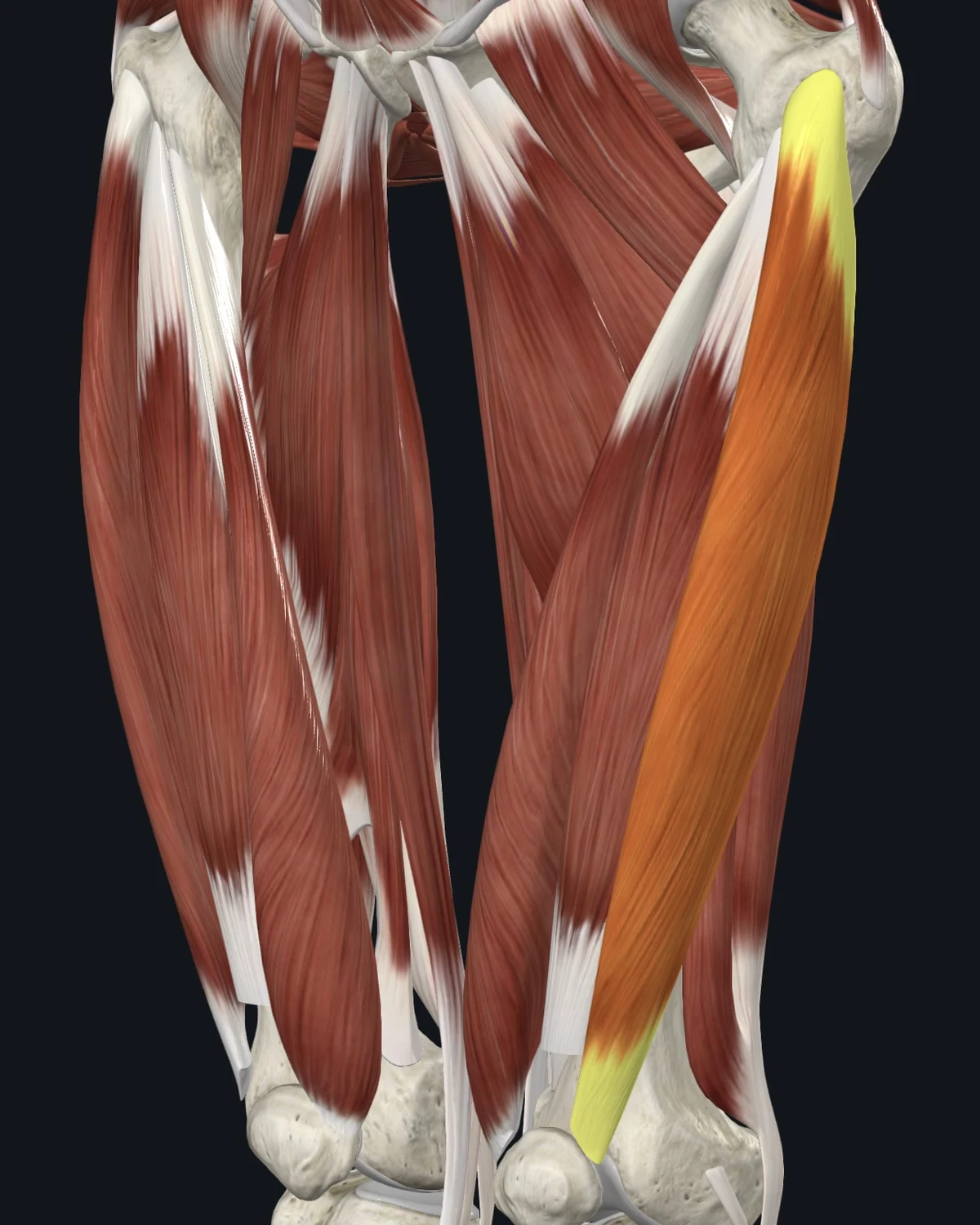
Attachments and action
Origin: The upper part of the intertrochanteric line, the greater trochanter, the gluteal tuberosity, and the outer lip of the linea aspera of the femur.
Insertion: The outer border of the patella and, through the quadriceps tendon and patellar ligament, the tibial tuberosity.
Action: Extension of the knee; with the vastus medialis it steadies the kneecap in its groove.
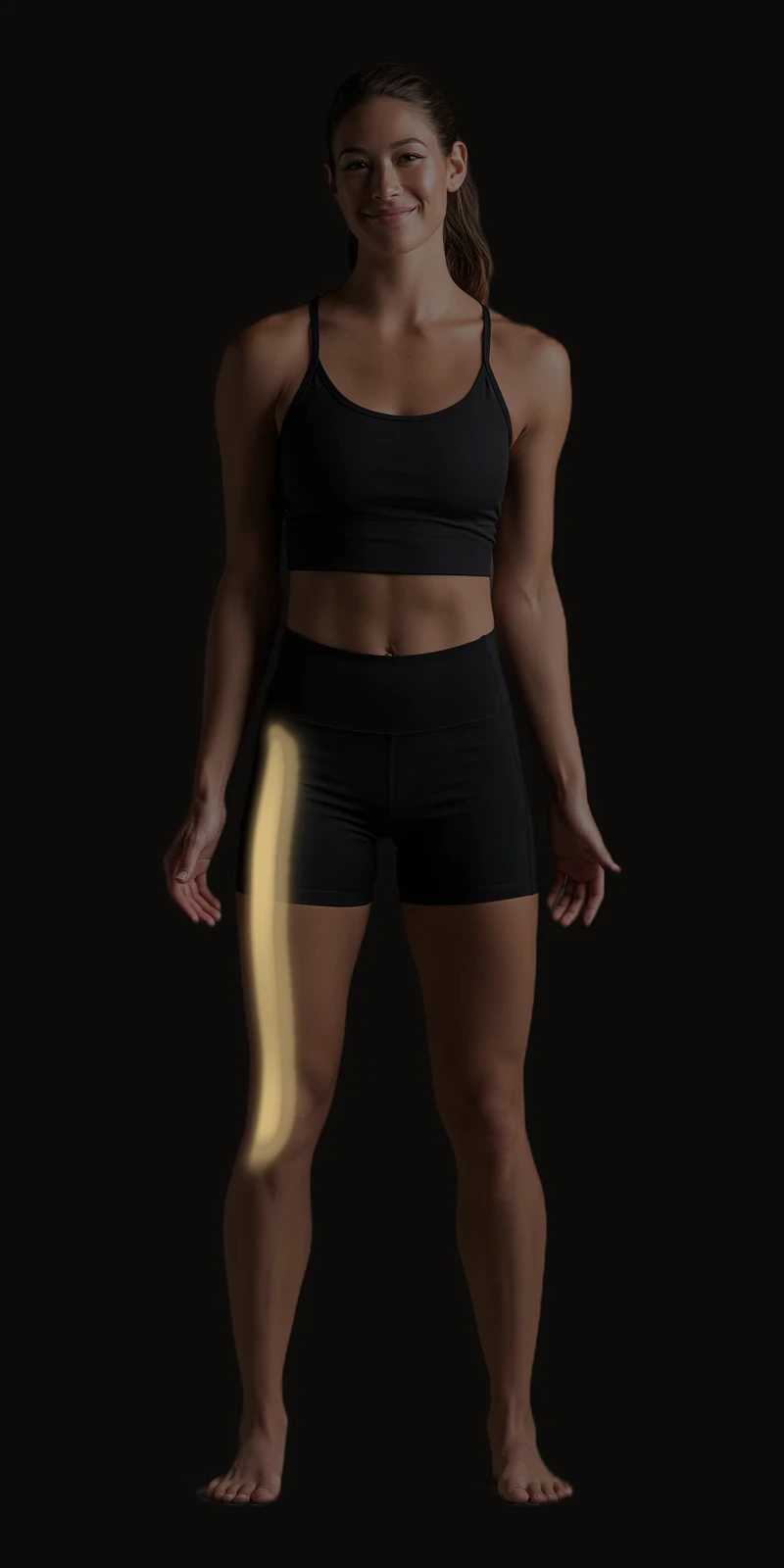
Where the pain is felt: Down the outer thigh from the hip to the knee. The outside of the kneecap and the outer back of the knee. A kneecap that sticks, catches, or will not let the knee bend all the way.
Common causes: Running, especially downhill; squats and lunges; a direct blow to the outer thigh; a long drive with the knee bent; immobilization in a cast or brace; a kneecap that tracks to the outside.
Patients say: "My kneecap gets stuck." "I cannot lie on that side at night." Pain down the outside of the thigh that the IT band work did not change. "I cannot fully bend my knee."
When to get evaluated: Outer-thigh pain with swelling, warmth, or redness needs a blood clot ruled out first. A knee that locks and will not straighten, or that gives way with a pop, needs assessment for a cartilage or ligament injury.
How this muscle is examined and treated
Examination measures knee bend, checks the kneecap's glide, and presses the outer thigh from the hip to the knee for the points that reproduce the pain and the sticking. Needling here addresses the muscle along the outer thigh. Assessment and treatment happen in the same visit.
Related conditions
Knee PainHip & Glute PainSports & Performance Injuries
This page is educational. It describes muscle referral patterns commonly associated with pain; it does not diagnose your condition. Individual patterns vary. For evaluation of your specific pain, see a licensed clinician. Seek immediate medical care for emergencies. Eugene Baek, L.Ac. · New Jersey License 25MZ00080600