Quadriceps: Pain Pattern and Treatment
The quadriceps covers the front of the thigh and straightens the knee. Two of its muscles carry the documented knee patterns: the vastus medialis refers to the inner and front of the knee, and the rectus femoris refers in and around the kneecap and deep into the joint, with an aching zone in the lower front of the thigh above the knee. The rectus femoris point sits near the hip, a long way from where the pain is felt, which is why this source of knee pain is easily missed.
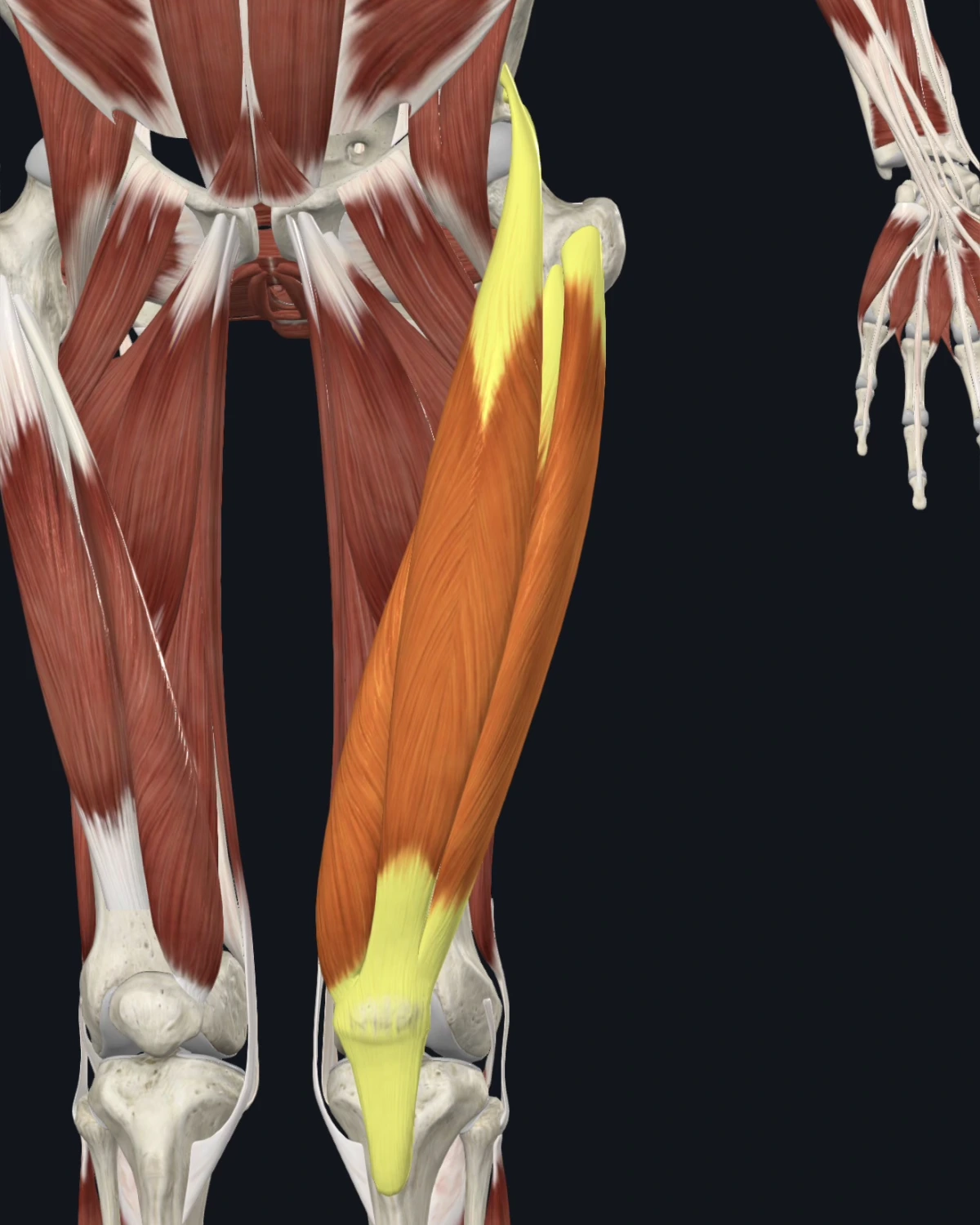
Attachments and action
Origin: The anterior inferior iliac spine of the pelvis (rectus femoris) and the medial line of the femur from the intertrochanteric line along the linea aspera (vastus medialis).
Insertion: The patella through the quadriceps tendon, continuing as the patellar ligament to the tibial tuberosity.
Action: Extension of the knee; the rectus femoris also flexes the hip as the only quadriceps muscle crossing both joints.
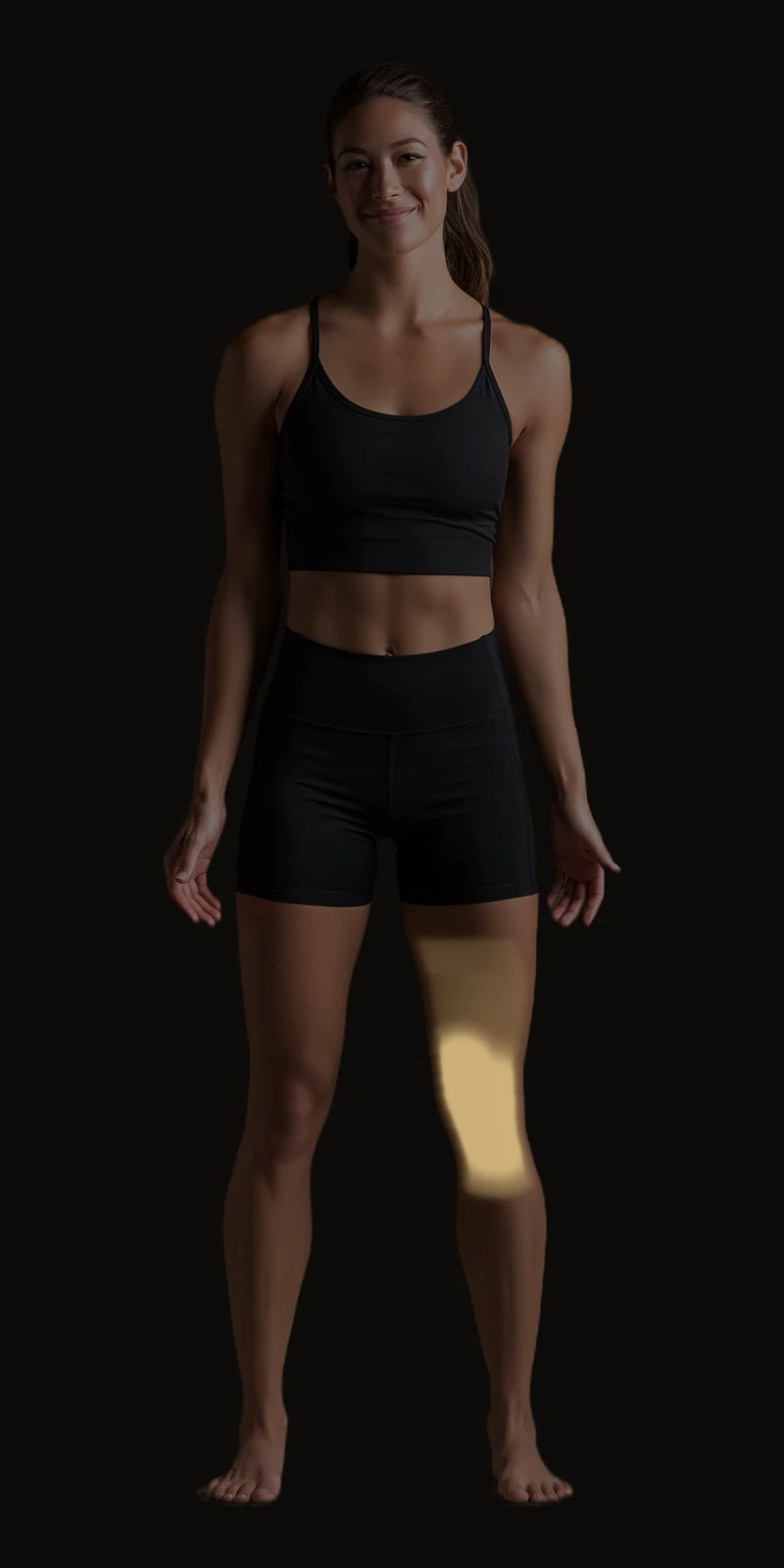
Where the pain is felt: In and around the kneecap and deep in the knee joint, at the inner knee, and as a deep ache in the lower front of the thigh above the knee, often worse at night.
Common causes: Running and jumping sports, deep squats and lunges, kneeling work, downhill walking, a sudden increase in training load, prolonged sitting with the hip flexed.
Patients say: “Deep in my kneecap.” A knee that aches at night above the joint. Weakness or buckling on stairs.
When to get evaluated: Knee pain with true joint swelling, locking, giving way after a twisting injury, or inability to bear weight gets orthopedic assessment before needling.
How this muscle is examined and treated
Examination tests resisted knee extension and hip flexion, screens the joint itself, and maps the rectus femoris near its hip attachment and the vastus medialis above the inner knee for the points that reproduce the familiar pain. Needling addresses both muscles directly. Assessment and treatment happen in the same visit.
Related conditions
Knee PainSports & Performance InjuriesChronic Pain Patterns
Treatment points: Quadriceps motor points, ST34 Liangqiu, SP10 Xuehai, Xiyan
This page is educational. It describes muscle referral patterns commonly associated with pain; it does not diagnose your condition. Individual patterns vary. For evaluation of your specific pain, see a licensed clinician. Seek immediate medical care for emergencies. Eugene Baek, L.Ac. · New Jersey License 25MZ00080600