Biceps Femoris: Pain Pattern and Treatment
The biceps femoris is the outer hamstring, running from the sit bone and the back of the femur down to the outside of the knee. It bends the knee and turns the lower leg outward. Its documented pattern is pain at the back of the knee that spreads up the outer back of the thigh, worst when sitting with the chair edge pressing the thigh. This is a sub-page of the hamstrings group page.
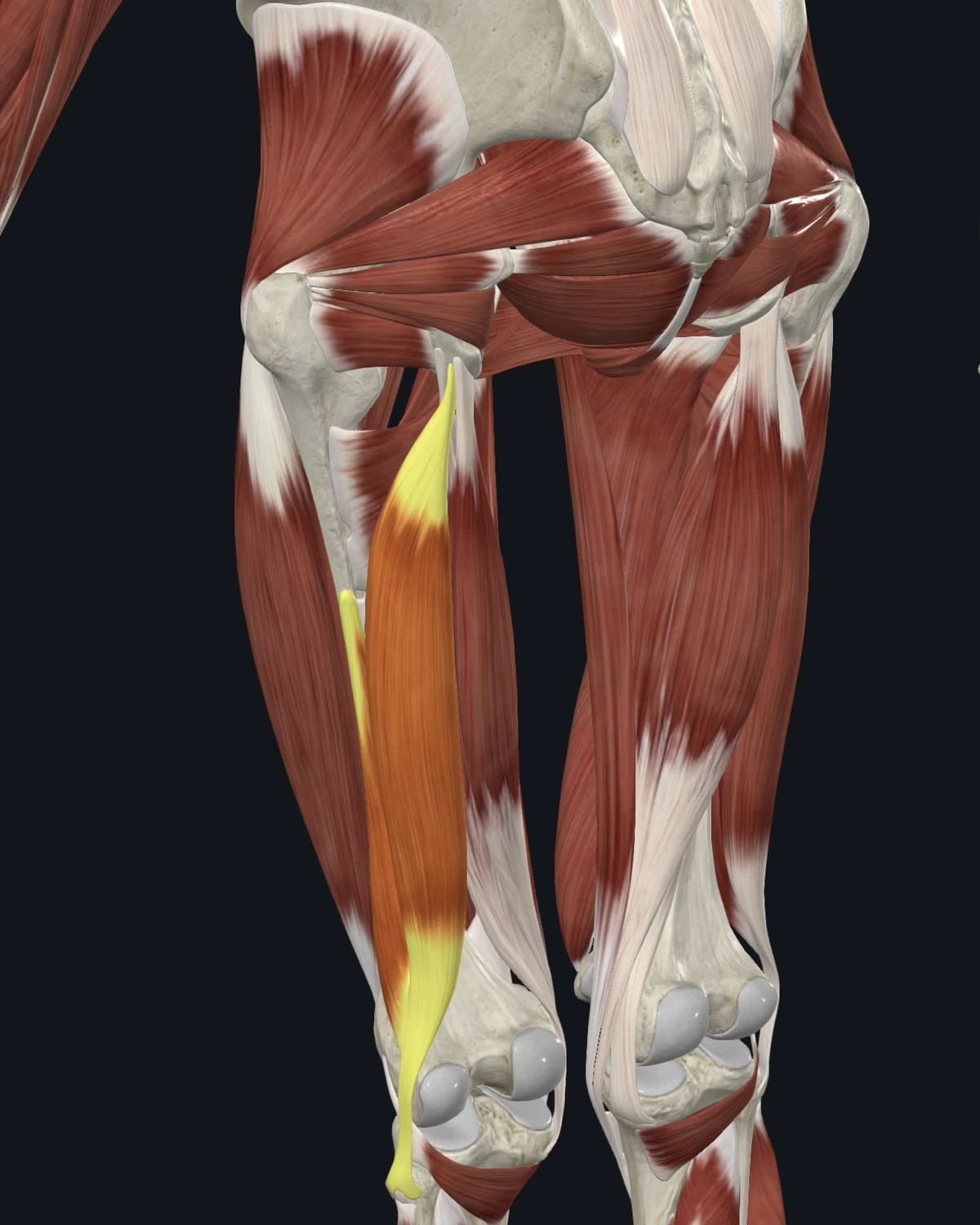
Attachments and action
Origin: Long head from the ischial tuberosity; short head from the outer lip of the linea aspera and the lateral supracondylar line of the femur.
Insertion: The head of the fibula and the lateral condyle of the tibia.
Action: Flexion of the knee; the long head extends the hip; with the knee bent it rotates the lower leg outward.
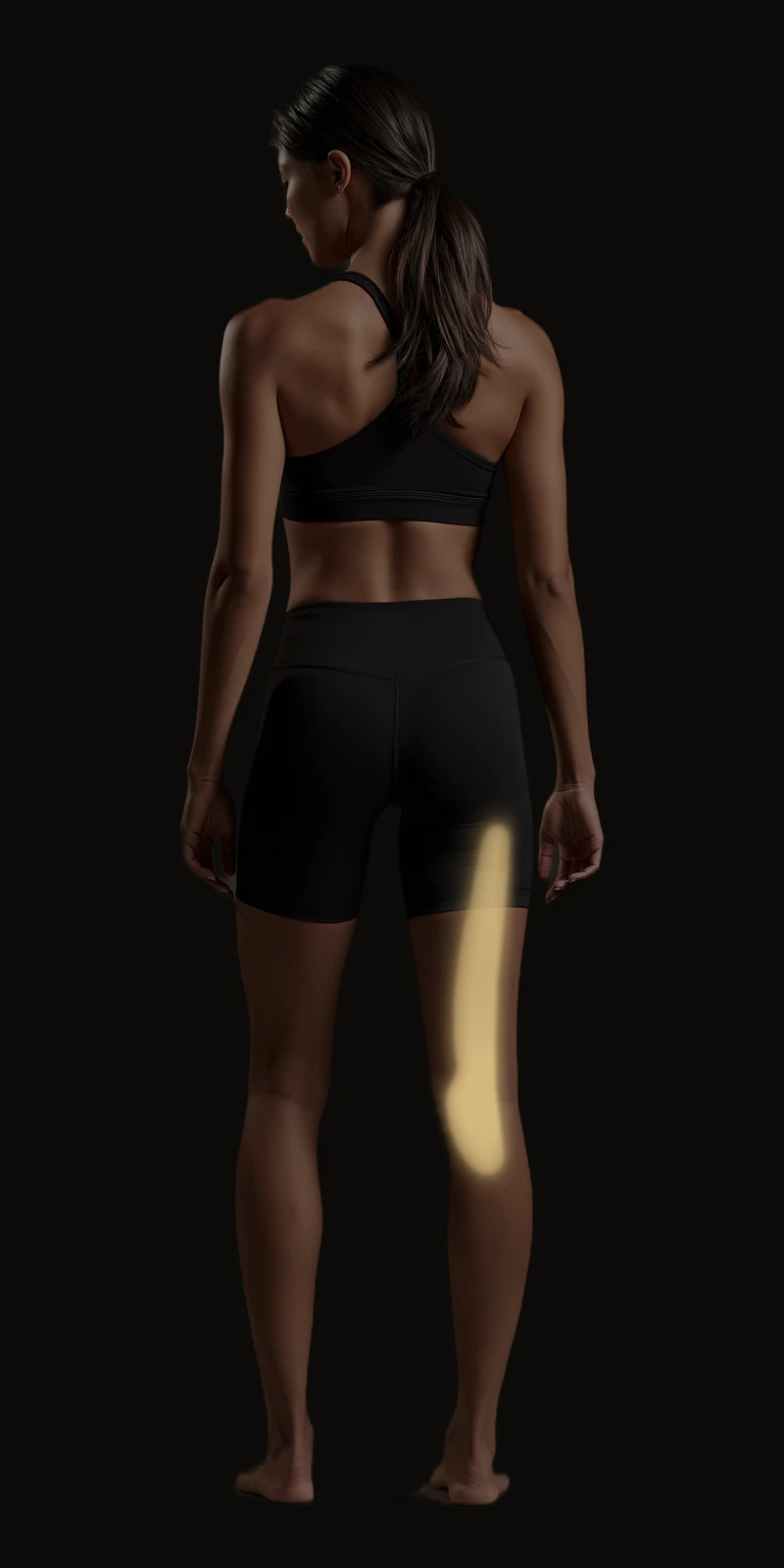
Where the pain is felt: The back of the knee, spreading up the outer back of the thigh and a short way down into the outer calf as one continuous ache. Worst sitting, especially on a chair whose edge presses the back of the thigh.
Common causes: Sitting on a chair that is too high or too deep; sprinting and a pulled hamstring that healed short; a fall onto the sit bone; a long drive; sport with sudden stops.
Patients say: "The back of my knee aches when I sit." "It runs up the outside of the back of my thigh." Limping after sitting. A hamstring that tore years ago and never felt right.
When to get evaluated: Back-of-knee pain with swelling, warmth, or redness of the calf needs a blood clot ruled out first. A sudden tearing pain with bruising and weakness needs a hamstring tear assessed.
How this muscle is examined and treated
Examination tests knee flexion with the lower leg turned out against resistance, then presses the outer hamstring from mid-thigh to the knee for the point that reproduces the back-of-knee pain. Needling here addresses the muscle along the outer back of the thigh. Assessment and treatment happen in the same visit.
Related conditions
Knee PainHip & Glute PainSports & Performance Injuries
This page is educational. It describes muscle referral patterns commonly associated with pain; it does not diagnose your condition. Individual patterns vary. For evaluation of your specific pain, see a licensed clinician. Seek immediate medical care for emergencies. Eugene Baek, L.Ac. · New Jersey License 25MZ00080600