Popliteus: Pain Pattern and Treatment
The popliteus is a small muscle lying deep at the back of the knee that unlocks the joint at the start of every step. Its documented pattern is pain at the back of the knee, staying within the muscle’s own area rather than travelling down the leg. Travell and Simons called it the bent-knee troublemaker: the pain shows itself crouching, squatting, walking downhill, and descending stairs, and it is routinely blamed on the meniscus.
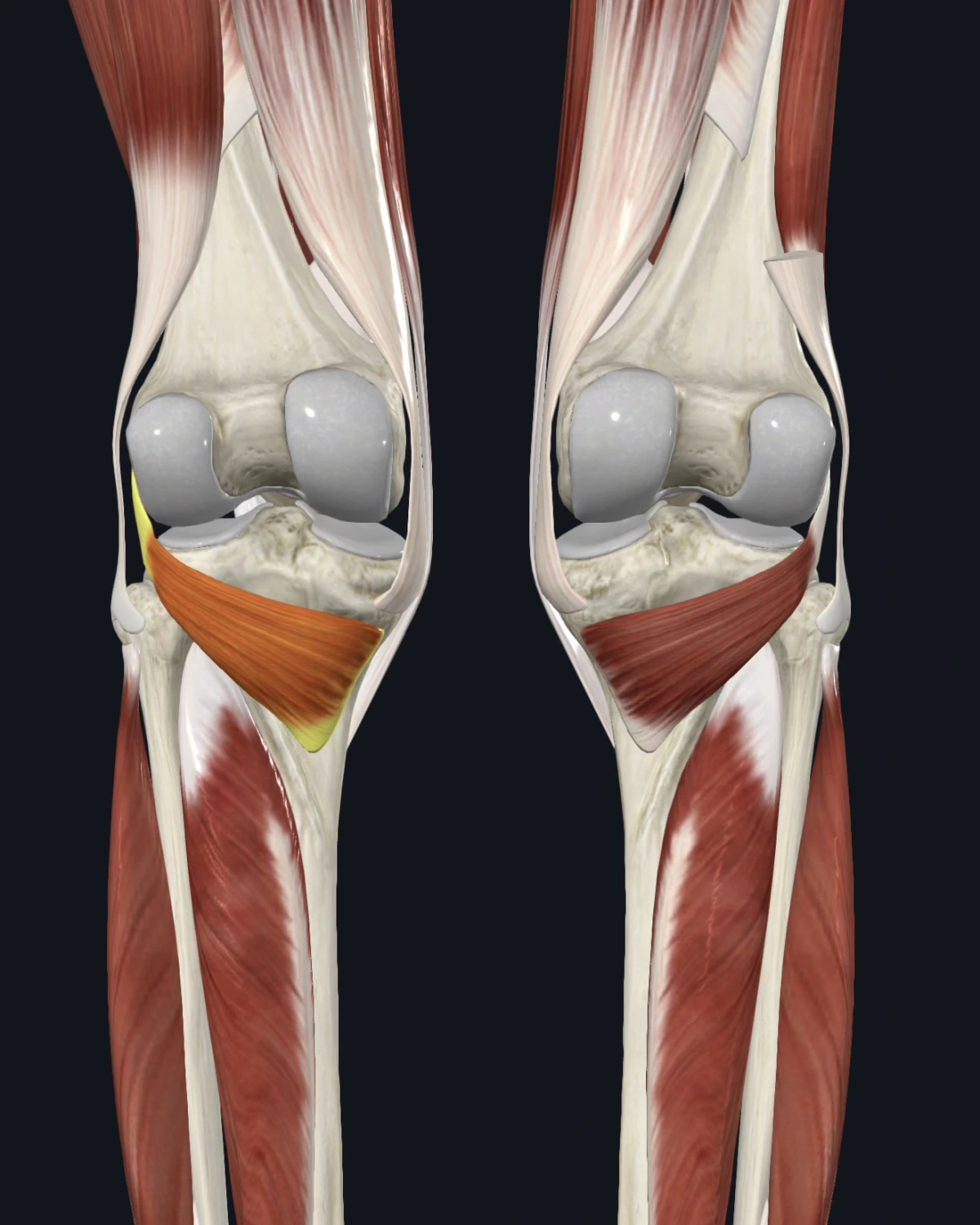
Attachments and action
Origin: The lateral surface of the lateral femoral condyle, with its tendon running inside the knee capsule.
Insertion: The posterior surface of the tibia above the soleal line.
Action: Unlocking the extended knee by rotating the joint at the start of flexion; stabilization of the back of the knee, especially descending slopes.
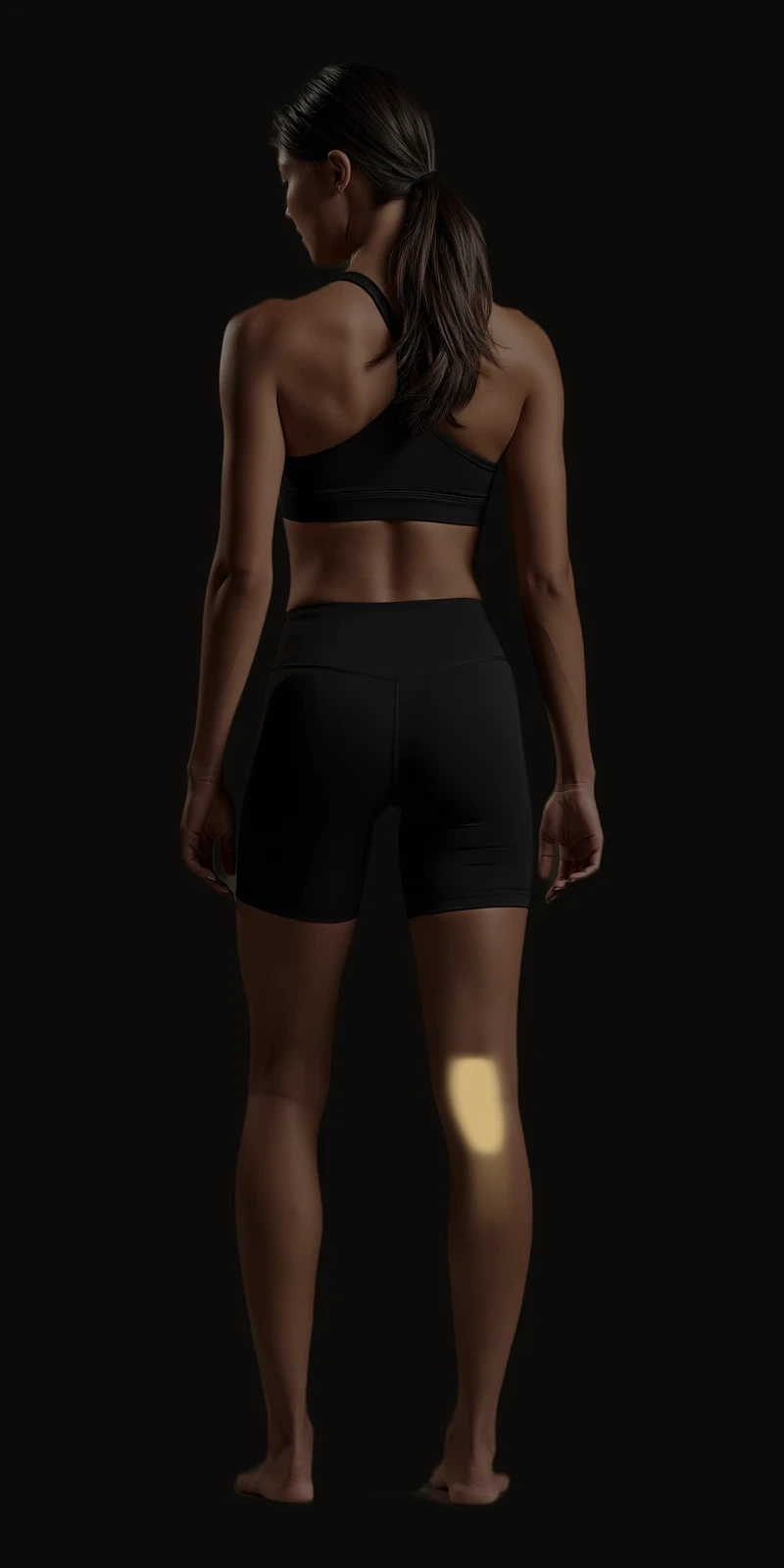
Where the pain is felt: At the back of the knee. Worse crouching, squatting, running downhill, and going down stairs.
Common causes: Downhill running and hiking, twisting sports like soccer and skiing, sudden stops on a bent knee, poor footwear, prolonged driving.
Patients say: “Behind my knee when I squat.” Pain going down stairs but not up. A knee that will not fully straighten in the morning.
When to get evaluated: Back-of-knee pain with calf swelling, warmth, or redness gets vascular assessment to rule out a clot before needling; a tense fluid swelling behind the knee gets assessed as a possible Baker’s cyst.
How this muscle is examined and treated
Examination tests resisted knee rotation on the flexed knee, screens the joint and the calf, and palpates the popliteal floor for the point that reproduces the familiar back-of-knee pain. Needling here is precise, deep work with the neurovascular structures of the fossa respected. Assessment and treatment happen in the same visit.
Related conditions
Knee PainSports & Performance InjuriesChronic Pain Patterns
Treatment points: SP9 Yinlingquan, BL40 Weizhong
This page is educational. It describes muscle referral patterns commonly associated with pain; it does not diagnose your condition. Individual patterns vary. For evaluation of your specific pain, see a licensed clinician. Seek immediate medical care for emergencies. Eugene Baek, L.Ac. · New Jersey License 25MZ00080600