Sartorius: Pain Pattern and Treatment
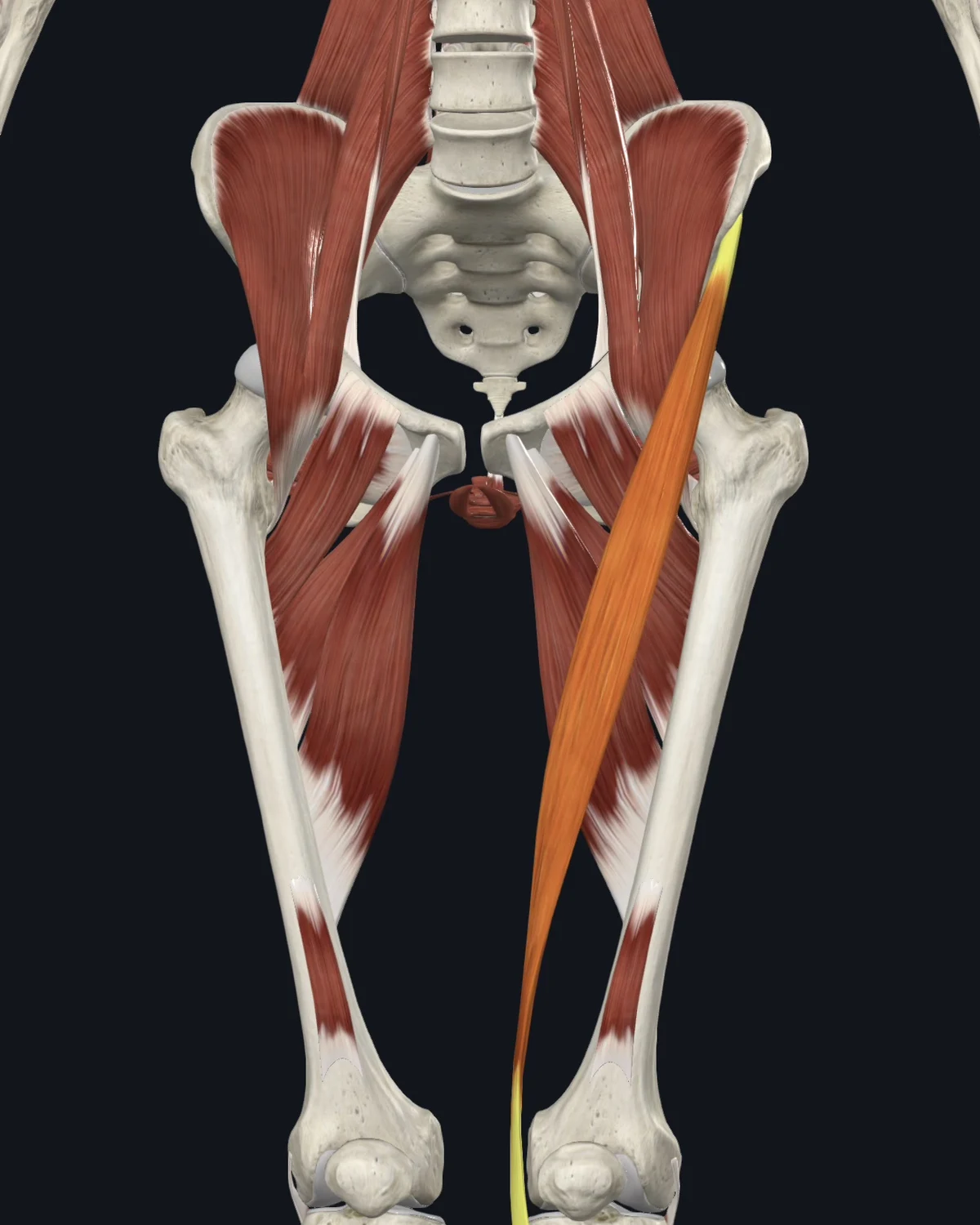
The sartorius is the longest muscle in the body, a thin strap that runs from the front of the hip bone diagonally across the thigh to the inside of the knee. It is the muscle that crosses one leg over the other. Its documented pattern is unlike the deep thigh muscles: sharp or tingling pain just under the skin, along the line of the muscle, at the hip, mid-thigh, or inner knee. Patients trace it with one finger.
Attachments and action
Origin: The anterior superior iliac spine, the point of the hip bone at the front.
Insertion: The upper inner surface of the tibia, in the pes anserinus with the gracilis and semitendinosus.
Action: Flexion, abduction, and lateral rotation of the hip with flexion of the knee, the movement of crossing one leg over the other.
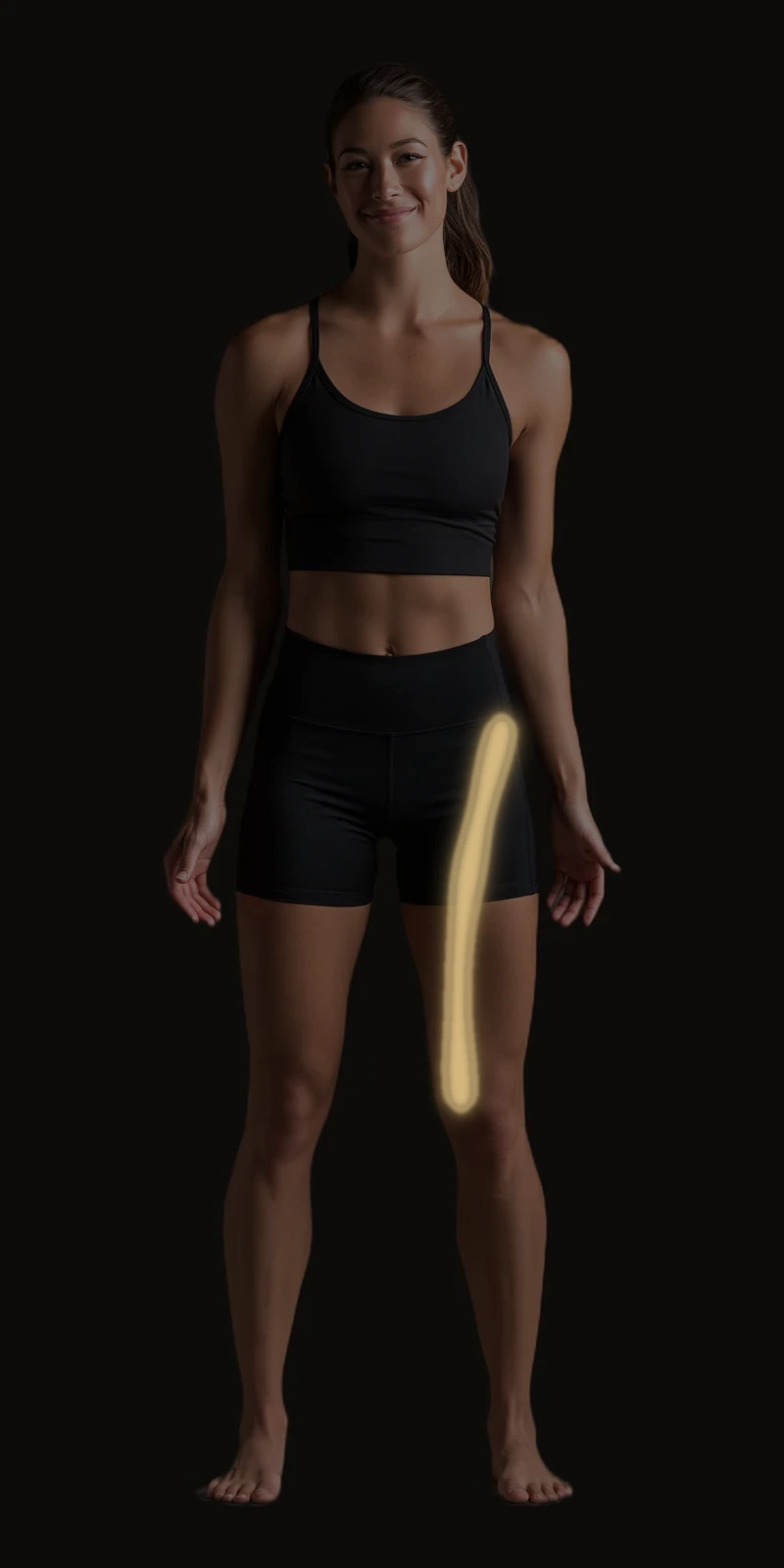
Where the pain is felt: Along the inner half of the thigh, from just below the hip point down to the inner knee, at up to three sites along the muscle. Sharp, tingling, and right under the skin, not deep in the joint or the muscle.
Common causes: Sitting cross-legged; a fall that twisted the hip; a sudden slip into a split; a tight belt, waistband, or tool belt over the front of the hip; cycling with the seat too low; the months of pregnancy.
Patients say: "It is right under the skin, sharp, along a line." "It tingles down the inside of my thigh." A burning patch on the outer thigh. Pain crossing the legs.
When to get evaluated: Numbness or burning on the outer thigh with weakness in the leg, or with back pain, needs the spine and nerves assessed. Front-of-hip pain after a fall in an older adult needs a hip fracture ruled out first.
How this muscle is examined and treated
Examination tests the crossed-leg movement against resistance and runs a finger along the muscle's line for the point that reproduces the sharp skin pain. The outer-thigh nerve is checked separately. Needling here addresses the muscle along its line, superficially. Assessment and treatment happen in the same visit.
Related conditions
Hip & Glute PainKnee PainSports & Performance Injuries
This page is educational. It describes muscle referral patterns commonly associated with pain; it does not diagnose your condition. Individual patterns vary. For evaluation of your specific pain, see a licensed clinician. Seek immediate medical care for emergencies. Eugene Baek, L.Ac. · New Jersey License 25MZ00080600