Obturator Internus: Pain Pattern and Treatment
The obturator internus lines the inside of the pelvis and turns sharply through the sciatic notch, beside the piriformis, to the hip. It turns the hip outward and steadies the head of the femur. Its documented pattern sits deep: pain between the tailbone and the anus, in the perineum, a feeling of fullness in the rectum, and pain down the back of the thigh. It is the most common muscle behind pelvic floor myofascial pain in the urogynecology literature, and it is a common companion of piriformis syndrome. This page covers the part of the pattern that is reached from the outside: the tailbone region and the back of the thigh. Internal pelvic floor work is the province of a pelvic floor physical therapist, and the page says so. It relates to the piriformis page.
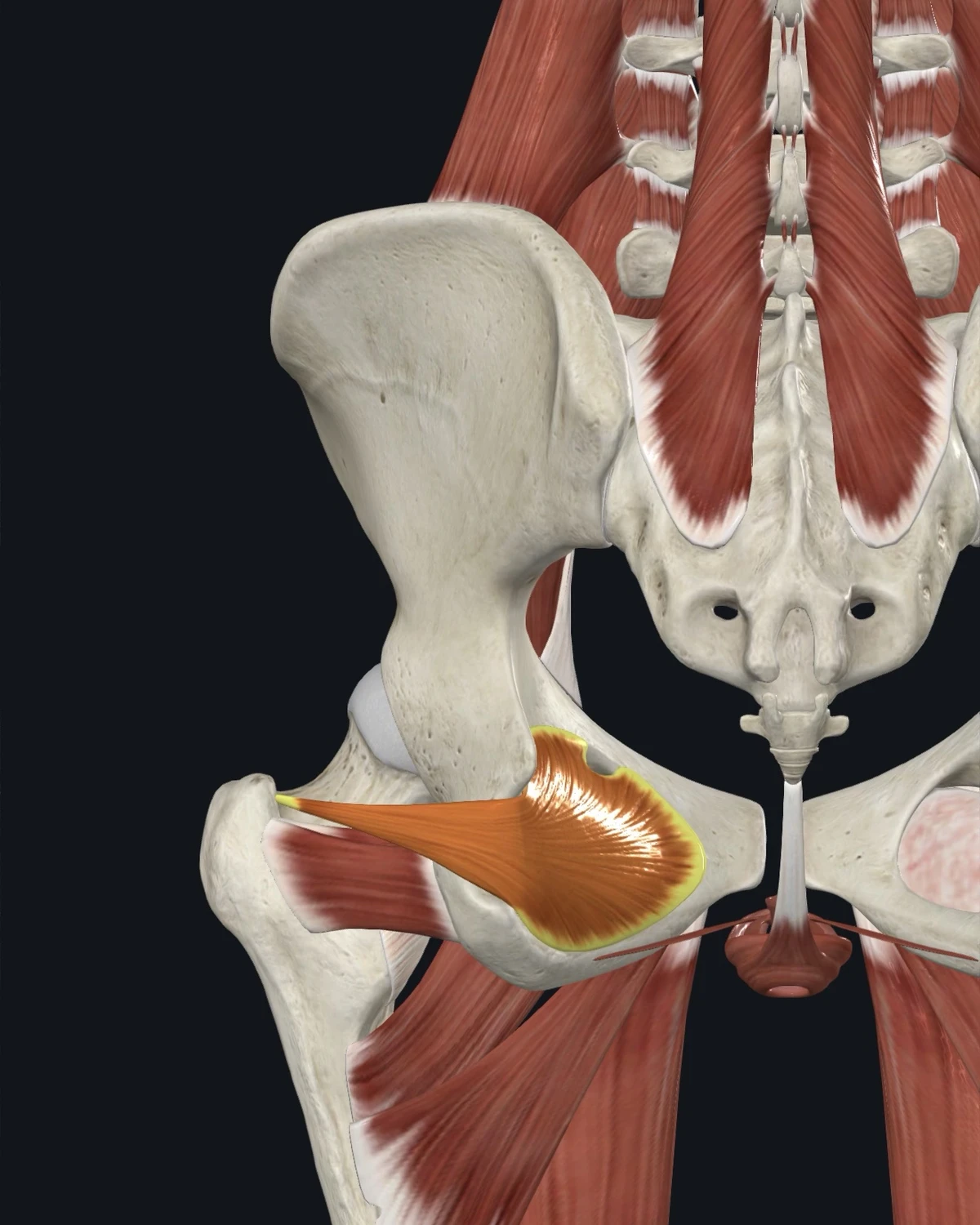
Attachments and action
Origin: The inner surface of the obturator membrane and the surrounding bone of the pelvis.
Insertion: The inner surface of the greater trochanter of the femur, through the lesser sciatic notch, with the gemelli.
Action: External rotation of the hip; abduction of the flexed hip; it steadies the head of the femur in the socket.
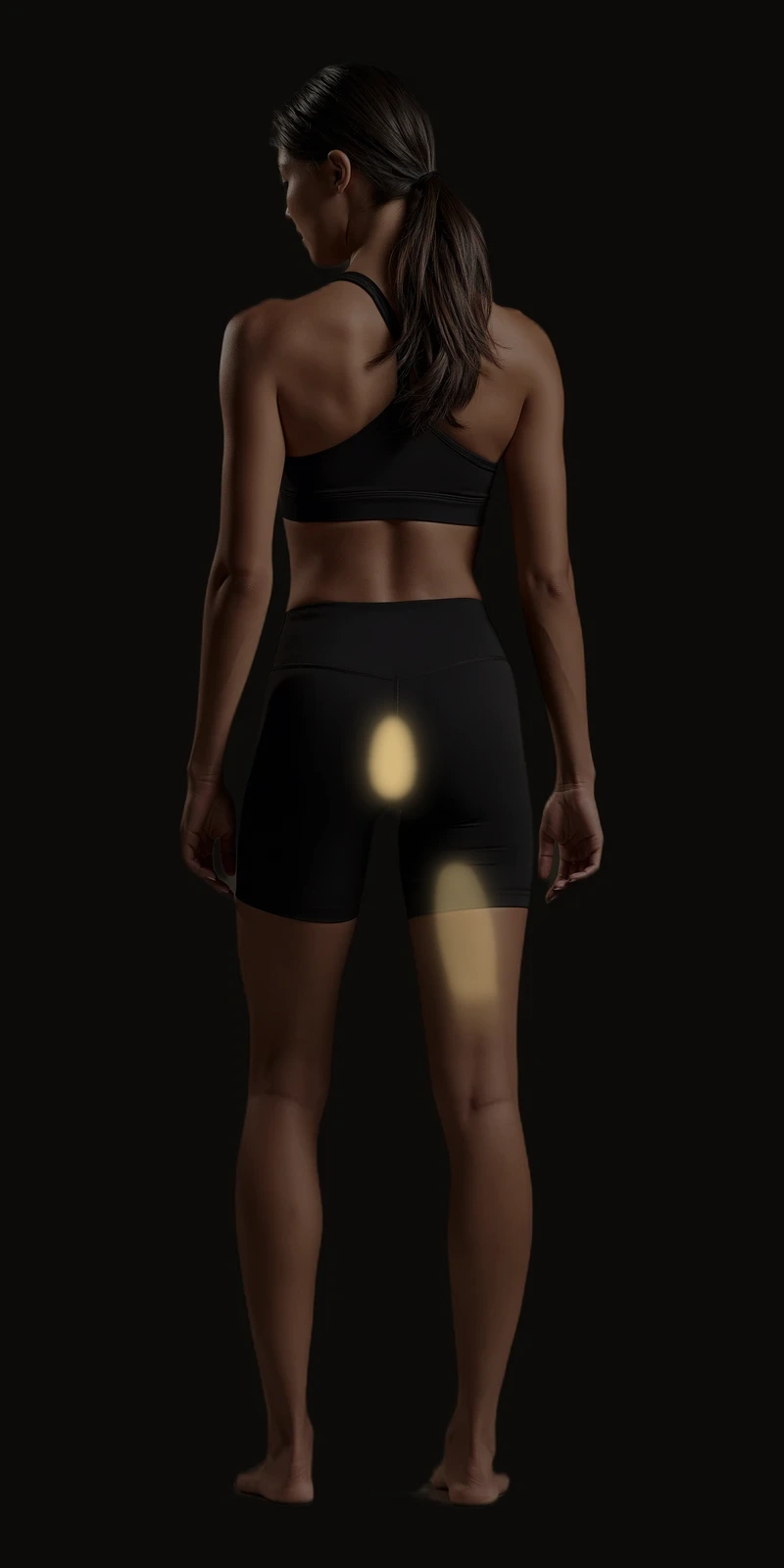
Where the pain is felt: Between the tailbone and the anus. In the perineum or the vagina. A feeling of fullness in the rectum. Down the back of the thigh on the same side. Worst sitting, and with the hip turned.
Common causes: Long sitting on a hard seat; cycling; a fall onto the buttock; childbirth; pelvic surgery; chronic constipation and straining; a hip that is held turned out to protect a sore joint; piriformis syndrome that keeps this muscle working with it.
Patients say: "It feels full inside, like I need to go." Pain between my tailbone and my anus when I sit. "It goes down the back of my thigh." A pelvic pain workup that found nothing.
When to get evaluated: Pelvic or rectal pain with bleeding, fever, a change in bowel habit, unexplained weight loss, or a mass needs medical evaluation before anything else. New numbness in the groin or inner thighs, or loss of bladder or bowel control, needs emergency evaluation. Persistent pelvic floor pain is examined by a pelvic floor physical therapist or a urogynecologist, and this page sends you there for the internal part.
How this muscle is examined and treated
Examination tests hip rotation with the hip bent and straight, presses the muscle where it turns at the sciatic notch beside the piriformis and along the back of the thigh for the points that reproduce the familiar pattern, and refers you for internal pelvic floor assessment when the deep symptoms lead. Needling here addresses the muscle from the outside, at the sciatic notch beside the piriformis, with the sciatic nerve's course respected; the internal part of the muscle is not needled at this practice. Assessment and treatment happen in the same visit.
Related conditions
Hip & Glute PainSciaticaChronic Pain Patterns
This page is educational. It describes muscle referral patterns commonly associated with pain; it does not diagnose your condition. Individual patterns vary. For evaluation of your specific pain, see a licensed clinician. Seek immediate medical care for emergencies. Eugene Baek, L.Ac. · New Jersey License 25MZ00080600