Levator Ani and Coccygeus: Pelvic Floor Pain Pattern and Treatment
The levator ani and the coccygeus form the pelvic floor, the sling of muscle from the pubic bone to the tailbone that supports the pelvic organs and controls the bladder and bowel. Their documented pattern is pain at the tailbone and the sacrum, worst sitting, a rectal ache, and low back pain from the sacral fibers. They are the muscles behind tailbone pain that persists after a normal X-ray, and behind a rectal ache that the colonoscopy did not explain. This page covers the part of the pattern reached from the outside: the tailbone, the sacrum, and the low back. Internal pelvic floor work belongs with a pelvic floor physical therapist, and the page says so. It relates to the gluteus maximus and piriformis pages.
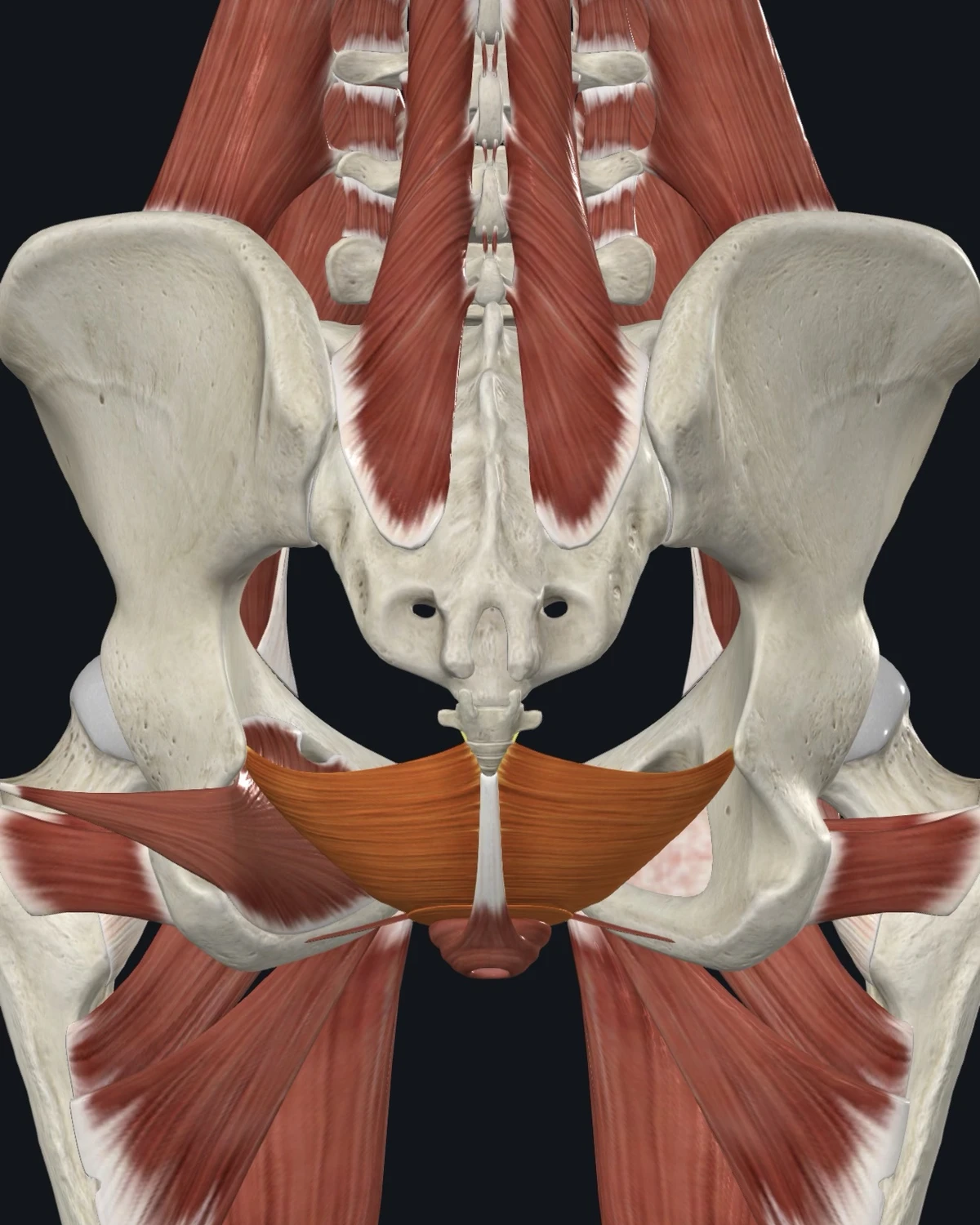
Attachments and action
Origin: Levator ani: the back of the pubic bone, the tendinous arch over the obturator internus, and the ischial spine. Coccygeus: the ischial spine and the sacrospinous ligament.
Insertion: Levator ani: the coccyx, the anococcygeal raphe, and the walls of the anus and the pelvic organs. Coccygeus: the lower sacrum and the coccyx.
Action: Support of the pelvic organs; control of the anus and the urethra; the coccygeus draws the tailbone forward; together they brace the pelvis with every lift and cough.
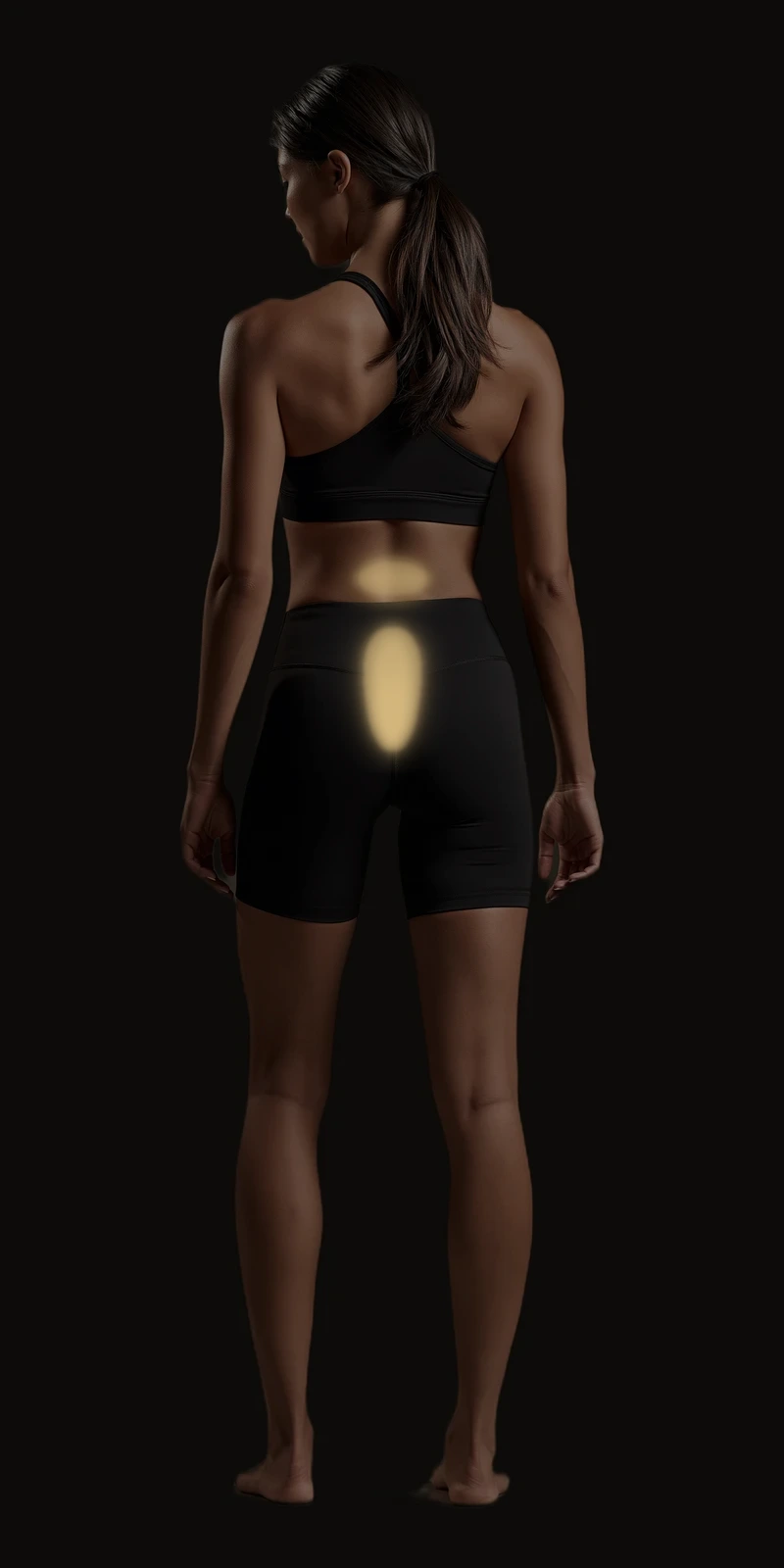
Where the pain is felt: At the tailbone and the sacrum, worst sitting. In the anus and the rectum, as an ache or a pressure, worst with a bowel movement. In the low back from the sacral fibers. In the vagina or the perineum.
Common causes: A fall onto the tailbone; childbirth; long sitting on a hard seat or a bicycle; chronic constipation and straining; pelvic surgery; a habit of holding the pelvic floor tight under stress; a hip or low back problem that changed how the pelvis carries load.
Patients say: "Tailbone pain when I sit, and the X-ray was normal." "An ache in my rectum that the colonoscopy did not explain." Low back pain that the back treatment did not touch. "It started after the birth."
When to get evaluated: Rectal or pelvic pain with bleeding, fever, a change in bowel habit, unexplained weight loss, or a mass needs medical evaluation before anything else. New numbness in the groin or inner thighs, or loss of bladder or bowel control, needs emergency evaluation. Tailbone pain after a fall needs an X-ray. Persistent pelvic floor pain is examined by a pelvic floor physical therapist or a urogynecologist, and this page sends you there for the internal part.
How this muscle is examined and treated
Examination presses the tailbone, the sacrum beside it, and the attachments around the sit bones for the points that reproduce the familiar sitting pain and the rectal ache, and refers you for internal pelvic floor assessment when the deep symptoms lead. Needling here addresses the coccygeus and the outer fibers of the levator ani from beside the tailbone and the sacrum, from the outside; the internal part is not needled at this practice. Assessment and treatment happen in the same visit.
Related conditions
Low Back PainHip & Glute PainChronic Pain Patterns
This page is educational. It describes muscle referral patterns commonly associated with pain; it does not diagnose your condition. Individual patterns vary. For evaluation of your specific pain, see a licensed clinician. Seek immediate medical care for emergencies. Eugene Baek, L.Ac. · New Jersey License 25MZ00080600