Multifidi: Pain Pattern and Treatment
The multifidi are the deepest long muscles of the back, a chain of short bundles that run from the sacrum to the neck, each spanning two to four vertebrae. They steady each segment before the bigger muscles move the spine. Their documented pattern is segmental: a trigger point at any level refers pain locally around the spine at that level, the lowest ones send pain to the sacrum and tailbone, the upper lumbar ones forward to the abdomen, the mid-thoracic ones out toward the lower angle of the shoulder blade, and the neck ones from the base of the skull down the back of the neck. Pain is felt "in the bone"; patients press the spine itself. This is a sub-page of the erector spinae group page.
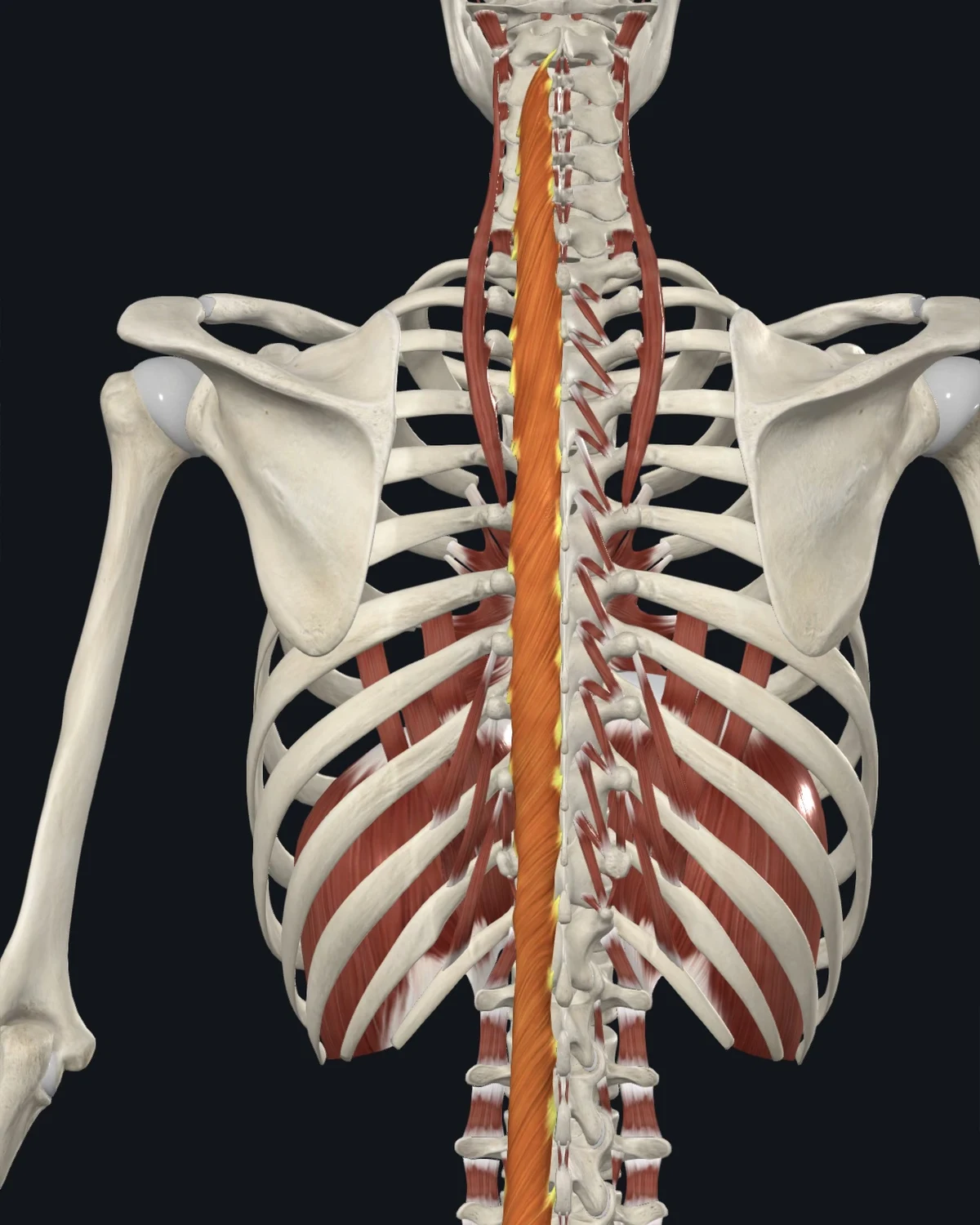
Attachments and action
Origin: The back of the sacrum, the posterior superior iliac spine, the mamillary processes of the lumbar vertebrae, the transverse processes of the thoracic vertebrae, and the articular processes of the lower cervical vertebrae.
Insertion: The spinous processes of the vertebrae two to four levels above each origin.
Action: Segmental stabilization of the spine; extension, and with one side working, rotation to the opposite side.
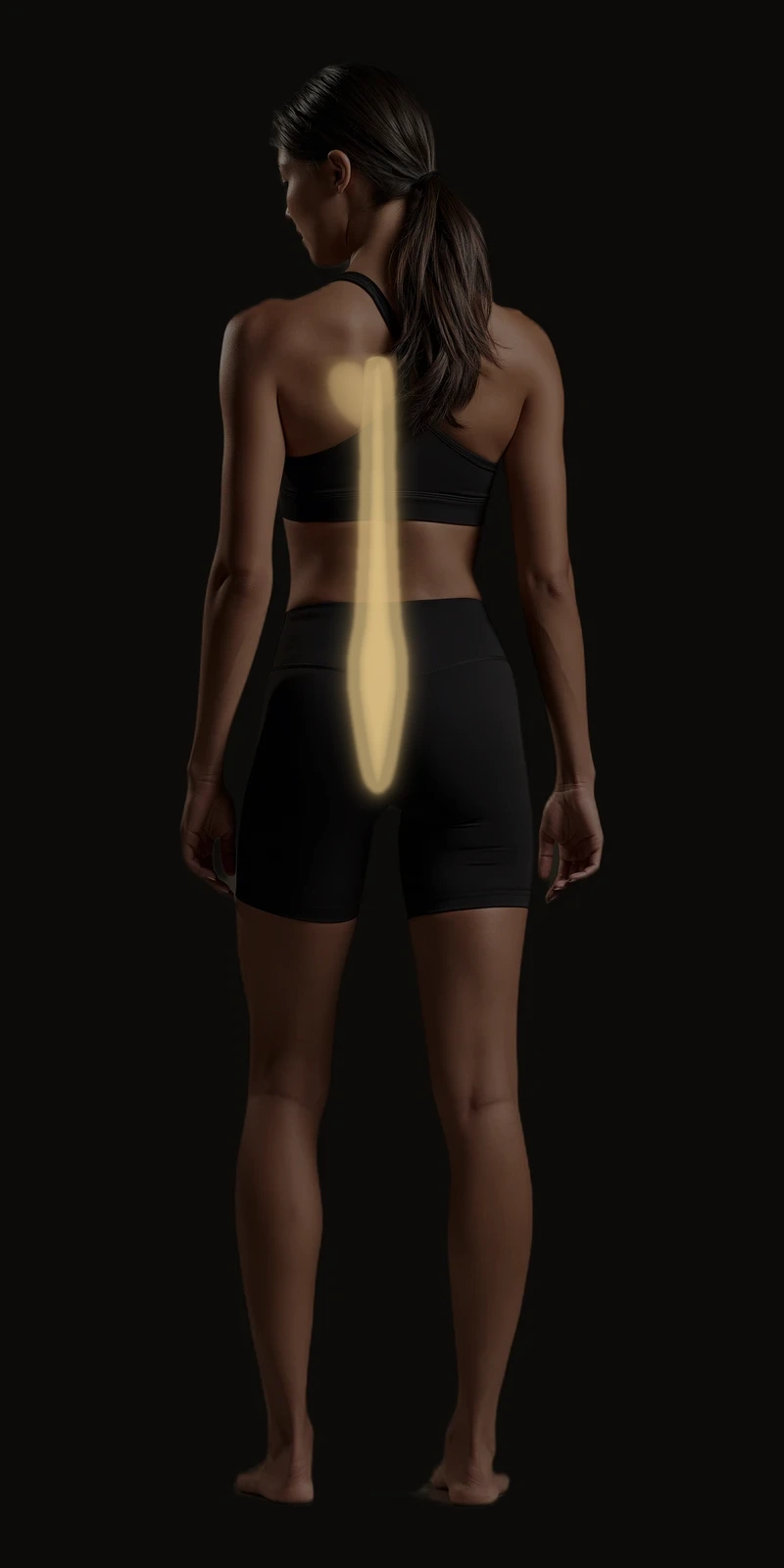
Where the pain is felt: Deep beside the spine at the level of the trigger point, felt in the bone. From the lowest points, the sacrum and tailbone. From the upper lumbar points, forward into the abdomen on the same side. From the mid-back points, out toward the lower angle of the shoulder blade. From the neck points, the base of the skull and down the back of the neck toward the shoulder blades.
Common causes: A sudden twist with a load; a long period bent forward; sitting slumped on a soft seat; a fall onto the tailbone; an old disc injury that left the segment guarded; pregnancy and the months after.
Patients say: "It is right beside my spine, deep, one spot." "My tailbone aches after I sit." Pain in the sacrum that the hip and glute work did not change. "It feels like it is in the bone."
When to get evaluated: Low back pain with numbness or weakness in the leg, changes in bladder or bowel control, unexplained weight loss, fever, or pain that wakes you and does not ease with position needs medical evaluation before anything else.
How this muscle is examined and treated
Examination presses the groove beside each lumbar spinous process for the level that reproduces the familiar deep spot, tests segmental extension and rotation, and checks the sacrum. Needling here addresses the muscle deep in the groove beside the spine, at the level found. Assessment and treatment happen in the same visit.
Related conditions
Low Back PainHip & Glute PainChronic Pain Patterns
Treatment points: BL23 Shenshu, BL25 Dachangshu, BL31 to BL34 Baliao
This page is educational. It describes muscle referral patterns commonly associated with pain; it does not diagnose your condition. Individual patterns vary. For evaluation of your specific pain, see a licensed clinician. Seek immediate medical care for emergencies. Eugene Baek, L.Ac. · New Jersey License 25MZ00080600