Quadratus Lumborum: Pain Pattern and Treatment
The quadratus lumborum runs from the pelvis to the lowest rib, deep on each side of the lumbar spine. It stabilizes the spine in side-bending and braces the trunk during lifting. Trigger points in this muscle are commonly associated with deep, aching low back pain.
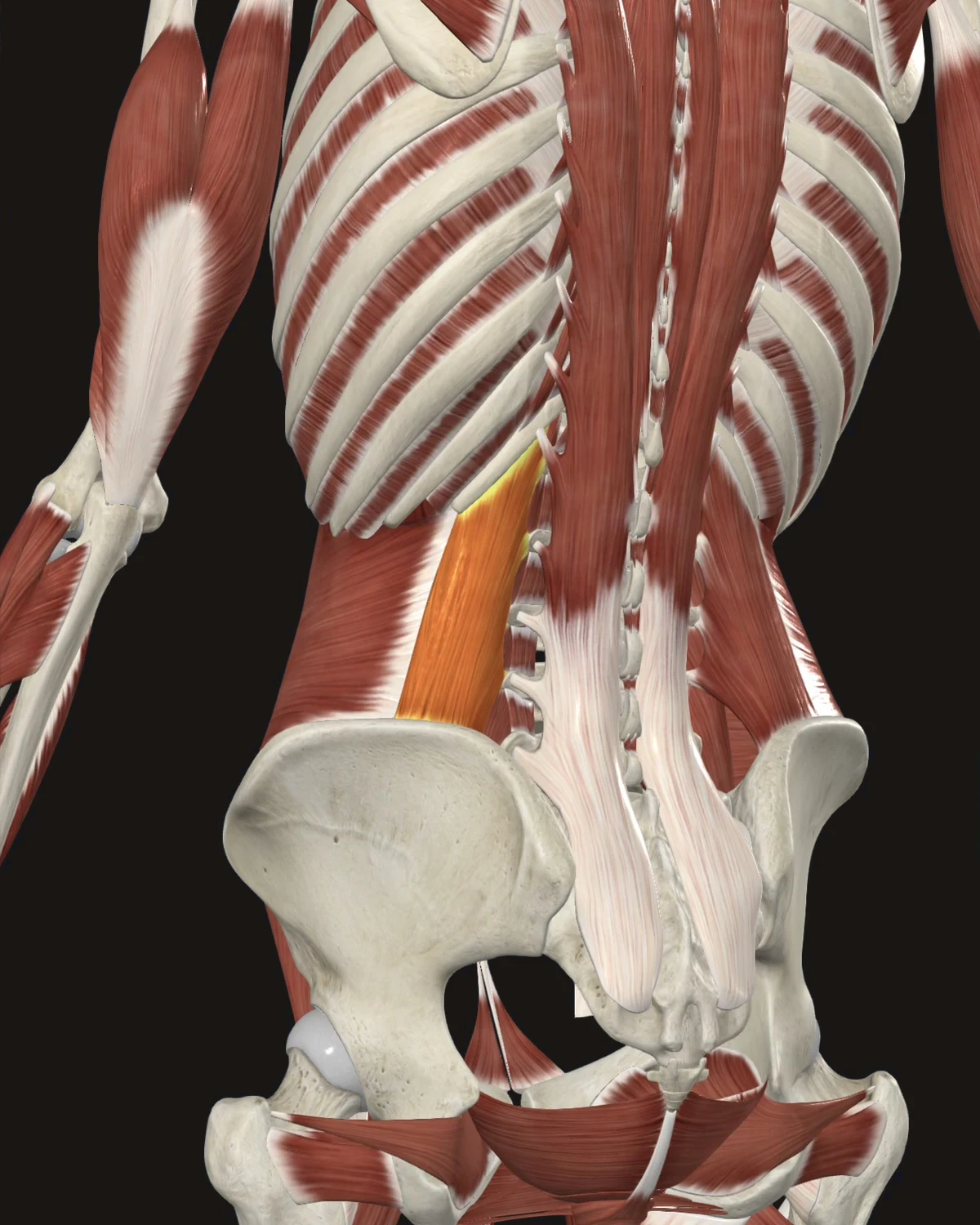
Attachments and action
Origin: The posterior iliac crest and the iliolumbar ligament.
Insertion: The inferior border of the twelfth rib and the transverse processes of the first through fourth lumbar vertebrae.
Action: Lateral flexion of the lumbar spine and elevation of the pelvis on one side; extension of the lumbar spine when both sides act. The muscle also braces the twelfth rib during breathing.
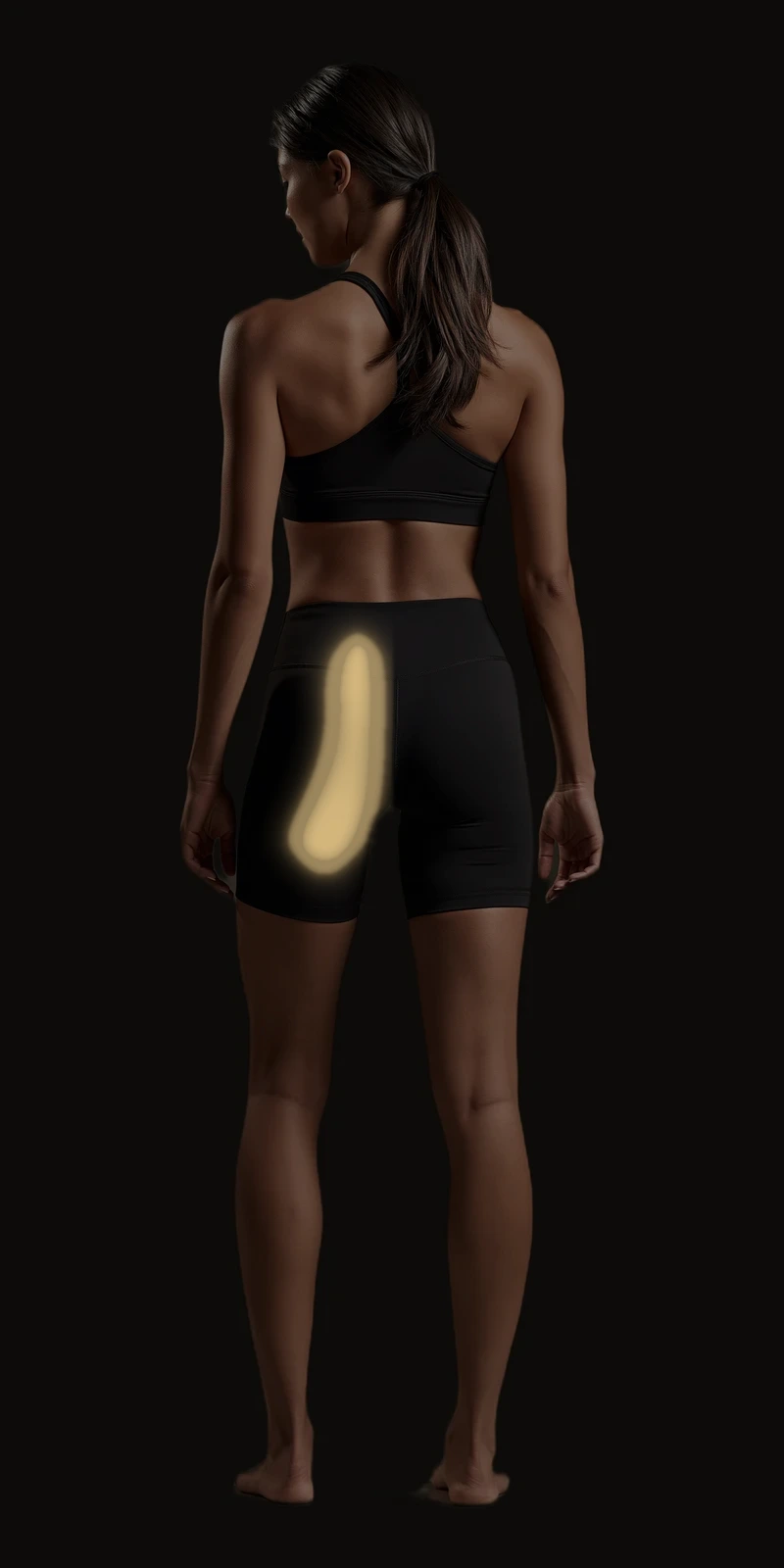
Where the pain is felt: The sacroiliac region, lower buttock, and along the iliac crest; the pattern extends toward the groin in the documented maps. Felt as deep, aching low back pain, aggravated by standing and by rolling over in bed. The pain sits to one side of the spine rather than across the center. Walking can feel guarded; standing from a chair provokes it.
Common causes: Sustained leaning postures, lifting combined with twisting, leg-length difference, one-sided carrying, gardening, shoveling. A single awkward lift can activate this muscle, and so can weeks of leaning toward one side of a desk.
Patients say: “It grabs when I stand up.” Difficulty rolling over at night. Pain on coughing or sneezing. Leaning away from the painful side.
When to get evaluated: Constant night pain unrelieved by position change, numbness, or bowel/bladder changes are not muscle-pattern findings. Those need medical evaluation.
How this muscle is examined and treated
Examination locates the taut band and reproduces your pain by pressure. The muscle sits deep, under the erector spinae, so dry needling reaches fibers that surface work cannot. Acupuncture addresses the nervous system’s amplification of the pattern. Assessment and treatment happen in the same visit.
Related conditions
Low Back PainSciaticaHip & Glute Pain
Treatment points: Quadratus lumborum motor point, BL52 Zhishi
This page is educational. It describes muscle referral patterns commonly associated with pain; it does not diagnose your condition. Individual patterns vary. For evaluation of your specific pain, see a licensed clinician. Seek immediate medical care for emergencies. Eugene Baek, L.Ac. · New Jersey License 25MZ00080600