Gluteus Maximus: Pain Pattern and Treatment
The gluteus maximus is the largest muscle of the hip and the body’s main hip extensor. Its trigger points keep their pain local: the referral stays within the buttock rather than shooting down the leg. Patients describe an ache when sitting, pain climbing stairs or walking uphill, and tenderness low on the buttock near the tailbone.
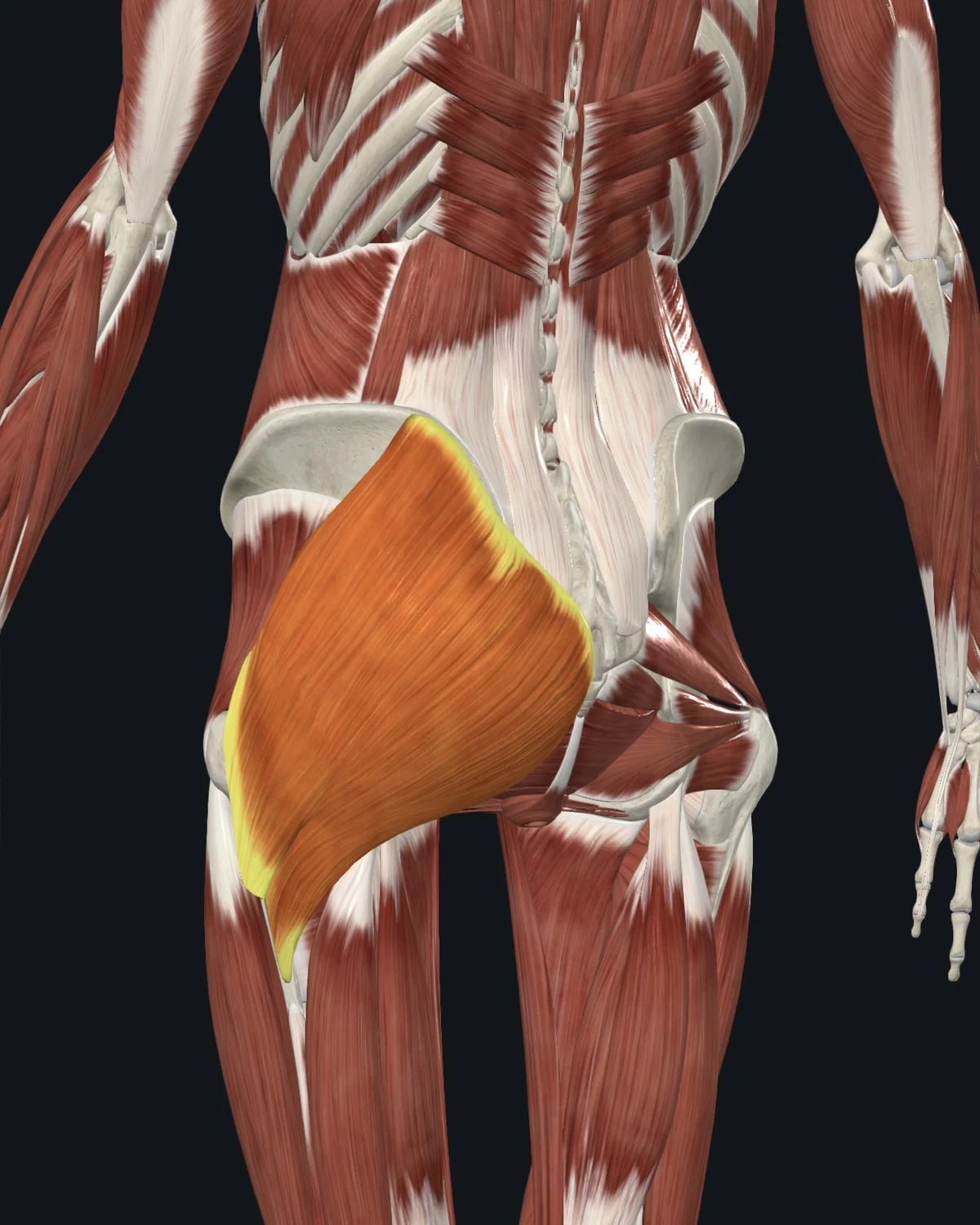
Attachments and action
Origin: The posterior iliac crest, the sacrum, and the coccyx.
Insertion: The iliotibial tract and the gluteal tuberosity of the femur.
Action: Extension and external rotation of the hip; the upper fibers assist abduction. The prime mover for climbing, rising from a chair, and uphill walking.
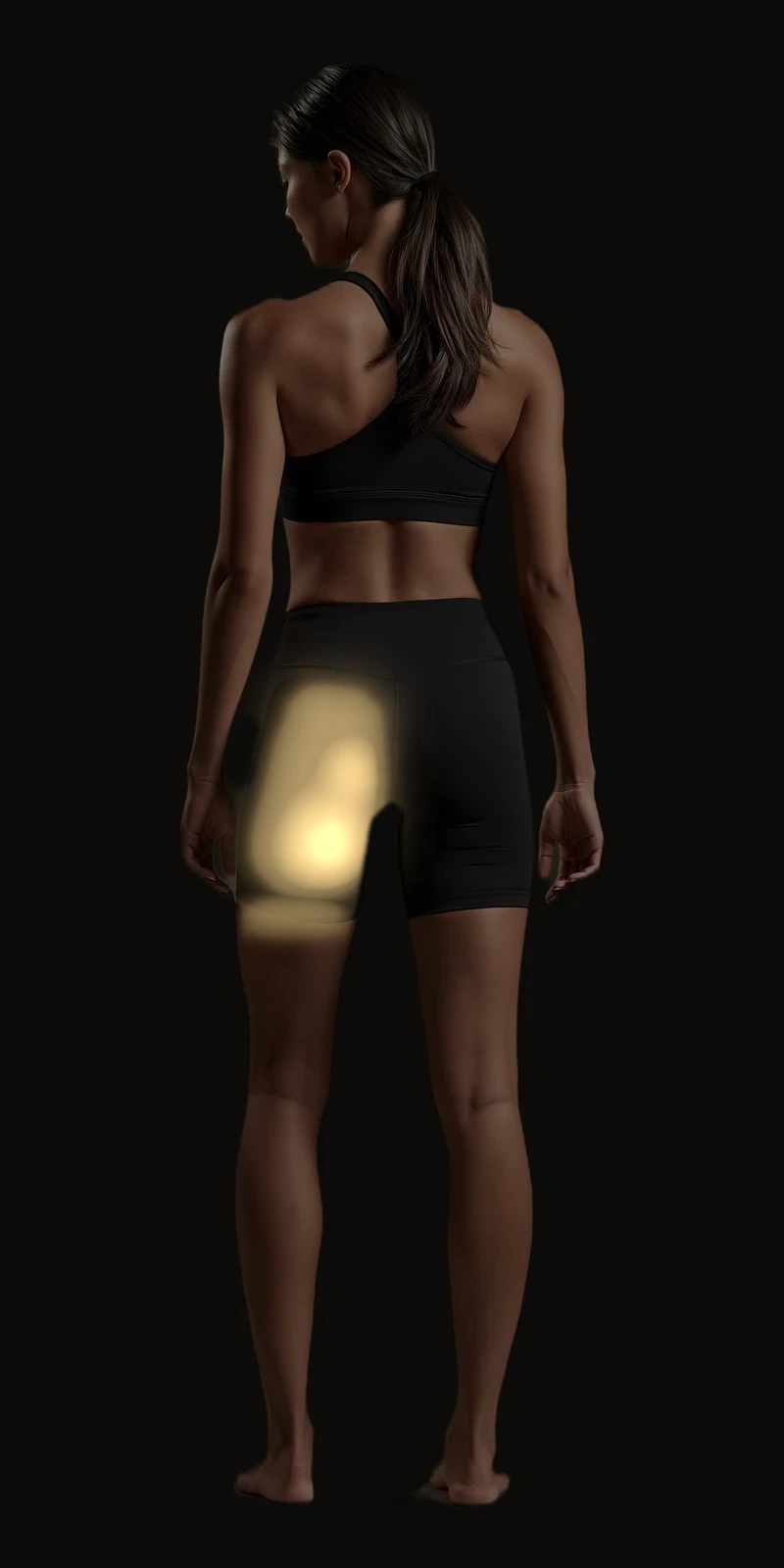
Where the pain is felt: Three trigger points, one composite. The medial point refers in a crescent along the edge of the sacrum and the gluteal fold. The lower point covers the buttock, concentrating over the lower sacrum and the sit bone. The tailbone point refers to the coccyx itself. Spillover reaches the outer-upper buttock below the iliac crest and can drift into the upper back of the thigh, but not below it. Pain that travels past the knee points away from this muscle.
Common causes: Prolonged sitting, especially on hard surfaces or a wallet; hill running and stair work; falls onto the buttock; sleeping curled on one side; swimming the crawl with a strong kick.
Patients say: “It aches deep in my seat when I sit too long, and my tailbone feels bruised.” The pain stays in the buttock; patients point to the sit bone, the sacral edge, or the coccyx, not the leg.
When to get evaluated: Buttock pain with fever, unexplained weight loss, or a history of cancer; numbness in the saddle area or new bowel or bladder changes: these need physician evaluation before any needling.
How this muscle is examined and treated
Examination separates this muscle from its neighbors: gluteus maximus pain stays in the buttock, while gluteus medius refers to the belt line and the outer hip. Palpation maps the three documented points against the sacral edge, the sit bone, and the coccyx. Needling reaches the trigger points directly through the muscle’s thickness. Assessment and treatment happen in the same visit.
Related conditions
Shoulder DysfunctionNeck & Cervical PainChronic Pain Patterns
Treatment points: GB30 Huantiao, BL54 Zhibian
This page is educational. It describes muscle referral patterns commonly associated with pain; it does not diagnose your condition. Individual patterns vary. For evaluation of your specific pain, see a licensed clinician. Seek immediate medical care for emergencies. Eugene Baek, L.Ac. · New Jersey License 25MZ00080600