Obturator Externus: Pain Pattern and Treatment
The obturator externus is a deep muscle at the front of the pelvis, under the adductors, running from the outer surface of the obturator membrane to the back of the hip. It turns the hip outward and steadies the head of the femur in the socket. Its documented pattern is local: deep pain in the front of the hip and the groin that feels like the joint itself, worst turning the leg outward under load. It is a muscle to check when the hip X-ray is normal and the groin still hurts. It relates to the adductor group page, which covers it, and to the piriformis page, its partner at the back.
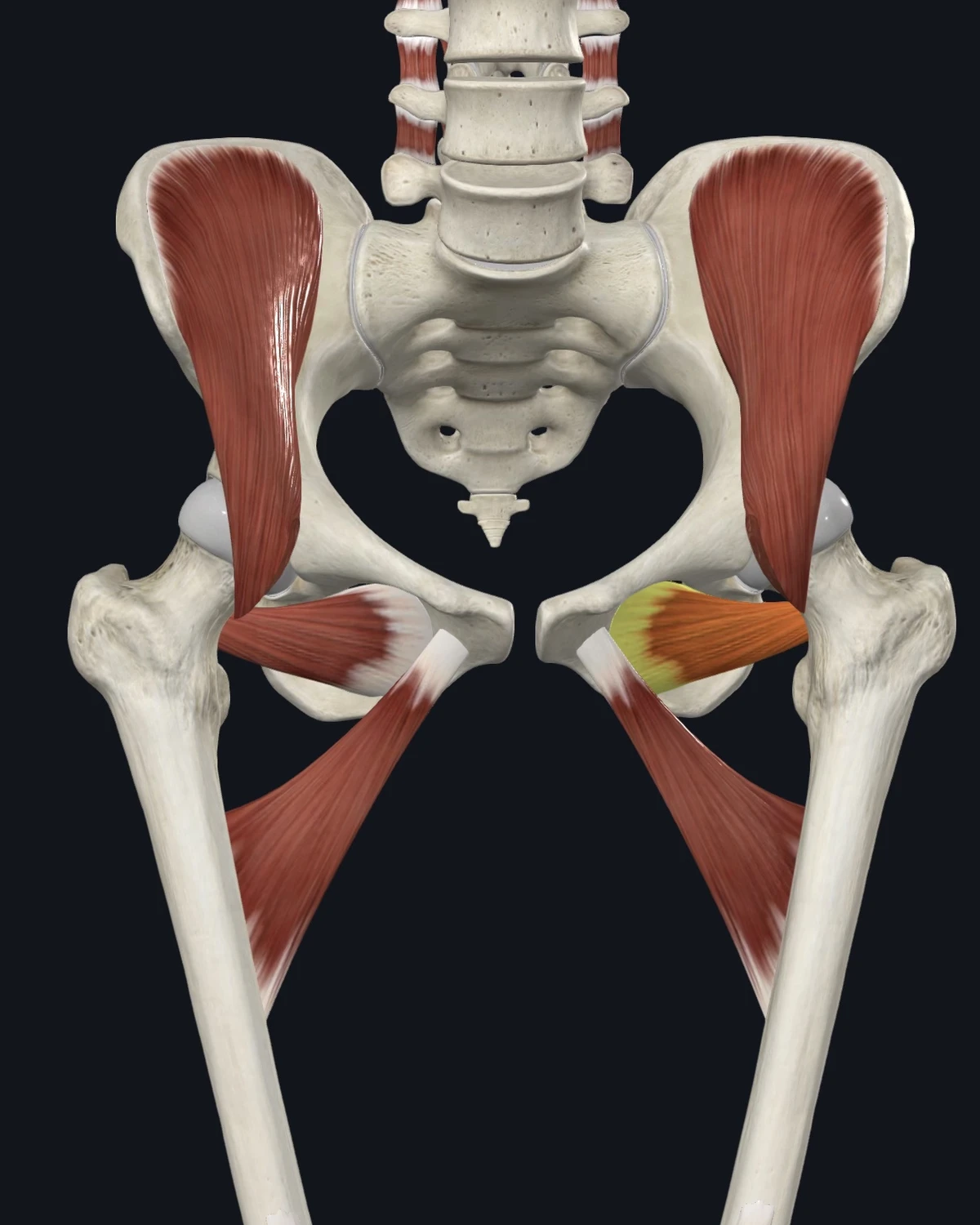
Attachments and action
Origin: The outer surface of the obturator membrane and the surrounding rim of the obturator foramen.
Insertion: The trochanteric fossa on the inner side of the greater trochanter of the femur.
Action: External rotation of the hip; it steadies the head of the femur in the socket and assists adduction.
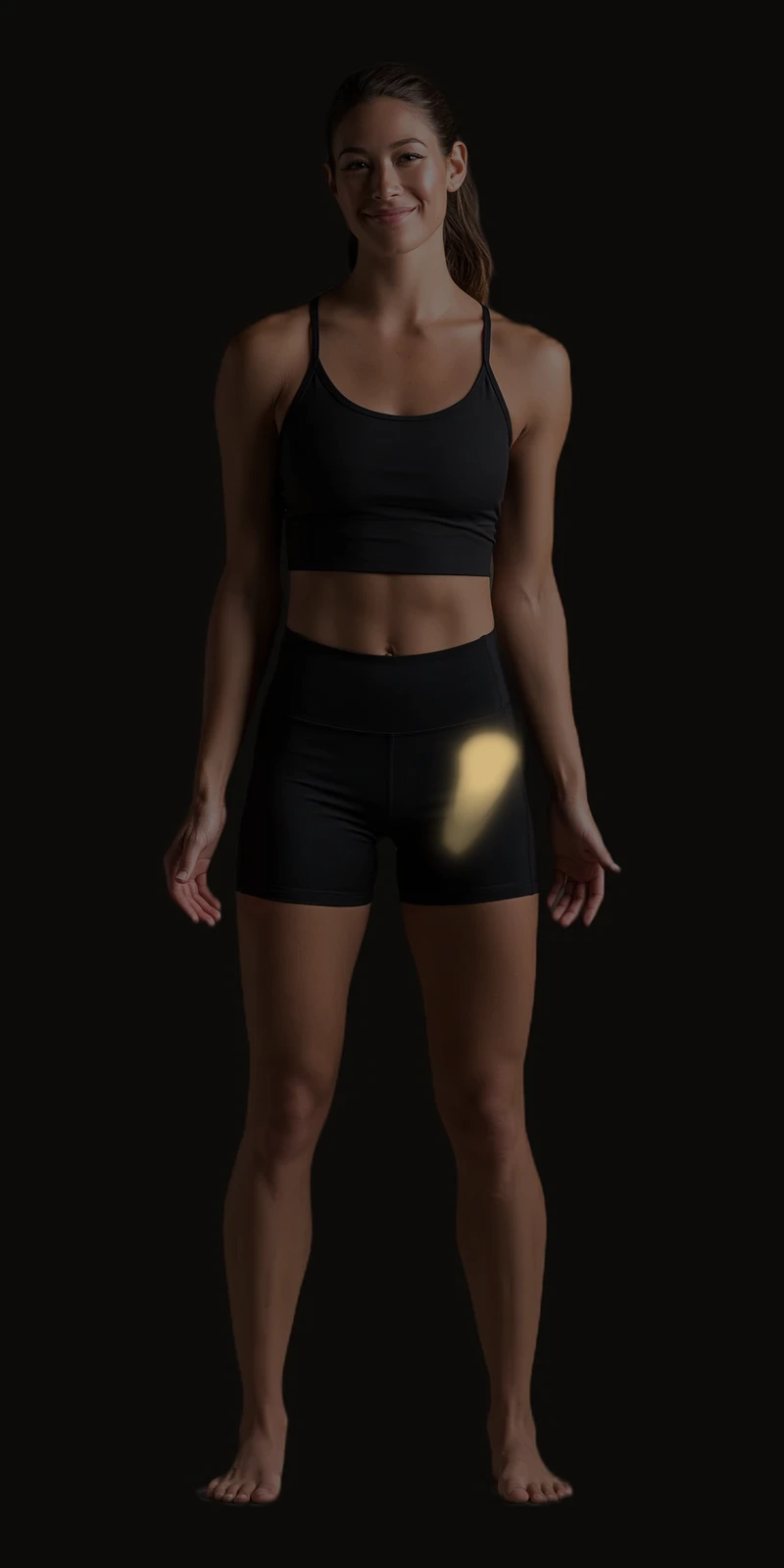
Where the pain is felt: Deep in the front of the hip. In the groin, felt as "in the joint." Worst turning the leg outward under load, as in getting out of a car or a pivot in sport.
Common causes: Kicking sports; ballet and martial arts with the hip turned out; a slip that split the legs; long sitting with the legs crossed; a hip that is held turned out to protect a sore joint; the months after hip surgery.
Patients say: "It feels like it is in the hip joint, but the X-ray was clean." Groin pain getting out of the car. "Turning my foot out sets it off." A deep ache that the adductor stretches did not change.
When to get evaluated: Groin or hip pain with a fall, an inability to bear weight, or a leg that looks shortened or turned needs an X-ray first. Groin pain with a bulge, or with fever, needs medical evaluation. Deep hip pain with clicking, catching, or locking, or in a young athlete, needs imaging for a labral tear or a stress fracture before this muscle is treated.
How this muscle is examined and treated
Examination clears the hip joint first, then tests outward rotation against resistance with the hip bent, and presses deep in the groin below the adductors for the point that reproduces the familiar joint-like pain. Needling here addresses the muscle deep in the front of the hip, from the inner thigh, with the vessels and nerves of the groin respected. Assessment and treatment happen in the same visit.
Related conditions
Hip & Glute PainSports & Performance InjuriesChronic Pain Patterns
This page is educational. It describes muscle referral patterns commonly associated with pain; it does not diagnose your condition. Individual patterns vary. For evaluation of your specific pain, see a licensed clinician. Seek immediate medical care for emergencies. Eugene Baek, L.Ac. · New Jersey License 25MZ00080600