Sternalis: Pain Pattern and Treatment
The sternalis is a thin strap of muscle that runs up and down over the breastbone, in front of the pectoralis major. About one person in twelve has it. Its documented pattern is a deep pain behind the breastbone and across the upper chest on one side that does not change with breathing or movement, sometimes reaching the front of the shoulder and the inner arm. It is a cardiac mimic, and the page says so: chest pain is examined for the heart first, and this muscle is looked at when the heart is clear. It relates to the pectoralis major page.
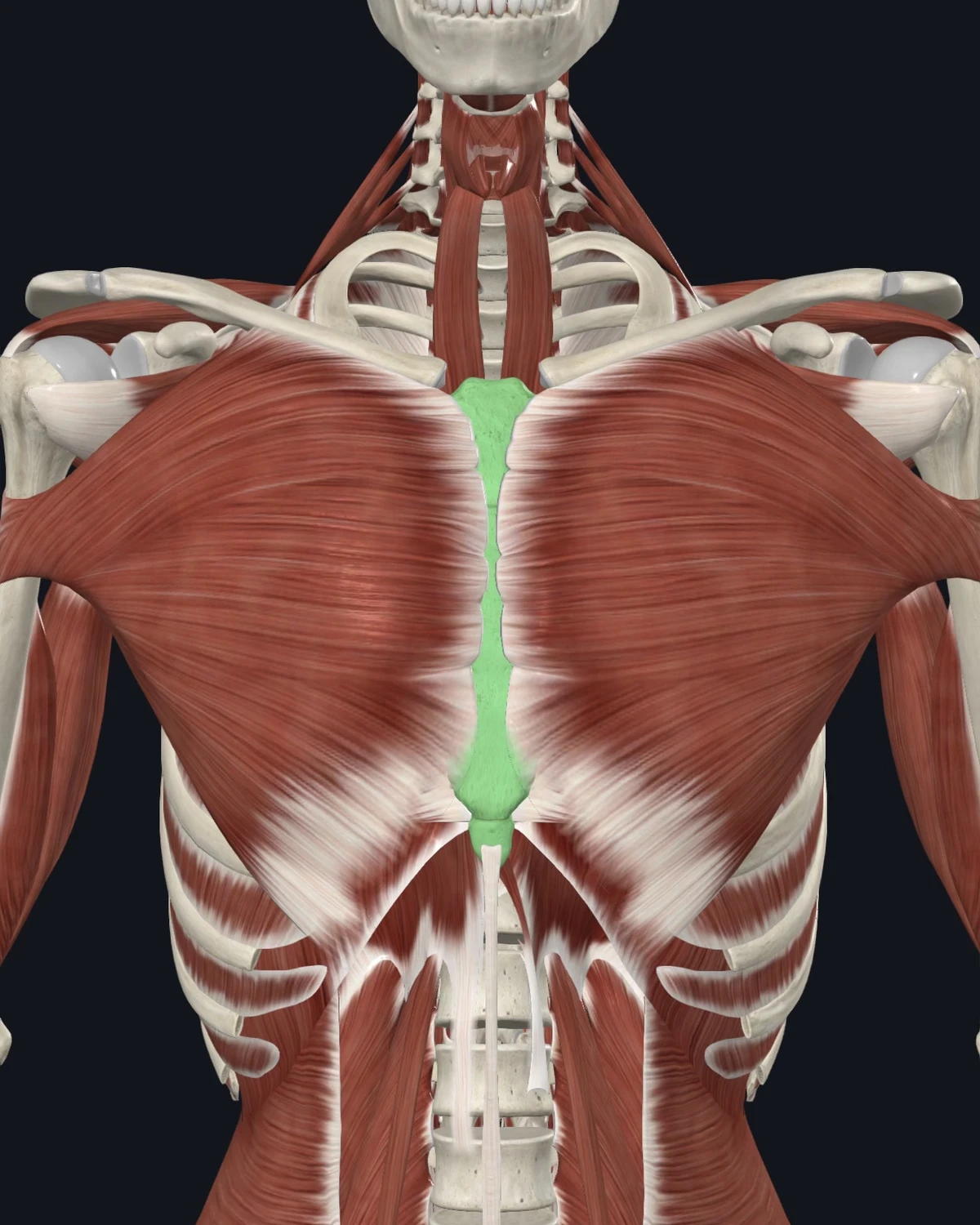
Attachments and action
Origin: The fascia over the upper sternum and the sternal head of the sternocleidomastoid, variably.
Insertion: The fascia over the lower sternum and the rib cartilages, or the sheath of the rectus abdominis, variably.
Action: No consistent action; it tenses the fascia over the breastbone. It is a variant muscle, present in about one person in twelve.
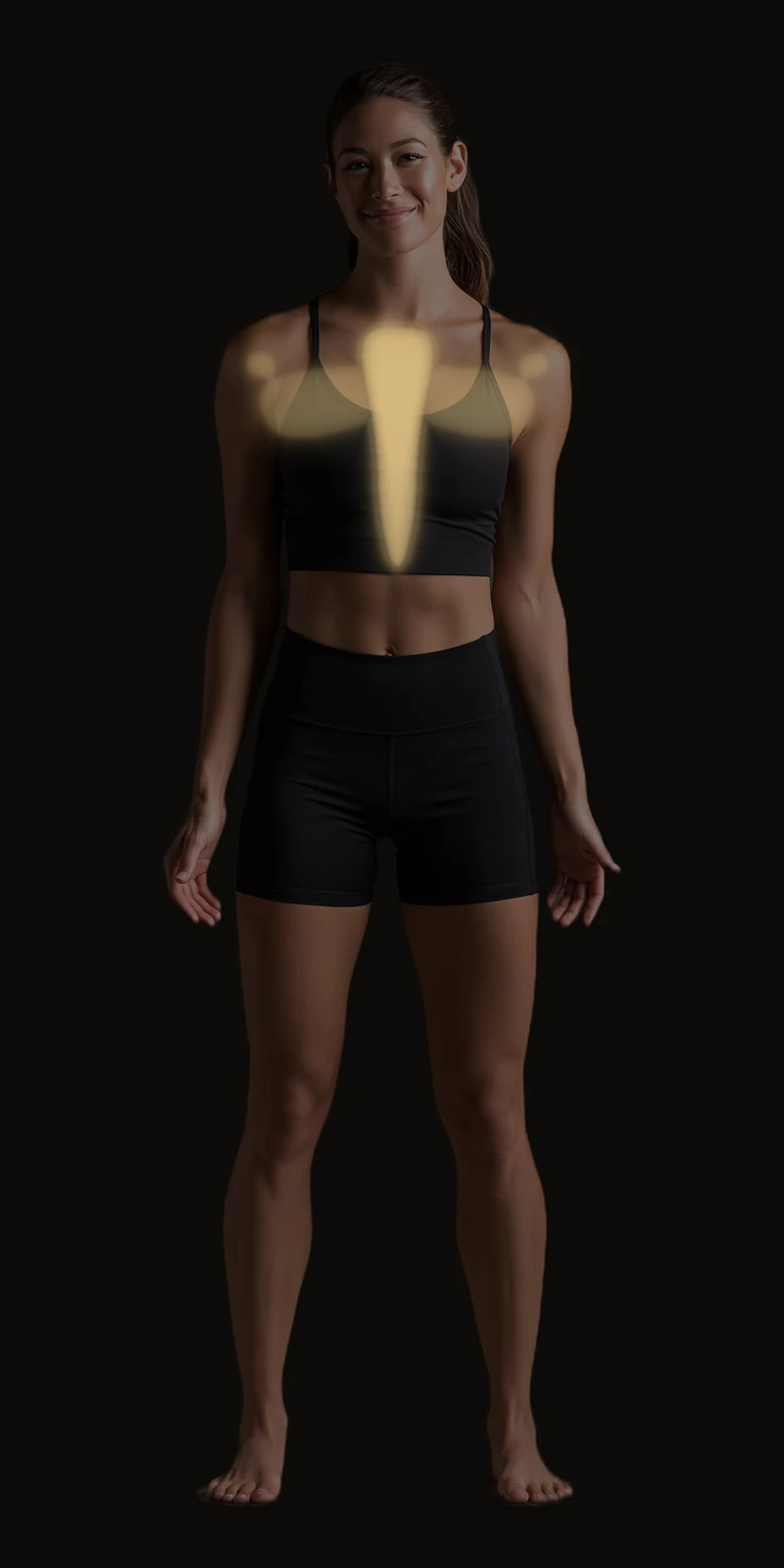
Where the pain is felt: Deep behind the breastbone. Across the upper chest on one side. Sometimes the front of the shoulder and the inner upper arm. The pain does not change with breathing, turning, or lifting.
Common causes: A blow to the chest; a seat belt in a collision; a fall onto the chest; heavy bench press; a coughing illness; chest surgery; a long period of hunched posture over a desk.
Patients say: "It feels like it is behind my breastbone." "The cardiologist found nothing." Chest pain that does not change when I breathe. "It goes to the front of my shoulder."
When to get evaluated: Chest pain with pressure, sweating, shortness of breath, nausea, or pain on exertion needs emergency cardiac evaluation before anything else, every time. Chest pain after a fall or a crash needs an X-ray. Chest pain with a rash along one side needs medical evaluation for shingles. This muscle is examined only after the heart has been cleared.
How this muscle is examined and treated
Examination, after cardiac clearance, presses along the breastbone and the strap beside it for the point that reproduces the deep chest pain and the shoulder spill, and tests that breathing and movement do not change it. Needling here addresses the thin strap over the breastbone, very shallow, along the bone. Assessment and treatment happen in the same visit.
Related conditions
Chronic Pain PatternsShoulder DysfunctionPost-Surgical Recovery
This page is educational. It describes muscle referral patterns commonly associated with pain; it does not diagnose your condition. Individual patterns vary. For evaluation of your specific pain, see a licensed clinician. Seek immediate medical care for emergencies. Eugene Baek, L.Ac. · New Jersey License 25MZ00080600