Abdominal Obliques: Pain Pattern and Treatment
The external and internal obliques wrap the sides of the abdomen in two crossing layers that rotate and side-bend the trunk. Their documented patterns are visceral mimics: the upper external oblique refers into the epigastrium and behaves like heartburn, and the lower fibers, internal oblique predominantly, refer into the groin.
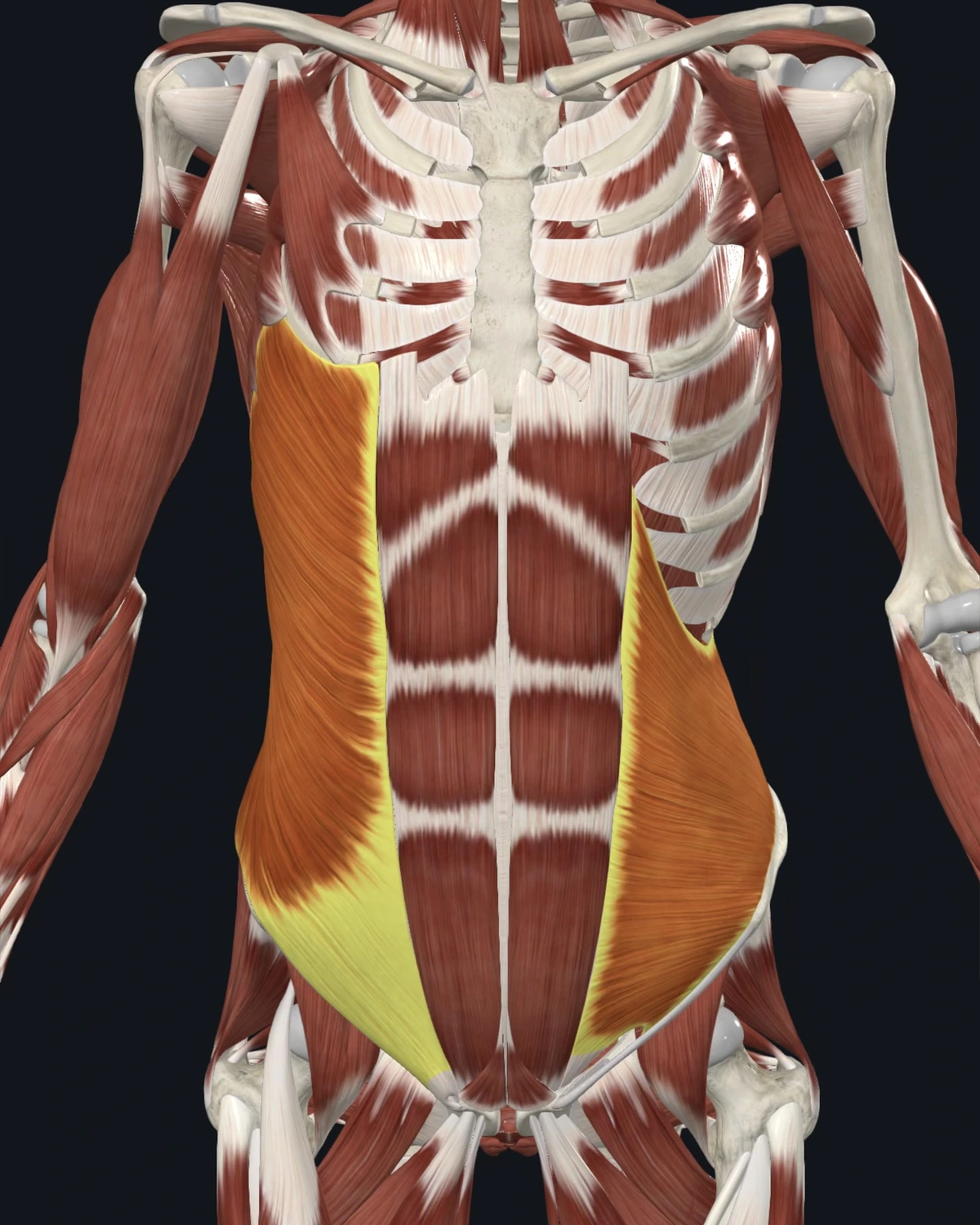
Attachments and action
Origin: External oblique: the outer surfaces of the fifth through twelfth ribs. Internal oblique: the thoracolumbar fascia, iliac crest, and lateral inguinal ligament.
Insertion: External oblique: the linea alba, pubic tubercle, and anterior iliac crest. Internal oblique: the lower rib borders and the linea alba through the rectus sheath.
Action: Trunk rotation and side-bending, with the two layers of opposite sides working as a pair; compression of the abdomen in bracing, coughing, and forced exhalation.
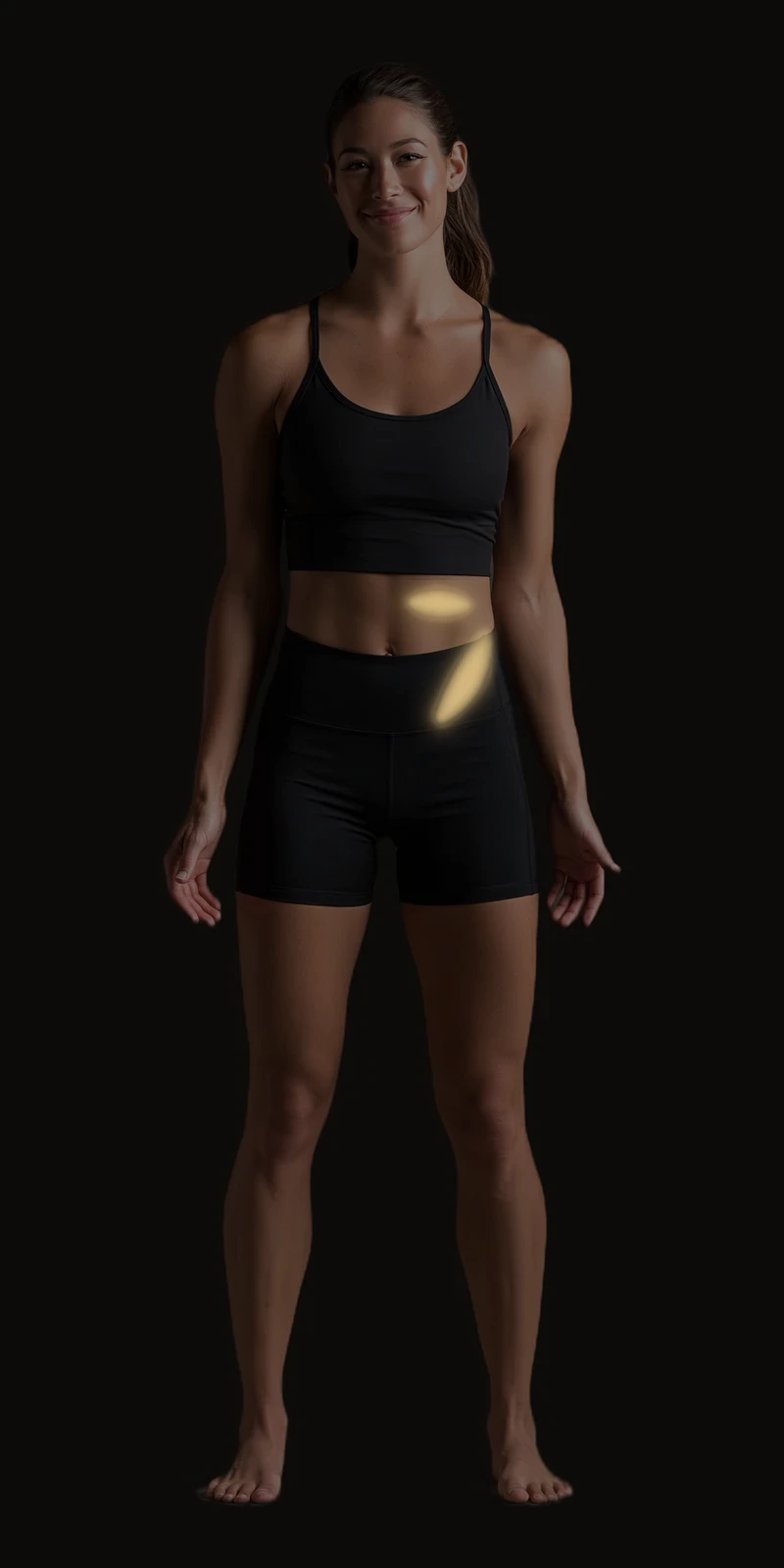
Where the pain is felt: Two distinct zones by layer. The upper anterior external oblique refers into the epigastrium, felt as heartburn, and this pattern is documented to arrive with belching and nausea, sending patients toward GI workups. The lower fibers, internal oblique predominantly with the lowest external fibers, refer into the groin and pubic region, mimicking an inguinal strain. Deeper spread across the abdomen is also documented.
Common causes: Twisting sports and rotational lifting, chronic cough, unaccustomed core exercise, prolonged crouched or twisted postures, surgical scars of the lateral wall, and abdominal gripping under stress.
Patients say: “Heartburn” that antacids do not settle and endoscopy does not explain. Belching with a burning upper stomach after exertion rather than meals. A groin pull that never fully heals.
When to get evaluated: Upper abdominal pain with exertion, radiation to the arm or jaw, or shortness of breath needs cardiac evaluation first. Groin pain with a visible bulge that changes with straining needs hernia evaluation. GI symptoms with weight loss, vomiting, or blood need medical workup before any muscle assessment.
How this muscle is examined and treated
Examination tenses the wall to separate muscular from visceral sources, then palpates the oblique layers along the ribs, flank, and above the inguinal ligament for the points that reproduce the familiar heartburn-like or groin symptoms. Needling over the lateral wall is tangential and shallow. Assessment and treatment happen in the same visit.
Related conditions
Low Back PainSports InjuriesChronic Pain Patterns
This page is educational. It describes muscle referral patterns commonly associated with pain; it does not diagnose your condition. Individual patterns vary. For evaluation of your specific pain, see a licensed clinician. Seek immediate medical care for emergencies. Eugene Baek, L.Ac. · New Jersey License 25MZ00080600