Intercostals: Pain Pattern and Treatment
The intercostals are the short muscles that fill the spaces between the ribs, in layers that run in opposite directions. They move the ribs with every breath. Their documented pattern is local: sharp pain in one rib space that spreads forward along that space, tender to the touch, and set off by a deep breath, a cough, or a twist. They are the muscles that keep chest-wall pain going after a rib injury, a chest surgery, or a bout of shingles has healed.
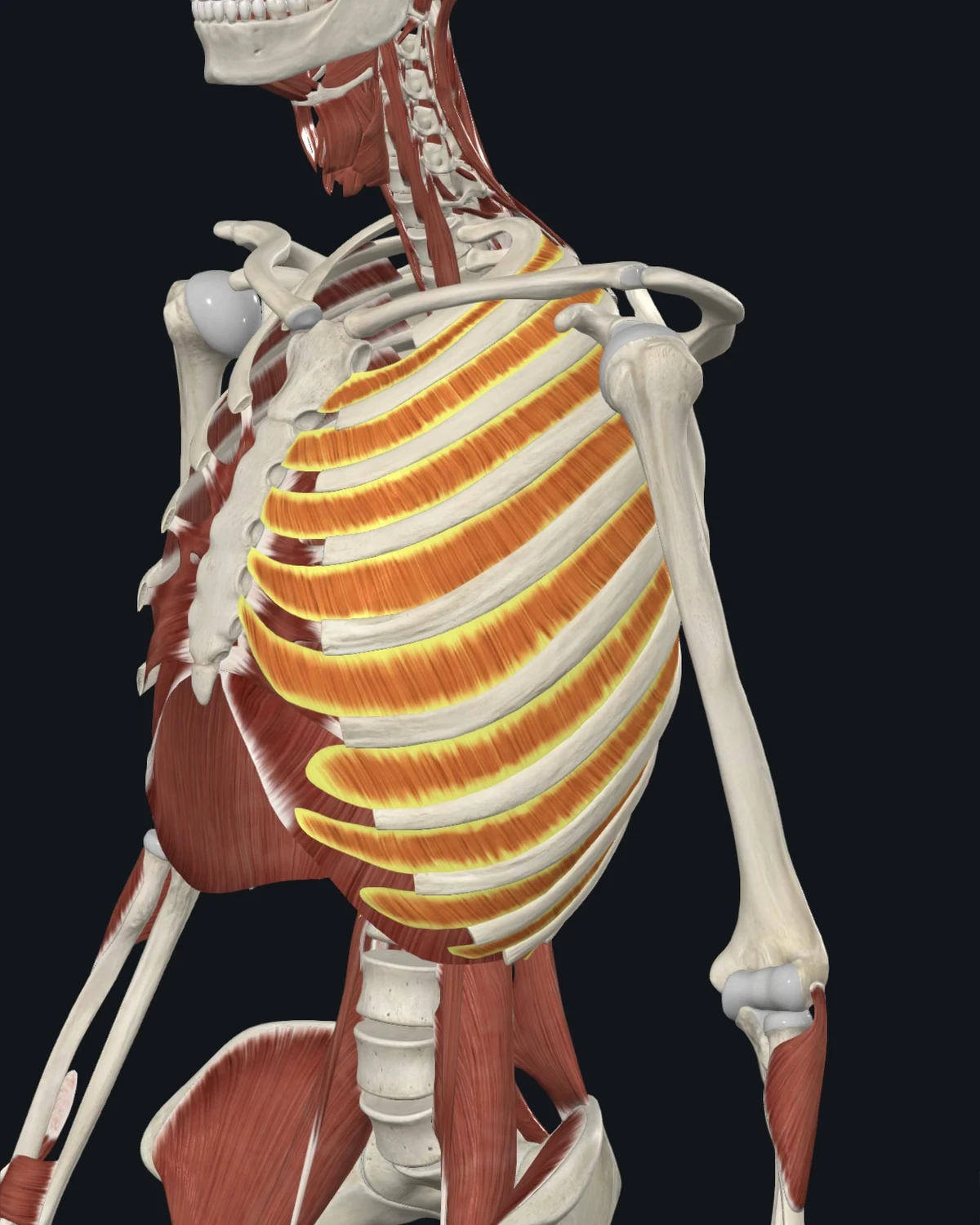
Attachments and action
Origin: The lower border of each rib.
Insertion: The upper border of the rib below, with the external layer running downward and forward and the internal layer downward and backward.
Action: The external intercostals lift the ribs on inspiration; the internal intercostals draw them down on forced expiration; together they stiffen the chest wall.
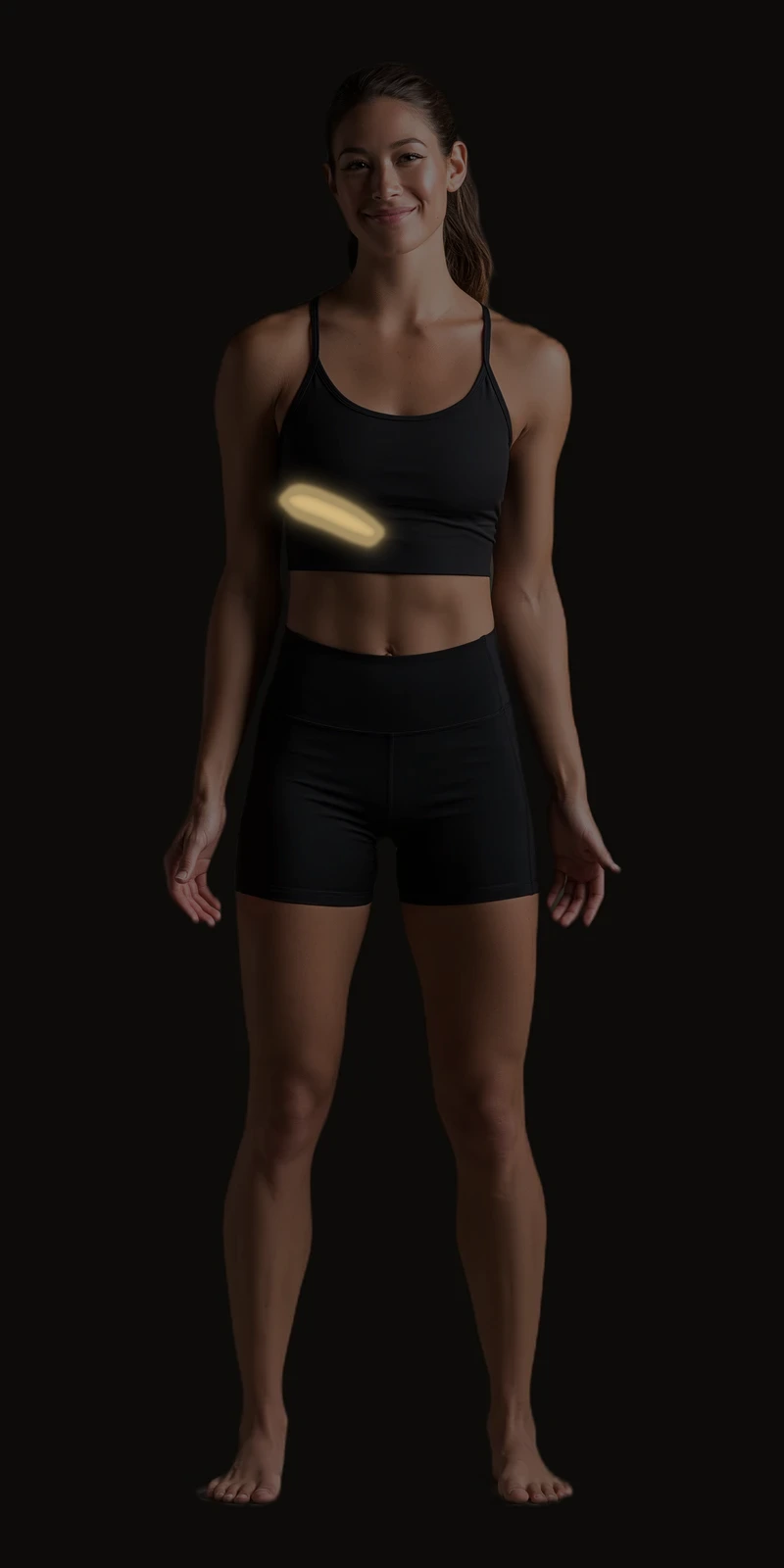
Where the pain is felt: In one rib space, sharp, tender to a light touch. It can spread forward along that space toward the breastbone. A deep breath, a cough, a sneeze, or a twist sets it off.
Common causes: A rib bruise or fracture that has healed; chest or breast surgery; shingles along that rib; a long coughing illness; rowing, paddling, or throwing; a hard hit in sport.
Patients say: "I can put my finger right between two ribs on it." "It stabs when I take a deep breath." Chest-wall pain that has outlasted the injury or the rash.
When to get evaluated: Chest pain with pressure, sweating, shortness of breath, or pain on exertion needs cardiac evaluation before anything else. Rib pain after a fall or with a fever and cough needs medical evaluation first. A new rash along the rib needs medical evaluation for shingles.
How this muscle is examined and treated
Examination finds the space by light pressure along the ribs, reproduces the pain with a deep breath and a twist, and rules out the rib itself. Needling here addresses the muscle in that one space, over the rib at a shallow angle, never between the ribs toward the chest. Assessment and treatment happen in the same visit.
Related conditions
Chronic Pain PatternsSports & Performance Injuries
This page is educational. It describes muscle referral patterns commonly associated with pain; it does not diagnose your condition. Individual patterns vary. For evaluation of your specific pain, see a licensed clinician. Seek immediate medical care for emergencies. Eugene Baek, L.Ac. · New Jersey License 25MZ00080600