Diaphragm: Pain Pattern and Treatment
The diaphragm is the dome of muscle that separates the chest from the abdomen and does most of the work of breathing in. Its documented pattern has two parts. Trigger points at its rim send pain along the front lower rib margin, the stitch in the side that a deep breath sharpens. Irritation of the dome sends pain to the top of the shoulder on the same side, through the nerve the two share. Patients arrive with a shoulder that has been examined and found normal.
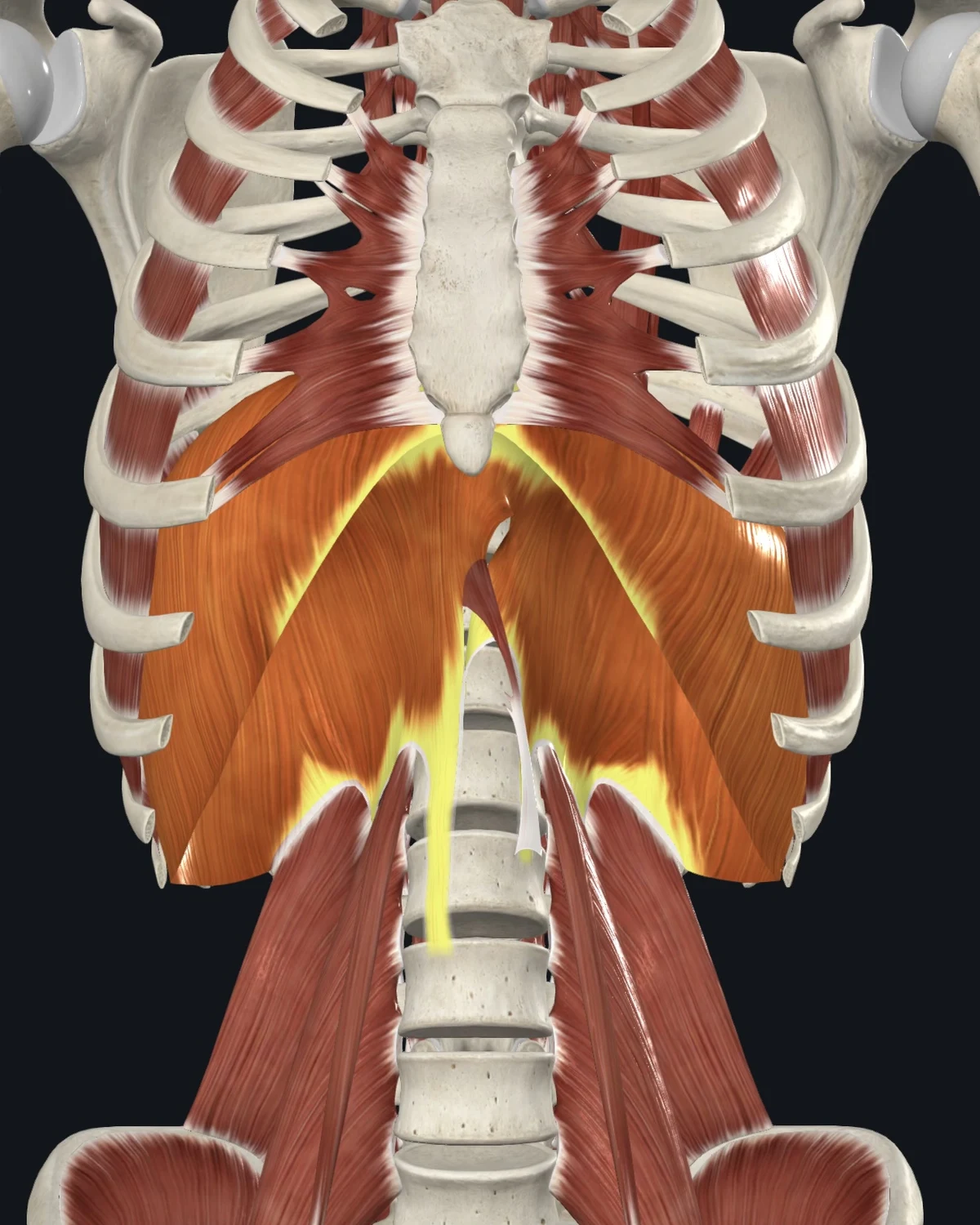
Attachments and action
Origin: The xiphoid process, the inner surfaces of the lower six ribs and their cartilages, and the upper lumbar vertebrae through the two crura and the arcuate ligaments.
Insertion: The central tendon, a flat sheet at the top of the dome.
Action: Contraction flattens the dome and draws air into the lungs; it is the primary muscle of inspiration and a partner of the abdominal wall in bracing the trunk.
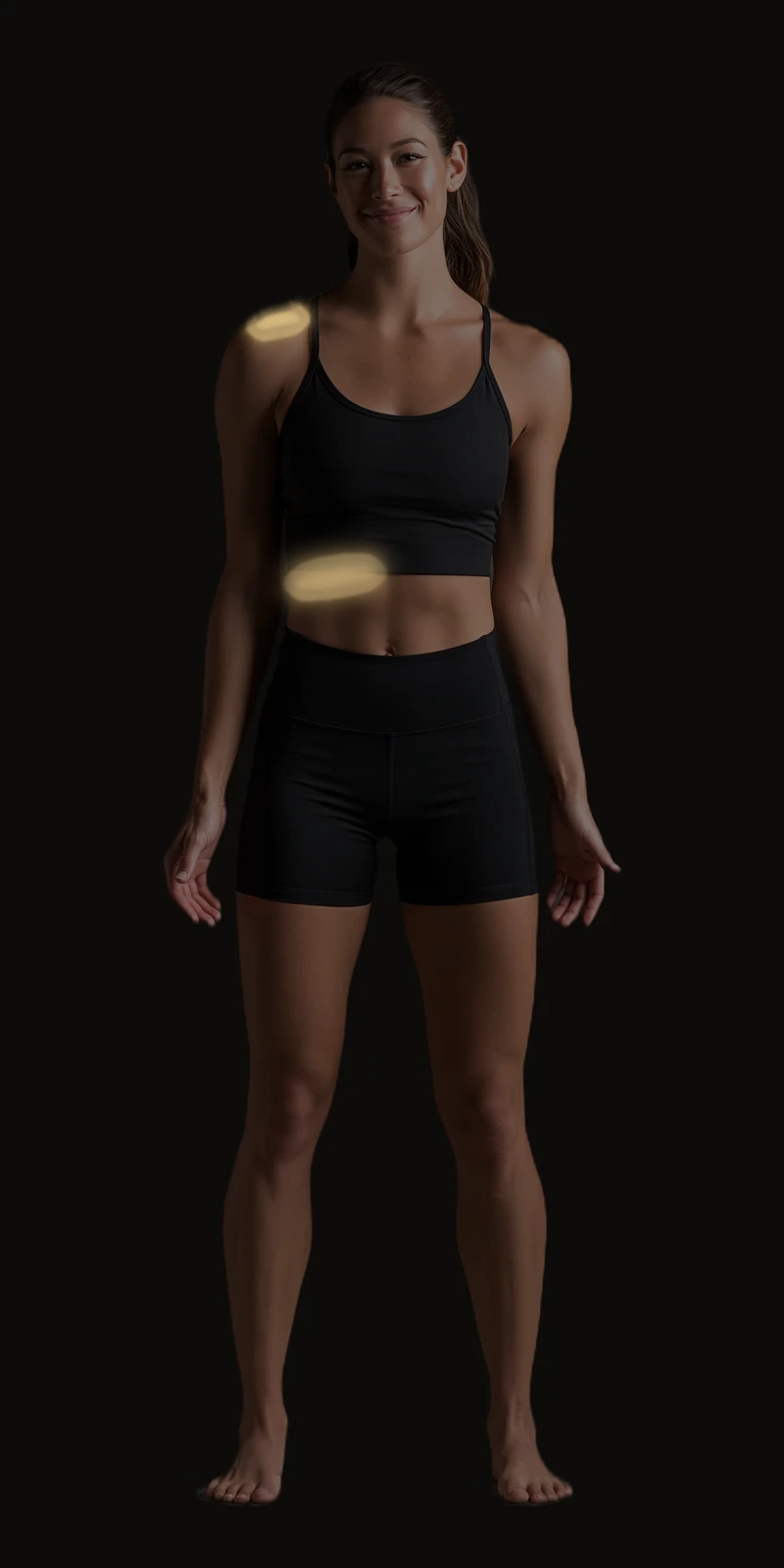
Where the pain is felt: Along the front lower rib margin on one side, sharp on a full breath in. The top of the shoulder on the same side, an ache that shoulder tests do not reproduce. A sense of not being able to take a full breath.
Common causes: Running and hard breathing before the trunk is warm; a long coughing illness; laughing or singing hard; a stomach that is very full; shallow chest breathing under stress; surgery or injury to the lower ribs.
Patients say: "A stitch in my side that never fully went away." "My shoulder aches and every test on it is normal." "I cannot get a full breath in."
When to get evaluated: Shortness of breath with chest pressure, sweating, a fast heartbeat, or lips that look blue needs emergency evaluation. Pain under the right ribs with nausea, fever, or yellowed skin needs the gallbladder and liver assessed. Shoulder-top pain after a fall or with abdominal pain needs medical evaluation first.
How this muscle is examined and treated
Examination watches the breath, measures rib expansion, and presses up under the front rib margin for the point that reproduces the stitch. The shoulder is examined to confirm the ache is referred. Needling here addresses the muscle at its rim, under the costal margin, at a shallow angle away from the chest. Assessment and treatment happen in the same visit.
Related conditions
Chronic Pain PatternsSports & Performance InjuriesShoulder Dysfunction
This page is educational. It describes muscle referral patterns commonly associated with pain; it does not diagnose your condition. Individual patterns vary. For evaluation of your specific pain, see a licensed clinician. Seek immediate medical care for emergencies. Eugene Baek, L.Ac. · New Jersey License 25MZ00080600